
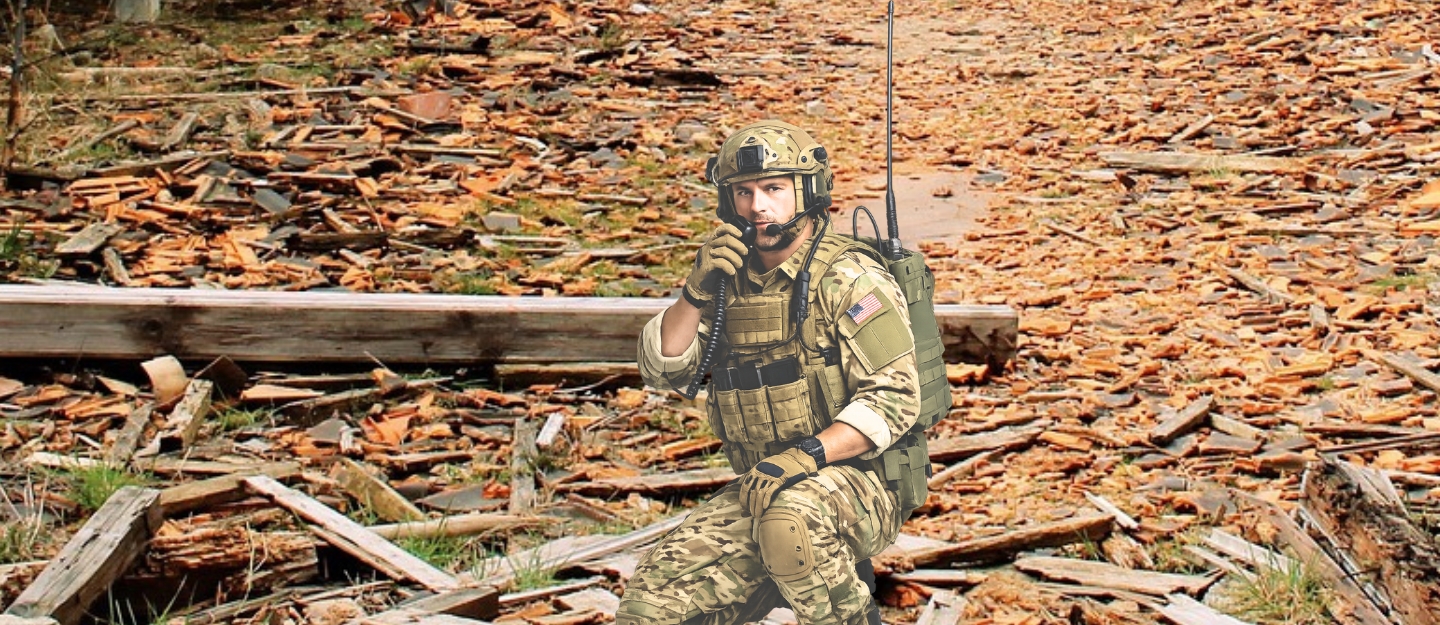
5 Military Radio Protocols ensure clean radio communications they prioritize clarity, speed, and reliability under pressure. However, many civilians never encounter this structured style. Therefore, learning core military radio protocols improves any serious radio operation. Moreover, these practices reduce confusion during emergencies and high-traffic events.
Purpose Behind Military Radio Protocols
Military forces design radio procedures to function in chaotic environments. Consequently, every word carries intent and timing. Therefore, operators eliminate unnecessary language and emotion. Moreover, standardized protocols allow strangers to communicate instantly without prior coordination.
Call Signs and Their Proper Use
Military units assign call signs to identify stations and roles. Therefore, operators always address the receiving station first, followed by their own. Consequently, this order ensures the intended listener pays attention. Moreover, repeating call signs confirms message routing accuracy.
Message Structure and Predictability
Military messages follow a predictable format. First, the operator establishes contact. Then, they pass the message content. Finally, they confirm receipt. Consequently, listeners know what to expect at each step. Therefore, this structure minimizes missed information.
Use of Pro-Words (Radio Procedure)
Pro-words replace longer phrases with standardized terms. For example, operators use concise words to signal completion or request repetition. Consequently, transmissions remain short and unmistakable. Therefore, civilians benefit by adopting these terms during crowded nets or emergencies.
| Pro-Word | Meaning | When to Use | Example |
|---|---|---|---|
| Over | My transmission is finished — reply expected | End of a transmission when waiting for response | “Signal report 59, over.” |
| Out | Conversation finished — no reply expected | Final transmission ending contact | “Thanks for the contact, out.” |
| Roger | Message received and understood | Acknowledge information | “Roger your signal report.” |
| Wilco | Will comply with instructions | Agreeing to follow directions | “Wilco, switching frequency.” |
| Standby | Wait — I will respond shortly | Temporary pause | “Standby while I check log.” |
| Break | Separate messages or interrupt | Pause between thoughts or urgent entry | “Break — emergency traffic.” |
| Say Again | Repeat your last transmission | When audio unclear | “Say again your call sign.” |
| Correction | Error made — correct info follows | Fixing spoken mistake | “Correction — frequency 14.250.” |
| Affirmative | Yes | Clear positive response | “Affirmative, copy that.” |
| Negative | No | Clear negative response | “Negative, not receiving.” |
| Copy | I hear and understand | Informal acknowledgment | “Copy your location.” |
| Wait | Short pause expected | Brief delay | “Wait one.” |
| Wait Out | Longer delay expected | Extended pause | “Wait out while I troubleshoot.” |
| Read Back | Repeat message exactly | Confirm accuracy | “Read back frequency.” |
| I Say Again | Emphasizing repeat info | Important clarification | “I say again — emergency traffic. |
Brevity and Time Discipline
Military operators speak only when necessary. Therefore, they avoid filler words and commentary. Consequently, airtime stays available for critical traffic. Moreover, this discipline becomes vital when multiple stations compete for access.
Phonetic Alphabet Precision
The phonetic alphabet ensures accurate spelling over noisy channels. Therefore, operators pronounce each word clearly and consistently. Consequently, similar-sounding letters no longer cause errors. Moreover, disciplined phonetics dramatically reduce message repeats.
Numbers and Pronunciation Rules
Military protocol specifies number pronunciation. For instance, operators modify certain numbers to prevent confusion. Consequently, critical data such as coordinates or frequencies transmit reliably. Therefore, civilians handling emergency traffic should adopt these conventions.
Authentication and Challenge Procedures
Military systems often require authentication to verify identity. Therefore, operators exchange coded challenges and responses. Consequently, this process prevents impersonation. Moreover, civilians can adapt simplified verification methods during disaster response operations.
| Step | Action | Purpose | Example Phrase |
|---|
| 1. Initial Contact | Station establishes communication | Begin controlled exchange | “Control, this is Station Alpha.” |
| 2. Challenge Issued | Receiving station requests authentication | Verify identity of transmitting station | “Authenticate Sierra-Four.” |
| 3. Authentication Reference | Challenged station uses authentication table, code sheet, or shared key | Prevent impersonation | (Operator checks authentication card) |
| 4. Correct Reply Given | Station responds with proper authentication response | Prove authorized identity | “Authentication Tango-Nine.” |
| 5. Verification | Challenging station confirms response is correct | Validate legitimacy | “Authentication correct.” |
| 6. Communication Continues | Normal message traffic resumes | Secure communications maintained | “Go with your traffic.” |
| 7. Failed Authentication | Incorrect or no response received | Prevent unauthorized access | “Authentication incorrect — stand by.” |
| 8. Action on Failure | Station may deny traffic, request re-authentication, or escalate | Maintain communication security | “Do not transmit. Re-authenticate. |
Transmission Security Awareness
Even without encryption, military operators assume adversaries listen. Therefore, they avoid sensitive details in plain language. Consequently, they use coded references or prearranged terms. Moreover, civilians should practice similar caution during public emergencies.
Listening Before Transmitting
Military doctrine emphasizes listening first. Therefore, operators assess ongoing traffic before keying the microphone. Consequently, they avoid interrupting critical messages. Moreover, this habit improves situational awareness.
Acknowledgment and Confirmation
Every message requires confirmation. Therefore, receivers acknowledge receipt explicitly. Consequently, senders know the message arrived intact. Moreover, this practice prevents dangerous assumptions.
Repetition and Corrections
When errors occur, military operators correct them immediately. Therefore, they restate only the incorrect portion. Consequently, corrections remain efficient. Moreover, this method reduces overall airtime usage.
Emergency and Priority Traffic
Military protocols define priority levels. Therefore, emergency traffic overrides routine communication. Consequently, all stations yield the channel. Moreover, civilians benefit by understanding and respecting these priorities during crises.
Radio Silence and Emissions Control
Sometimes, military units enforce radio silence. Therefore, operators transmit only when authorized. Consequently, they reduce detection risk. Moreover, civilians can apply similar discipline to manage interference during sensitive operations.
Net Control and Command Authority
Military nets operate under clear control. Therefore, a designated station manages traffic flow. Consequently, order replaces chaos. Moreover, this structure translates well to volunteer and emergency nets.
Training and Repetition
Military radio proficiency comes from constant training. Therefore, operators drill protocols until responses become automatic. Consequently, stress does not degrade performance. Moreover, civilians improve reliability through regular practice.
Common Civilian Mistakes
Civilians often over-explain messages. However, verbosity wastes time. Therefore, adopting concise phrasing improves clarity. Moreover, resisting casual chatter preserves channel effectiveness.
Applying Military Protocols to Civilian Use
Civilians do not need to mimic military culture. However, they should adopt its efficiency. Therefore, selective application enhances professionalism. Moreover, these skills prove invaluable during disasters and public events.
5 Military Radio Protocols
Military radio protocols succeed because they impose discipline. Because disciplined communication saves time and lives, civilians gain real advantages by learning these methods. Therefore, adopting these protocols elevates any radio operation. In the end, clear procedure matters more than equipment or power.
Amateur Radio Nets
Many of these protocols have been adopted in civilian radio, especially in amateur radio. It allows for fast and clean exchanges while in emergency situations, training, activities, or just having a net.
Please consider Donating to help support this channel