
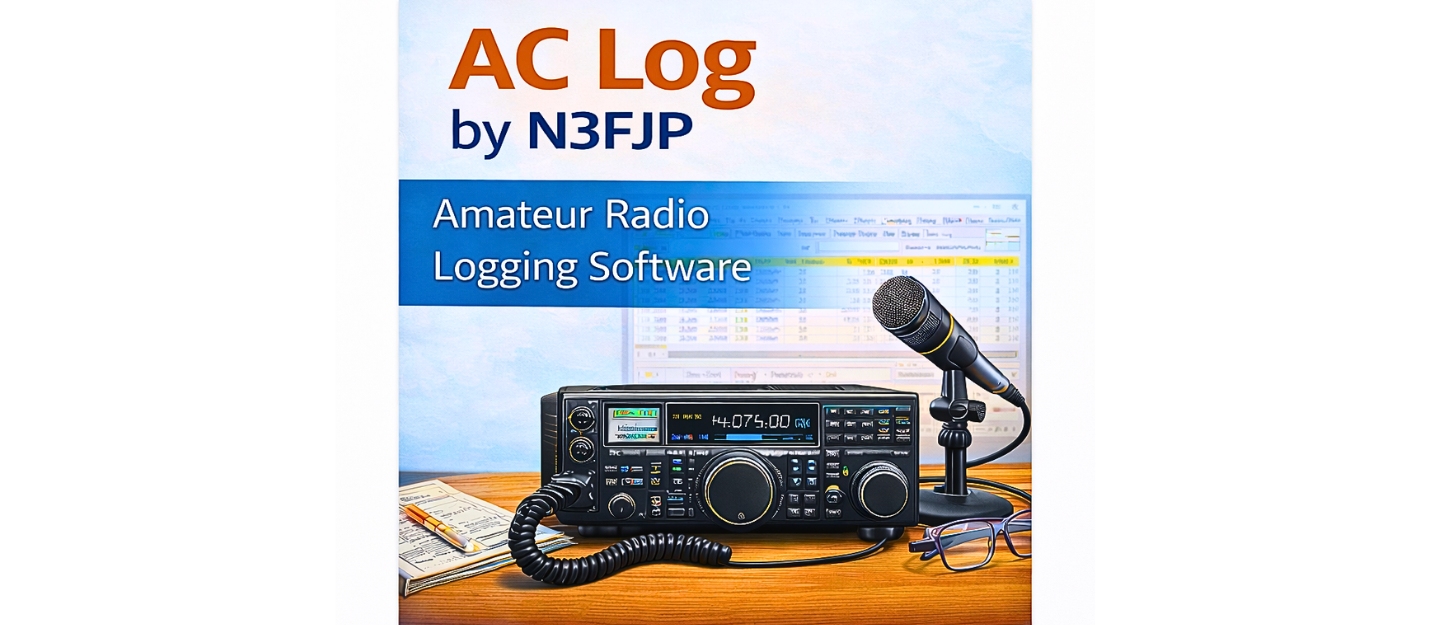
AC Log from N3FJP is one of the most widely used amateur radio logging programs because it focuses on speed, simplicity, and practical station operation. Although many logging applications exist, AC Log stands out because it prioritizes real operating workflow instead of overwhelming users with unnecessary complexity. Therefore, operators who want fast contact entry, reliable data storage, and flexible integration often choose this software as their primary station log.
Because logging every contact accurately is essential in amateur radio, operators need software that works instantly and reliably. AC Log delivers exactly that by offering a streamlined interface that allows users to enter contacts quickly while still maintaining detailed records. As a result, the program supports everyday operation, award tracking, and contest participation without forcing complicated setup procedures.
(adsbygoogle = window.adsbygoogle || []).push({});What AC Log Is Used For in Everyday Operation
Most operators use AC Log as the central control point for daily station activity. It records contacts, tracks operating history, and maintains structured data that supports awards, confirmations, and long-term record keeping. Because information is stored instantly and accurately, operators can focus on communication rather than documentation.
For many stations, the logging system becomes as essential as the radio itself. Reliable logging ensures every contact is preserved, searchable, and ready for confirmation or analysis at any time.
The History Behind AC Log and N3FJP Software
AC Log was created by Scott Davis, N3FJP, who developed the software to support real amateur radio operating conditions. Initially, the goal was to provide a logging system that worked smoothly during active operation instead of slowing down the operator. Consequently, the design philosophy focused on ease of use, reliability, and fast data entry.
As amateur radio logging became increasingly digital, operators needed tools that could handle large volumes of contacts while maintaining accuracy. Therefore, AC Log evolved to support electronic log formats, rig control, award tracking, and data export. Meanwhile, additional companion programs were developed for contests and specialized operating events.
Over time, N3FJP software gained a strong reputation because it consistently balanced powerful capability with operational simplicity. Consequently, many operators adopted AC Log as their daily logging solution while using specialized N3FJP contest log programs during competitive events.
How AC Log Functions as a Station Logbook
AC Log functions as the central record of all station activity. Because it stores every contact in a structured database, operators can retrieve, analyze, and export information whenever needed. Additionally, the program records time, frequency, mode, callsign, and location details with precision.
When an operator enters a contact, the software immediately logs the information and updates tracking statistics. Meanwhile, the system can display worked and confirmed entities, band usage, and operating history. Therefore, operators can monitor progress toward awards or operating goals in real time.
Furthermore, the logging interface allows extremely fast entry. Because fields are arranged logically, operators can complete a contact record in seconds. This speed is especially valuable during pileups or rapid operating sessions.
How to Set Up AC Log for the First Time
Initial setup begins by creating or importing a station log database. Operators enter basic station information, including callsign and operating preferences, which establishes the working environment for all future logging.
Next, rig control settings can be configured if the radio supports computer interfacing. Once connected, frequency and mode data transfer automatically into the log entry fields.
Operators then configure award tracking preferences and confirmation services if used. After these steps are complete, the system is ready for normal contact entry and station operation.
Most users can complete initial setup quickly because the interface follows typical operating workflow.
Core Features That Define AC Log
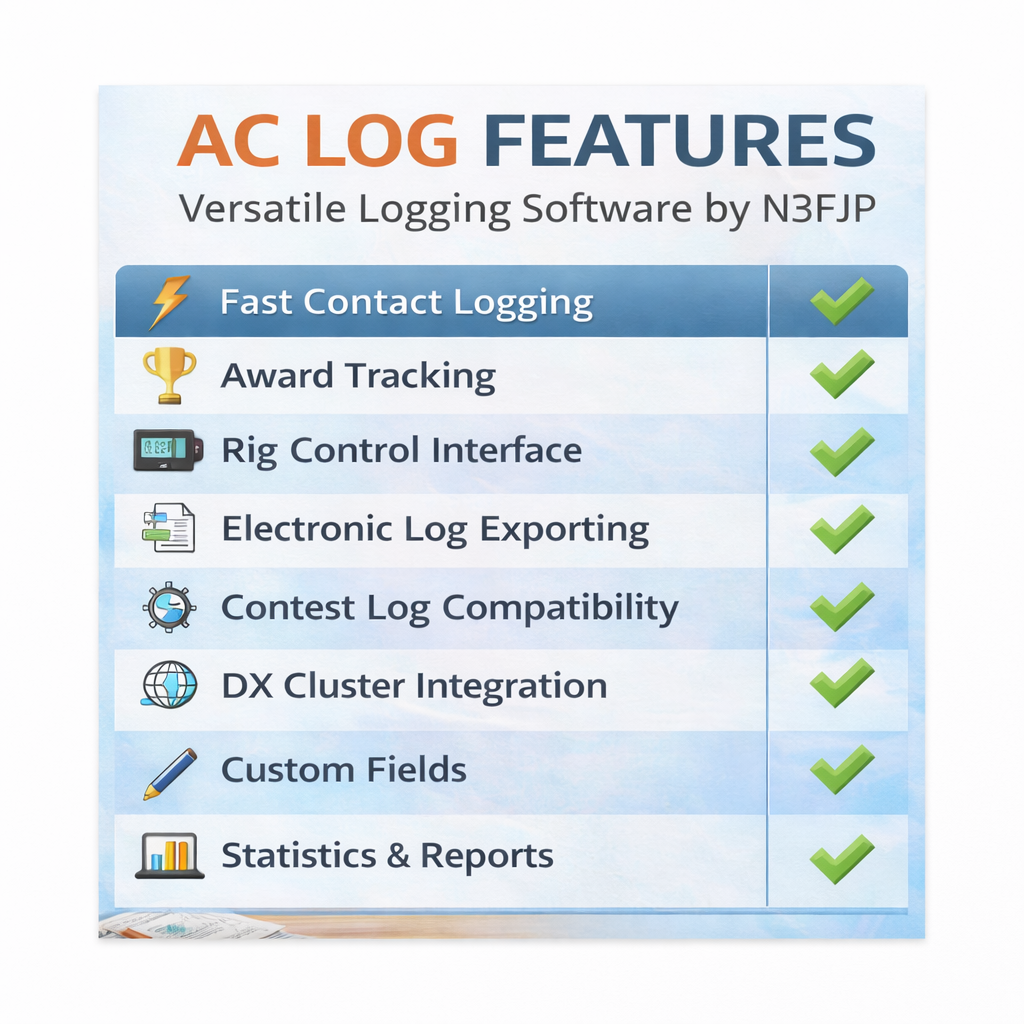
AC Log includes a wide range of capabilities designed for practical station management. However, it keeps the workflow simple enough that operators can focus on making contacts instead of managing software.
Key functional areas include:
- Contact logging with rapid entry
- Award tracking and statistics
- Rig control and frequency capture
- Electronic log export and import
- DX tracking and history review
- Multiple station configuration support
- Search and filter tools for large log databases
Because these features operate together inside one interface, operators maintain complete awareness of station activity. Additionally, the software organizes data in ways that support both casual operating and serious award pursuit.
Typical Logging Workflow During Operation
During normal operation, the operator enters callsign, signal report, and optional location information as each contact occurs. If rig control is active, frequency and mode populate automatically.
Once saved, the contact immediately updates award tracking, band statistics, and operating totals. This real-time update allows operators to monitor progress continuously without additional processing.
Because the system responds instantly, it supports rapid logging during pileups, contest exchanges, or high activity periods.
Rig Interface and Radio Control Integration
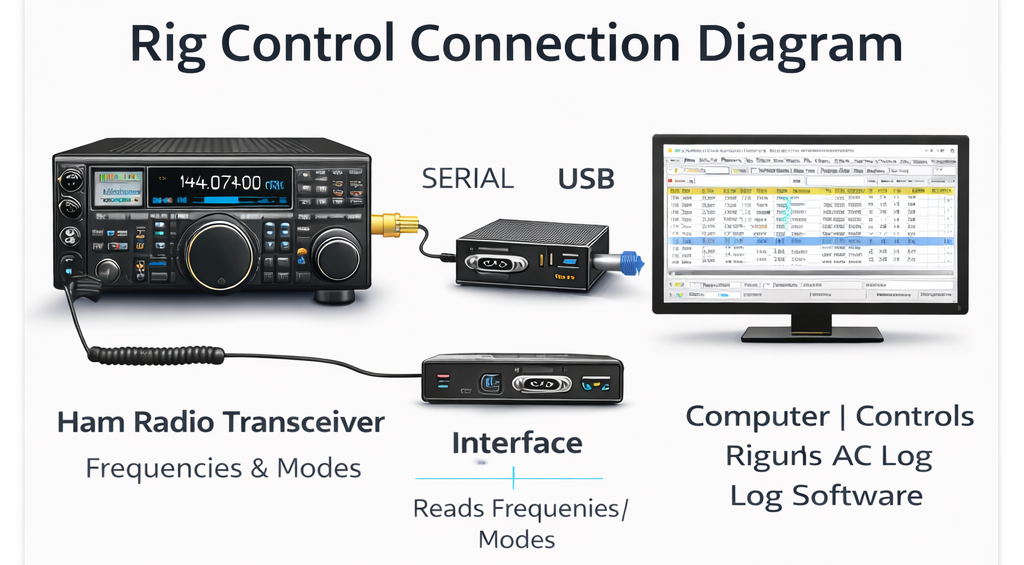
AC Log supports rig interfacing so the program can communicate directly with the radio. When properly connected, the software reads frequency and mode information automatically. Therefore, operators no longer need to type those details manually.
Rig control improves logging accuracy because frequency data transfers directly from the radio hardware. Consequently, each contact record reflects actual operating conditions without manual entry errors. Additionally, automatic capture speeds up logging during rapid operating sessions.
The rig interface typically connects through a computer serial port, USB interface, or virtual COM port depending on radio model and station configuration. Once configured, the connection operates continuously in the background. Meanwhile, the operator focuses on communication instead of data entry.
Because modern radios support computer control protocols, AC Log can adapt to many different transceiver models. Therefore, integration remains flexible across station setups.
Common Configuration Issues and Solutions
Most rig control problems result from incorrect communication port settings or cable configuration. Verifying the correct COM port and communication parameters typically resolves connection issues.
If frequency or mode data does not transfer automatically, confirming radio control protocol compatibility and cable type usually restores operation.
Regularly backing up log data also prevents loss from unexpected system interruptions.
Automatic Frequency and Mode Tracking Benefits
Automatic capture of radio frequency and mode eliminates one of the most common logging errors. Manual entry mistakes can affect confirmations, award tracking, and historical accuracy. Direct radio communication prevents these errors and ensures each log entry reflects actual operating conditions.
This automation becomes especially valuable during fast operating periods when manual entry may be impractical.
Contest Logging and Specialized Operating
Although AC Log handles everyday logging, N3FJP also provides dedicated contest logging software designed specifically for competitive events. These contest programs share similar design philosophy but include additional tools optimized for scoring and rapid exchange entry.
During contests, operators need extremely fast logging, multiplier tracking, and scoring visibility. Therefore, contest log software focuses on speed, automation, and error reduction. Meanwhile, AC Log remains ideal for general operating outside contest periods.
Many operators use both systems together. After a contest ends, contacts can transfer into the main station log. Consequently, all activity remains consolidated in one historical record.
Companion Software for Specialized Operation
In addition to general station logging, specialized programs support contest operation and event-specific activity. These companion applications focus on rapid exchange entry, multiplier tracking, and real-time scoring.
After operating events conclude, contact data can transfer into the main station log. This integration keeps all operating history centralized while allowing each activity type to use optimized logging tools.
Using both systems together provides flexibility without fragmenting station records.
Companion Software for Specialized Operation
In addition to general station logging, specialized programs support contest operation and event-specific activity. These companion applications focus on rapid exchange entry, multiplier tracking, and real-time scoring.
After operating events conclude, contact data can transfer into the main station log. This integration keeps all operating history centralized while allowing each activity type to use optimized logging tools.
Using both systems together provides flexibility without fragmenting station records.
Electronic Logs and Data Exchange
Electronic logging plays a critical role in modern amateur radio because contacts must often be confirmed digitally. AC Log supports electronic log formats that allow operators to export and import contact data efficiently.
When operators submit logs for awards or confirmations, standardized data formats ensure compatibility across systems. Therefore, AC Log enables smooth data exchange with confirmation services and other logging platforms.
Electronic logging also allows long-term storage and analysis. Because digital records remain searchable and structured, operators can review years of operating history instantly. Additionally, electronic logs simplify backup and recovery procedures, protecting valuable contact records.
Furthermore, eLogs support automated confirmation workflows. When contact data transfers electronically, confirmation processes become faster and more reliable. Consequently, award tracking becomes easier and more accurate.
How AC Log Supports Award Tracking
Award tracking tools monitor worked and confirmed entities across bands and modes. As contacts are logged, the system compares them against award criteria and updates progress automatically.
Operators can view confirmation status, identify missing contacts, and plan future operating goals based on real data. This automated tracking simplifies long-term achievement planning and reduces manual record management.
Accurate logging ensures award progress reflects actual operating history.
Why Digital Confirmation Systems Depend on Accurate Logs
Modern confirmation systems rely on consistent and correctly formatted data. Even small entry differences can prevent automated matching between stations. Structured logging software ensures records follow standardized formats, which improves confirmation success rates.
Accurate digital records also simplify submission for awards and operating achievements, reducing administrative workload for the operator.
Data Organization and Long-Term Record Management
AC Log stores information in a structured database that supports large volumes of contacts. As operating time accumulates, the system maintains performance while allowing rapid search and retrieval.
Operators can filter by callsign, band, mode, or date range. Therefore, historical analysis becomes straightforward. Meanwhile, summary views display totals, trends, and operating patterns.
Because long-term record keeping matters in amateur radio, reliable storage ensures contacts remain accessible indefinitely. Additionally, backup tools allow operators to preserve data securely.
Managing Large Log Databases Efficiently
As contact totals grow into the thousands or tens of thousands, fast search and filtering become critical. Structured database storage allows instant retrieval of specific callsigns, bands, or time periods without performance slowdown.
This efficiency supports long-term station operation and makes historical analysis practical even for very large logs.
Why Many Operators Prefer AC Log from N3FJP
AC Log succeeds because it focuses on real operating needs rather than unnecessary complexity. Although advanced features exist, the interface remains intuitive and efficient. Therefore, operators of all experience levels can use the software effectively.
Speed, accuracy, and reliability remain the defining advantages. Because the program responds instantly and stores data securely, operators trust it as their primary station log.
Furthermore, integration with radios, electronic confirmation systems, and contest tools creates a complete operating ecosystem. Consequently, AC Log supports both everyday communication and long-term operating goals.
The Role of Logging Software in Modern Amateur Radio
Logging software has become essential because operating activity now spans voice, digital modes, contests, and global communication networks. Therefore, accurate record keeping supports technical operation, award programs, and communication history.
AC Log provides a practical solution that meets these needs without excessive complexity. Because it combines usability with powerful data management, it remains one of the most respected logging tools available.
Ultimately, successful amateur radio operation depends on accurate records, efficient workflow, and reliable data management. AC Log from N3FJP delivers all three, which is why so many operators rely on it every day.
The Role of Logging Software in Modern Amateur Radio
Common Logging Mistakes New Operators Make
Some operators delay logging contacts until later, which increases the risk of missing or incorrect information. Logging immediately after each contact preserves accuracy.
Another common mistake is inconsistent data entry, especially for mode or location fields. Standardized entry improves confirmation success and award tracking accuracy.
Regular backups are also essential to prevent data loss.
Who Should Use AC Log
AC Log works best for operators who want fast logging, reliable record keeping, and integrated station control without complex configuration. It is especially well suited for daily operators, award trackers, and stations that require accurate long-term contact history.
Operators who participate in contests, manage multiple radios, or maintain extensive logs benefit most from its structured workflow and automation features.
AC Log vs Complex Logging Software
Some logging programs provide extensive customization and advanced technical configuration. While powerful, those systems often require significant setup and ongoing management. AC Log takes a different approach by focusing on immediate usability and operational speed.
Operators who prefer minimal configuration and fast workflow often choose AC Log, while those who need extensive automation scripting or specialized database customization may prefer more complex systems.
Amateur Radio Logging Software Comparison
| Feature | AC Log | Complex Logging Suites |
|---|---|---|
| Ease of setup | Very simple | Often complex |
| Logging speed | Extremely fast | Varies by configuration |
| Rig control | Yes | Yes |
| Award tracking | Integrated | Integrated |
| Customization depth | Moderate | Extensive |
| Learning curve | Low | Higher |
| Best for | Daily operation | Advanced automation |
Learning Curve and Ease of Adoption
Operators often choose AC Log because it requires minimal setup before productive use. The interface follows logical station workflow, so most users can begin logging contacts immediately. Advanced features remain available without complicating basic operation.
This balance between simplicity and capability makes the software accessible to both new and experienced operators.
Frequently Asked Questions About AC Log
Is AC Log suitable for beginners?
Yes. Its interface follows normal operating workflow and requires minimal setup.
Does AC Log work with modern radios?
Yes. It supports rig control through standard communication interfaces.
Can AC Log handle large log databases?
Yes. Structured storage allows efficient management of very large contact records.
Is contest logging included?
Dedicated contest software is available separately but integrates with the main log.
Advanced Operating Tips for Efficient Logging
Experienced operators prepare log fields before active operating sessions to minimize typing. Preconfigured macros and rig integration further accelerate entry speed.
Regular database maintenance and backups ensure long-term reliability. Reviewing statistics periodically helps identify operating patterns and improvement opportunities.
Efficient logging becomes part of overall station performance.
Final Evaluation of AC Log from N3FJP
AC Log succeeds because it focuses on practical station operation rather than software complexity. Its speed, reliability, and integrated workflow make it well suited for daily logging, award tracking, and long-term record management.
Operators who want dependable performance and efficient logging will find it a highly effective primary station log solution.
About the Author
Vince, W2KU, is a licensed Extra class amateur radio operator and the founder of Ham Shack Reviews. He was named Amateur of the Year in 2026 for contributions to practical amateur radio education and equipment evaluation.
He primarily operates HF, knows propagation very well, operates mobile and handhelds daily. Vince exchanges QSL cards for DXCC, contest confirmation, and award tracking and is the club QSL manager. His guidance focuses on practical operating procedures, accurate logging, and real-world amateur radio practices.