
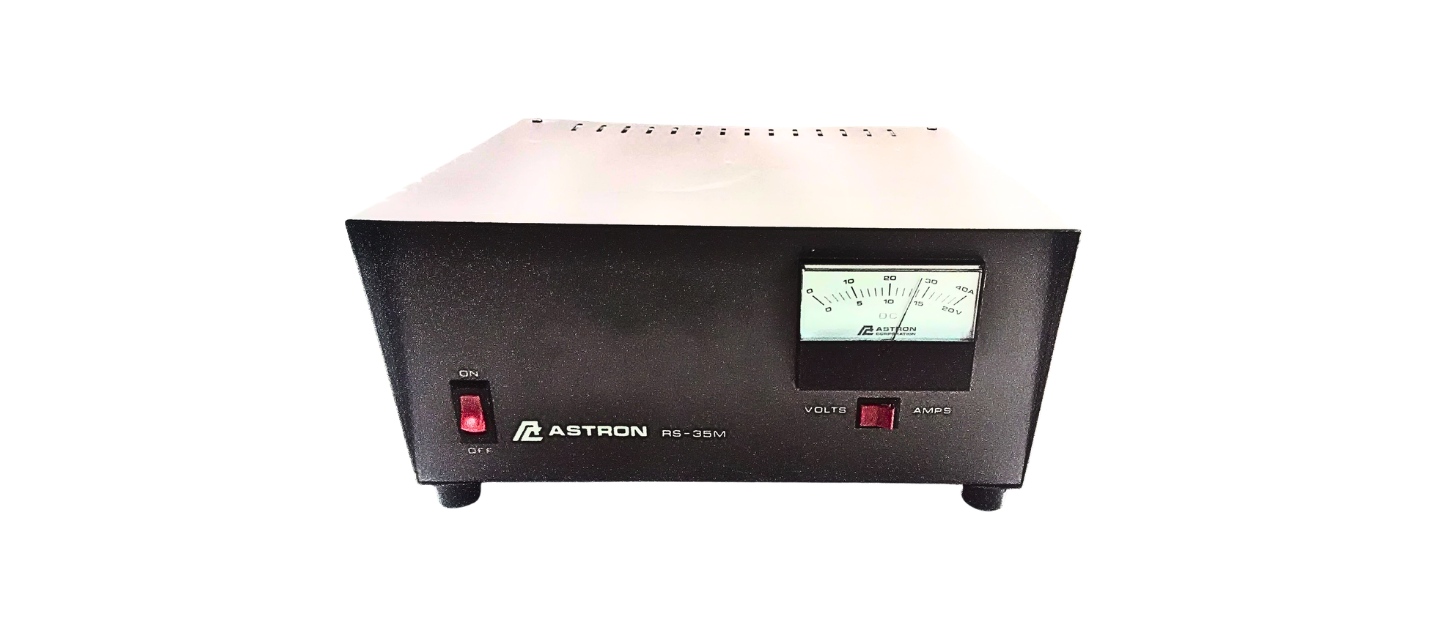
The Astron RS-35A power supply is a linear regulated DC power supply designed to deliver stable, clean 13.8-volt output for radio equipment and other high-current electronics. It uses a traditional transformer-based linear design rather than switching conversion, which allows it to produce exceptionally low electrical noise. As a result, radio operators widely use it in communication systems where signal purity matters. Unlike many modern switching supplies, it prioritizes voltage stability and RF cleanliness over compact size and weight.
Because amateur radio transceivers demand consistent voltage under changing load conditions, the RS-35 regulates output continuously. Therefore, when current draw increases during transmission, the supply maintains voltage within a narrow range. This regulation prevents transmitter distortion, protects equipment, and improves operating reliability. Additionally, the heavy transformer and large filter capacitors provide strong energy reserves, which support transient current demands without voltage sag.
(adsbygoogle = window.adsbygoogle || []).push({});Linear Regulated Power Supply Design
The RS-35 operates as a linear regulated supply. First, an internal transformer steps down AC mains voltage. Next, a rectifier converts AC to pulsating DC. Then large electrolytic capacitors smooth the waveform. Finally, a transistor-based regulator maintains precise output voltage.
Because linear regulation dissipates excess energy as heat, the supply uses large heat sinks and substantial internal mass. However, this inefficiency is intentional. Linear regulation produces extremely low ripple and minimal switching noise.. Consequently, the RS-35 performs well in RF environments where electrical noise can interfere with receivers or transmitters.
In contrast to switching supplies that rapidly chop current at high frequency, linear regulation operates continuously. Therefore, the output waveform remains smooth and stable across the entire operating range. This design explains why many radio operators prefer linear supplies despite their weight and heat generation.
Regulated Output Characteristics
The RS-35 is designed to provide a nominal 13.8 volts DC. This value matches typical automotive electrical system voltage and therefore aligns with most mobile radio equipment requirements.
Because regulation circuitry actively controls output, voltage remains stable even when load varies. As transmit power rises and current draw increases, regulation circuitry compensates automatically. Consequently, connected equipment receives consistent voltage regardless of operating mode.
Typical output voltage adjustment range is slightly above and below nominal. Operators can fine-tune voltage for specific equipment requirements or compensate for wiring losses. However, the regulator prevents excessive rise under light load conditions, which protects sensitive electronics.
Continuous and Peak Current Capability
The RS-35 designation reflects its surge capacity. However, linear power supplies distinguish between continuous current and peak current.
Continuous current represents the level the supply can deliver indefinitely without overheating. Peak or surge current represents short-duration output available during brief transmit bursts or startup loads.
Typical performance characteristics:
- Continuous duty output: approximately 25 amps
- Peak or surge output: up to 35 amps
Because transmitters often draw significantly more current during modulation peaks, surge capacity allows stable operation without voltage collapse. Therefore, high-power radios operate reliably even during intense transmission periods.
Output Voltage vs Current Performance Chart
Below is a typical behavior chart showing regulated response under increasing load. Values represent expected performance ranges rather than absolute specifications.
| Load Current (Amps) | Output Voltage (Volts DC) |
|---|---|
| 0 A | 13.8 – 14.0 V |
| 5 A | 13.8 V |
| 10 A | 13.8 V |
| 15 A | 13.8 V |
| 20 A | 13.7 – 13.8 V |
| 25 A (continuous max) | 13.6 – 13.8 V |
| 30 A surge | 13.5 – 13.7 V |
| 35 A peak | brief drop possible |
Because the regulator compensates actively, voltage drop under normal continuous load remains minimal. However, near surge limits, small transient drops may occur due to internal resistance and thermal limits.
Filtering and Ripple Suppression
Filtering is one of the defining strengths of the RS-35. After rectification, large electrolytic capacitors store charge and smooth the DC waveform. Then the linear regulator further removes ripple.
This multi-stage filtering significantly reduces residual AC components. Consequently, output ripple remains extremely low compared with switching supplies. Low ripple matters because RF transmitters amplify noise along with signal. Therefore, cleaner DC input produces cleaner transmitted RF output.
Additionally, stable DC prevents modulation artifacts and audio hum. As a result, operators achieve clearer signals and improved receiver performance.
Causes of RF Interference in Power Supplies
Although linear supplies produce minimal RF noise, interference can still occur under certain conditions.
Possible RF sources include:
- Poor grounding between supply and station
- Long DC leads acting as antennas
- External devices injecting noise back into supply
- Loose internal connections
- Aging filter capacitors
- High current wiring loops
Because high current creates magnetic fields, wiring layout influences noise coupling. Therefore, short, twisted, or shielded leads reduce emissions. Proper station grounding also minimizes RF feedback into the power supply chassis.
Even though switching supplies often generate broadband noise through high-frequency switching transients, linear supplies like the RS-35 typically produce interference only when installation or maintenance problems exist.
Electrical and Mechanical Specifications
Typical specifications include:
- Output voltage: nominal 13.8 V DC
- Continuous output current: ~25 amps
- Surge output current: up to 35 amps
- Regulation type: linear transistor series regulator
- Cooling: passive heat sink with natural convection
- Protection: over-voltage protection circuit
- Transformer: heavy laminated iron core
- Output terminals: binding posts or screw terminals
- Chassis: steel enclosure
- Cooling method: conduction and convection
Because the transformer is large, total unit weight is substantial. However, mass improves thermal stability and voltage regulation.
Thermal Management and Load Stability
Heat generation increases with current draw because linear regulators dissipate voltage difference as thermal energy. Therefore, heavy aluminum heat sinks conduct heat away from pass transistors.
As load increases, thermal rise triggers gradual internal resistance changes. However, regulation circuitry compensates automatically. Consequently, voltage remains stable even during extended high-power transmission.
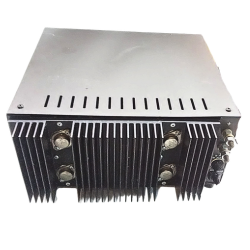
Adequate ventilation remains essential. Operators should avoid enclosing the supply in confined spaces. Proper airflow ensures long component life and consistent regulation.
Transient Response and Dynamic Load Handling
Transmitters create rapidly changing current demands during modulation. The RS-35 handles these fluctuations using stored capacitor energy combined with regulator response.
When current demand spikes suddenly, capacitors discharge briefly to support load. Then the regulator restores equilibrium. This dynamic response prevents voltage sag during peak transmit audio or digital mode duty cycles.
Therefore, communication equipment experiences stable operation even under highly variable power demand.
Over-Voltage Protection and Safety Systems
Internal protection circuits monitor output voltage continuously. If regulation fails or voltage rises above safe limits, protective circuitry disconnects output. This prevents damage to sensitive radio components.
Additionally, the heavy transformer provides electrical isolation from mains supply. Therefore, the DC output remains galvanically separated from AC line potential.
Applications in Radio and Electronics Systems
Operators commonly use the RS-35 for:
- HF and VHF transceivers
- Base station radio installations
- Repeater control equipment
- Test benches
- Accessory power distribution
- High-current DC loads
Because output is clean and stable, the supply supports both analog and digital communication systems.
Performance Advantages of Linear Regulation
Linear power supplies remain popular in RF environments because they provide:
- Extremely low ripple
- Minimal electromagnetic noise
- Stable voltage regulation
- Strong surge capacity
- Predictable thermal behavior
Although switching supplies achieve higher efficiency, linear designs prioritize signal purity and reliability.
Long-Term Reliability Factors
Several characteristics contribute to long service life:
- Conservative transistor operating margins
- Oversized transformer design
- Simple regulator topology
- Passive cooling
- Minimal high-frequency stress
Because fewer switching components operate at high frequency, internal stress remains relatively low. Therefore, properly maintained units can operate for decades
Why the RS-35 Became a Standard Station Power Supply
Many operators consider the RS-35 a benchmark linear supply because it balances current capability, stability, and noise performance. It delivers enough power for most base station radios while maintaining clean output and strong surge handling.
Additionally, the straightforward analog design allows predictable behavior under all operating conditions. Consequently, experienced operators often choose it when reliability and signal quality matter more than size or efficiency.
Astron RS-35A Power Supply
The Astron RS-35A power supply exemplifies classic linear power supply engineering. It delivers regulated voltage through continuous analog control rather than high-frequency switching. As a result, it produces exceptionally clean DC output with minimal ripple and low RF emissions.
Because it combines heavy transformer capacity, large filtering reserves, and robust regulation circuitry, it maintains stable voltage across wide load variations. Furthermore, surge current capability supports demanding transmit conditions without collapse.
For radio operators who require dependable, low-noise DC power, the RS-35 remains one of the most widely trusted linear regulated supplies in continuous service.
Please consider Donating to help support this channel