
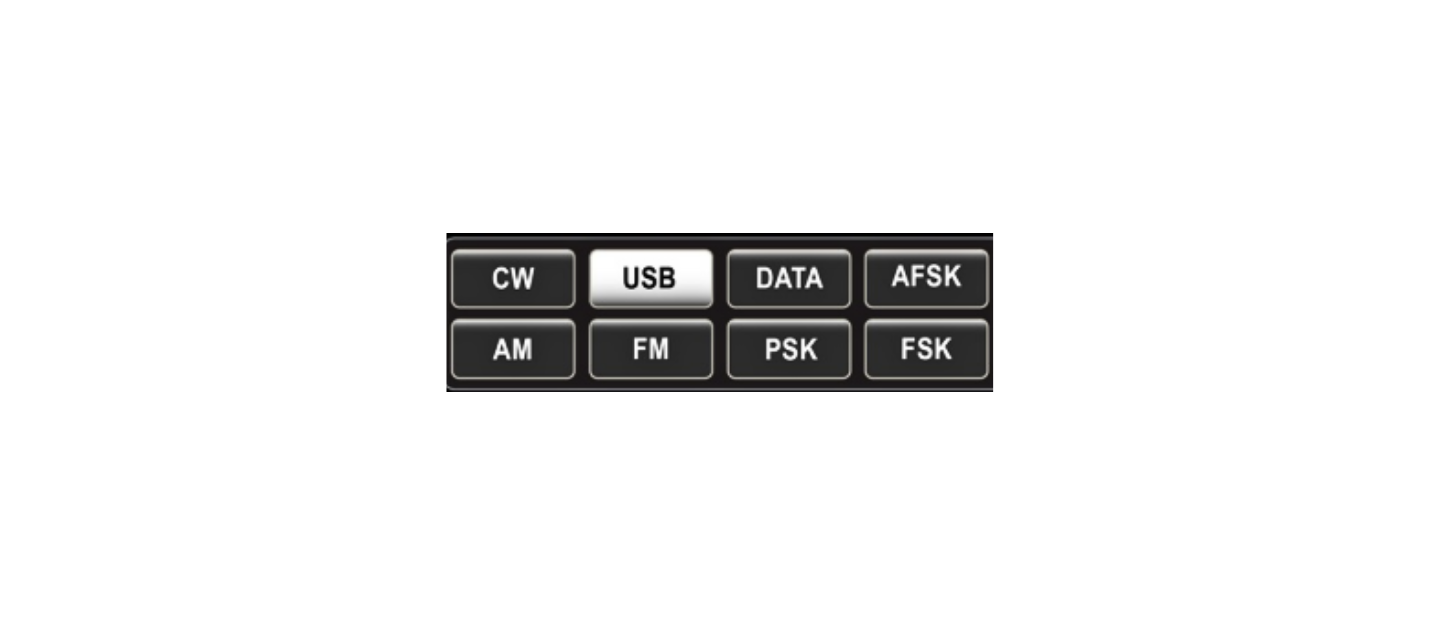
Exploring different operating modes is one of the fastest ways to expand both technical skill and on-air capability in amateur radio. Each mode uses different transmission methods, equipment requirements, and operating procedures. Therefore, learning multiple modes builds a deeper understanding of how radio communication actually works.
Different Operating Modes also perform better under different conditions. Propagation changes constantly, band congestion varies throughout the day, and interference levels shift without warning. Because of this, operators who know only one mode are limited by conditions. However, operators who understand multiple modes can adapt instantly.
New to the hobby? Start with our Complete Guide to Ham Radio Fundamentals.
Voice modes such as Single Sideband and Frequency Modulation provide natural communication and flexibility. Meanwhile, digital modes like FT4 and FT8 excel when signals are weak or bands are crowded. Continuous Wave performs exceptionally well in low signal environments and narrow bandwidth conditions.
By experimenting with multiple operating modes, amateur radio operators gain flexibility, improve efficiency, and dramatically increase their chances of making successful contacts under any conditions.
The Value of Understanding Mode Performance in Changing Propagation
Propagation rarely remains stable for long. Solar activity, atmospheric conditions, and frequency selection all influence signal behavior. As a result, one mode may struggle while another performs extremely well at the same time.
For example, voice communication may become difficult during weak propagation. However, digital weak-signal modes can still decode signals that are barely audible. Similarly, CW can often penetrate noise and interference that would completely block voice transmissions.
Because of these differences, experienced operators select modes strategically rather than habitually. They choose the mode that best matches current band conditions, power limitations, and communication goals.
Learning how each mode behaves under real operating conditions transforms an operator from reactive to adaptive.
Understanding Single Sideband Operation
Single Sideband is the dominant voice mode on the HF bands because it is highly efficient and optimized for long-distance communication.
SSB transmits only one sideband of an amplitude-modulated signal while suppressing the carrier and unused sideband. Because of this, it occupies less bandwidth and concentrates transmitter power into a narrower signal.
This produces several important advantages. First, SSB improves signal-to-noise ratio because more transmitted energy carries useful information. As a result, signals remain intelligible over greater distances.
Second, SSB conserves power. Portable and battery-powered stations benefit significantly from this efficiency.
Third, reduced bandwidth minimizes interference with nearby signals. Therefore, SSB performs well in crowded band conditions.
Because of these characteristics, SSB remains the primary voice mode for DX communication, contesting, and long-range HF operation.
Understanding AM and FM Voice Modes
Amplitude Modulation and Frequency Modulation remain important voice communication methods, although their use varies by band and operating style.
AM varies the strength of the carrier wave to transmit information. Although it uses more bandwidth and power than SSB, it produces natural-sounding audio and simple receiver requirements. Some operators enjoy AM for its audio quality and heritage.
FM operates by varying carrier frequency instead of amplitude. This provides strong resistance to noise and stable audio quality.
Because of this reliability, FM dominates VHF and UHF local communication. Repeaters, handheld radios, and mobile stations commonly rely on FM for dependable short-range operation.
However, FM requires wider bandwidth and is less efficient for long-distance HF communication.
Each voice mode serves a different purpose. AM provides audio quality and simplicity. FM delivers reliable local communication. SSB maximizes efficiency for distance.
Understanding Continuous Wave Operation
Continuous Wave communication uses Morse code to transmit information through timed pulses of a carrier signal. Although CW is one of the oldest operating modes, it remains one of the most effective.
CW signals occupy extremely narrow bandwidth. Because of this, they can be received even when signals are very weak or buried in noise.
Another major advantage is power efficiency. CW contacts can succeed with very low transmit power, making it ideal for portable and low-power operation.
CW also performs exceptionally well in crowded bands because many signals can fit into a small frequency range. Skilled operators can copy signals at high speed by sound alone, a skill often called head copy.
Although learning Morse code requires practice, many operators find CW highly rewarding because it combines technical skill, listening ability, and operating discipline.
Understanding FT4 and FT8 Digital Modes
Modern digital communication has transformed amateur radio, and FT4 and FT8 are among the most widely used digital modes today.
These modes use structured digital transmissions combined with advanced signal processing and error correction. Because of this, they can decode signals far below the human hearing threshold.
FT8 uses timed transmission cycles and automated message exchange. FT4 uses even shorter cycles for faster contact rates.
Both modes allow reliable communication with minimal power and small antennas. As a result, operators routinely complete long-distance contacts that would be impossible using voice modes under the same conditions.
However, these modes focus on structured exchanges rather than conversation. Contacts typically include call signs, signal reports, and location data.
Despite limited interaction, digital modes dramatically expand operating opportunities when propagation is poor.
Additional Digital Modes Worth Exploring
Many other digital modes provide specialized advantages.
RTTY remains popular in contesting because of its reliability and structured exchange format. Frequency shift keying and other digital modulation techniques provide efficient communication under specific conditions.
Exploring multiple digital modes broadens technical knowledge and improves operating versatility.
Amateur Radio Operating Mode Comparison
| Mode | Bandwidth | Power Efficiency | Weak Signal Performance | Best Use |
|---|---|---|---|---|
| SSB | Medium | High | Moderate | Long-distance voice |
| FM | Wide | Moderate | Low | Local communication |
| AM | Wide | Low | Low | Audio quality and heritage operation |
| CW | Very narrow | Extremely high | Excellent | Weak signal and low power |
| FT8 | Very narrow | Extremely high | Outstanding | Weak signal DX |
| FT4 | Very narrow | Extremely high | Excellent | Fast digital contacts |
Choosing the Best Mode for Your Operating Goal
If your goal is natural conversation, voice modes provide the best experience. When your goal is long-distance communication with limited power, CW and digital modes perform better. If your goal is local reliability, FM is ideal.
Experienced operators switch modes depending on conditions rather than relying on a single method.
How Experimentation Builds Long-Term Skill
Experimentation drives learning. Each operating mode teaches different aspects of radio communication.
Voice operation develops conversational procedure and frequency awareness. CW strengthens listening skill and signal recognition. Digital modes introduce signal processing and software integration.
As operators experiment, they gain deeper understanding of propagation, noise behavior, and equipment performance. Over time, this knowledge produces better station setup, faster troubleshooting, and more reliable communication.
Why Mode Diversity Improves Overall Amateur Radio Capability
No single operating mode performs best in every situation. Conditions change constantly. Equipment limitations vary. Communication goals differ.
Operators who understand multiple modes can always choose the most effective method. This adaptability improves success rates, technical understanding, and overall enjoyment of amateur radio.
Final Thoughts on Exploring Different Operating Modes
Amateur radio offers far more than a single communication method. It provides a wide range of operating modes designed for different goals, conditions, and technical approaches.
Exploring multiple modes builds flexibility, improves efficiency, and deepens technical knowledge. More importantly, it allows operators to communicate successfully even when conditions become difficult.
Those who experiment with voice, CW, and digital transmission gain the ability to adapt instantly to changing propagation and band conditions. As a result, they make more contacts, operate more effectively, and experience the full technical depth that amateur radio offers.
Frequently Asked Questions About Amateur Radio Operating Modes
What is the most efficient amateur radio mode?
Continuous Wave and digital weak-signal modes are the most power-efficient because they use extremely narrow bandwidth and advanced decoding.
Which mode works best during poor propagation?
FT8, FT4, and CW perform best when signals are weak or conditions are unstable.
Why do HF operators prefer SSB?
SSB provides efficient long-distance voice communication while conserving power and bandwidth.
Is Morse code still useful today?
Yes. CW remains one of the most reliable weak-signal communication methods available.
Should beginners learn multiple modes?
Yes. Learning multiple modes greatly improves adaptability and increases successful contact opportunities.
Please consider Donating to help support this channel