
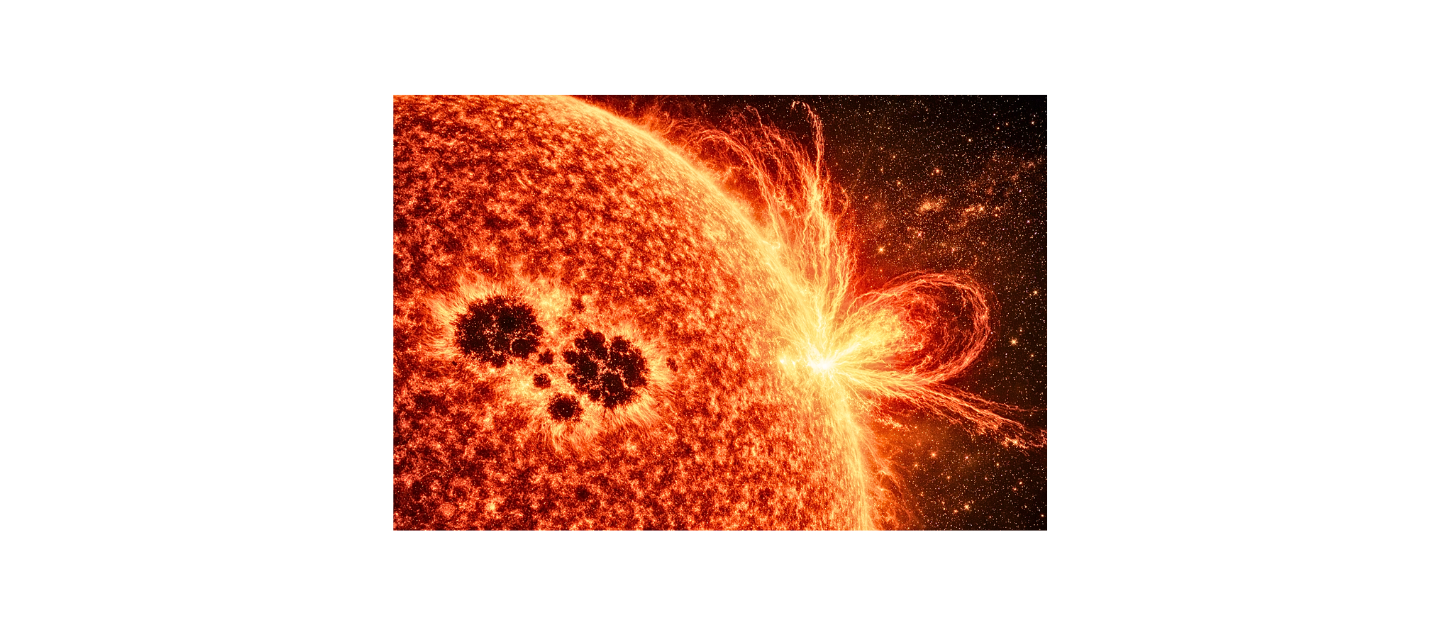
Why Predicting Solar Flares Matters
Solar flares are one of the most disruptive forces affecting high-frequency (HF) radio propagation. Unlike gradual solar changes, flares can produce immediate and severe impacts, including sudden radio blackouts across large portions of the Earth. For amateur radio operators, the ability to anticipate these events provides a measurable advantage.
HF communication depends on the ionosphere, which is directly influenced by solar radiation. When a solar flare occurs, it injects a burst of energy into the upper atmosphere, changing how radio waves are absorbed and refracted. Without warning, bands that were previously active can go silent.
Operators who understand solar flare behavior and monitor solar data can avoid these disruptions or adapt quickly. Instead of reacting to poor conditions, they operate strategically.
Want to learn more about propagation? Try Complete Guide to Ham Radio Propagation
What Solar Flares Actually Do to HF Signals
Solar flares emit intense radiation across multiple wavelengths, particularly X-rays and extreme ultraviolet radiation. These signals travel at the speed of light and reach Earth in approximately eight minutes.
When this radiation hits the ionosphere, it significantly increases ionization in the D layer. This layer is responsible for absorbing HF signals, especially on lower frequencies. During a flare, absorption rises sharply, causing signals to weaken or disappear entirely.
The effect is most pronounced on the sunlit side of Earth. Operators in daylight regions may experience a sudden ionospheric disturbance, often referred to as an HF blackout. Lower bands such as 40 meters and 80 meters are typically affected first, while higher bands may remain partially usable depending on severity.
Understanding this mechanism is critical, because it explains why propagation can collapse so quickly during solar events.
Understanding Solar Flare Classifications
Solar flares are categorized based on their X-ray intensity. This classification provides a direct indication of how severe their impact on HF propagation is likely to be.
- C-class flares are relatively weak and rarely cause significant disruption
- M-class flares are moderate and can degrade signals, especially on lower bands
- X-class flares are extremely powerful and can produce full HF blackouts
Each category represents a tenfold increase in energy. For example, an X1 flare is ten times stronger than an M1 flare. Higher-level X-class events, such as X5 or X10, can cause widespread and severe disruption.
For practical operation, M-class flares should be treated as warnings, while X-class flares should be treated as immediate operational threats.
Early Warning Signs of Solar Flares
Although solar flares occur suddenly, there are indicators that increase the likelihood of flare activity. Monitoring these signs allows operators to anticipate potential disruptions.
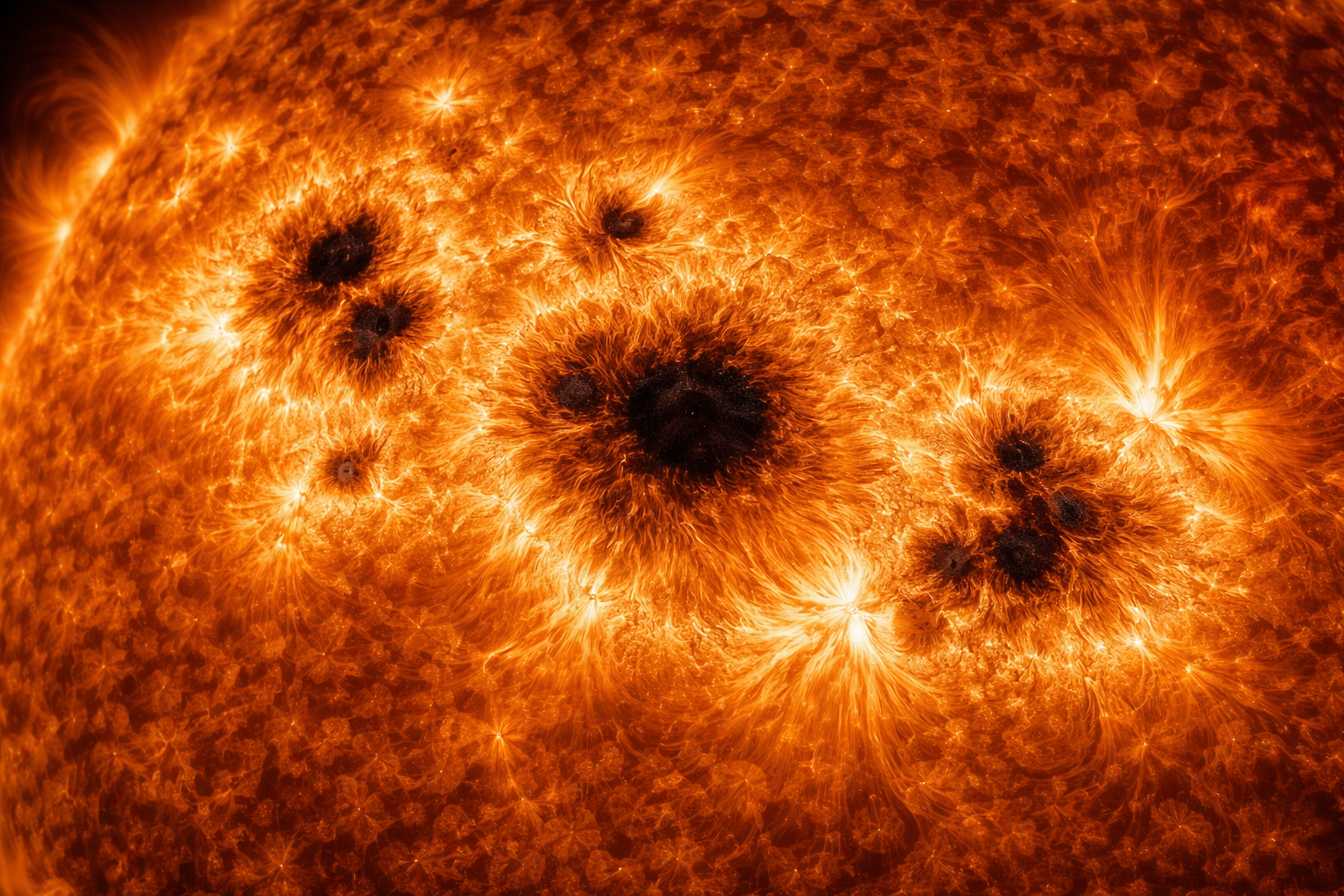
Active sunspot regions are the most important factor. Large, magnetically complex sunspot groups are more likely to produce flares. When these regions grow rapidly or show structural changes, the probability of flare activity increases.
Rising background X-ray flux is another key indicator. An upward trend suggests that the sun is entering a more active state. While this does not guarantee a flare, it signals elevated risk.
These indicators do not provide exact timing, but they offer enough warning to adjust operating plans.
Key Data Sources for Solar Flare Prediction
Accurate prediction depends on reliable real-time data. Several types of sources provide the information needed to monitor solar activity effectively.
- Space weather dashboards displaying X-ray flux and flare activity
- Solar observatories tracking sunspots and magnetic complexity
- Amateur radio tools integrating propagation and solar indices
Using multiple sources improves accuracy and reduces the chance of missing critical changes. No single data point tells the full story, but combined data provides a clear operational picture.
How Solar Flares Differ from CMEs
Solar flares and coronal mass ejections are related but behave very differently in terms of HF propagation. Solar flares produce immediate effects due to electromagnetic radiation. Their impact is almost instantaneous and typically short-lived.
Coronal mass ejections involve massive clouds of charged particles that travel more slowly. They can take hours or days to reach Earth, but when they arrive, they can trigger geomagnetic storms lasting several days.
For operators, this means solar flares require immediate reaction, while CMEs allow time for preparation.
Practical Operating Strategies During Solar Flares
When a solar flare occurs, conditions can change rapidly. Having a clear response strategy prevents wasted time and improves results.
- Shift to higher frequencies, which may remain usable longer
- Focus on regional communication instead of long-distance DX
- Monitor signal reports and band activity continuously
- Pause operation during strong X-class events if bands collapse
The key is flexibility. Operators who adapt quickly can still find usable propagation even during disturbed conditions.
Using Solar Data to Avoid Blackouts
Avoiding solar flare impact entirely is often more effective than trying to operate through it. This requires consistent monitoring and proactive decision-making.
If solar data shows increasing activity or alerts indicate flare risk, adjusting operating times can make a significant difference. Operating before or after peak disturbance often produces better results.
Combining flare data with geomagnetic indices such as the K-index provides a more complete understanding of current and upcoming conditions.
Advanced Insight: Timing and the Sunlit Side of Earth
Solar flare effects are strongest on the sunlit side of Earth. This means operators in daylight regions experience the most severe disruptions.
Operators near the grayline, where day transitions to night, may experience less severe effects. In some cases, propagation along this boundary can remain viable even during disturbances.
Understanding your position relative to the sun allows you to make better decisions about when to operate and when to wait.
Staying Ahead With Real-Time Alerts
Real-time monitoring tools are essential for staying ahead of solar activity. Alerts for X-ray flux increases and flare events allow operators to respond immediately.
Setting up notifications ensures that you are aware of changes as they happen. This prevents wasted operating time and allows for quick adjustments. Consistent monitoring is one of the most effective ways to improve HF operating success.
Advanced Operator Insight: Pattern Recognition and Trend Tracking
Experienced operators do not rely on single data points. Instead, they look for patterns in solar activity over time. A steady increase in solar activity often signals an increased likelihood of flare events. Conversely, stable conditions with low background activity suggest lower risk.
Keeping a log of solar data alongside operating results helps build long-term understanding. Over time, this improves your ability to anticipate conditions and make informed decisions.
Turning Solar Flare Data Into an Advantage
Solar flares cannot be prevented, but their impact can be managed. By understanding how they affect the ionosphere and learning how to interpret solar data, operators can anticipate disruptions and adjust accordingly.
This transforms solar flare activity from an unpredictable obstacle into a manageable factor. With consistent monitoring and experience, you gain control over your operating environment and improve overall success on HF bands.
FAQ
What is a solar flare in ham radio?
A solar flare is a burst of radiation from the sun that can disrupt HF radio propagation and cause signal loss or blackouts.
How do solar flares affect HF communication?
They increase ionization in the D layer, causing signal absorption and potential radio blackouts.
Can you predict solar flares?
You can monitor sunspot activity and X-ray flux trends to anticipate increased flare risk.
What is the difference between solar flares and CMEs?
Solar flares cause immediate disruption, while CMEs cause delayed but longer-lasting geomagnetic storms.
Which flare class is most dangerous for HF radio?
X-class flares are the most disruptive and can cause complete HF blackouts.
Should you operate during a solar flare?
It depends on severity, but strong flares often make HF operation ineffective, especially on lower bands.
About the Author
Vince, W2KU, is a licensed Extra class amateur radio operator and the founder of Ham Shack Reviews. He was named Amateur of the Year in 2026 for contributions to practical amateur radio education and equipment evaluation.
He knows propagation very well, operates mobile and handhelds daily. Vince exchanges QSL cards for DXCC, contest confirmation, and award tracking and is the club QSL manager. His guidance focuses on practical operating procedures, accurate logging, and real-world amateur radio practices.
Please consider Donating to help support this channel