
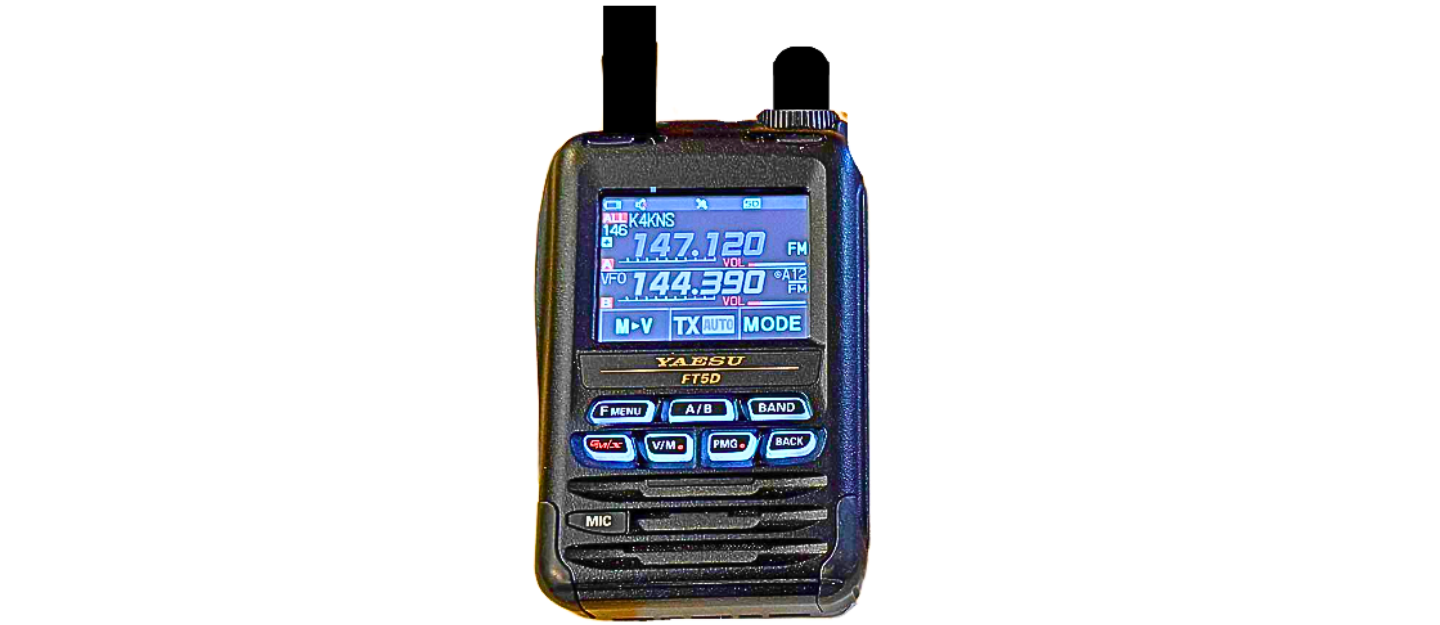
The Yaesu FT5DR Mars Modification (often referred to as MARS/CAP modification or frequency expansion) to enable transmit capability outside the standard amateur band limits. This modification changes how the radio handles frequency restrictions, and therefore it significantly alters how the transceiver operates.
This guide explains exactly what the modification is, why operators perform it, how it works electronically, and what technical and operational effects you should understand before attempting it.
What the MARS Modification Actually Means
The term MARS refers to the Military Auxiliary Radio System, while CAP refers to the Civil Air Patrol. These organizations operate on frequencies outside the standard amateur radio allocations. Therefore, radios used for official service must transmit on those non-amateur channels.
Manufacturers ship most amateur radios with transmit limits programmed into firmware or hardware configuration. As a result, the radio will not transmit outside specific band segments even if the hardware could physically do so.
The MARS modification removes or bypasses those transmit restrictions.
In practical terms, the modification expands transmit coverage beyond the amateur allocations. Although receive coverage already spans wide ranges, transmit becomes unlocked. Consequently, the FT5DR can transmit on additional VHF and UHF frequencies that were previously blocked.
Why Operators Perform the Modification
Operators perform the modification for several distinct reasons. First, authorized MARS or CAP members require transmit capability on assigned frequencies. Without the modification, the radio cannot legally or technically operate on those channels.
Second, emergency communications groups sometimes operate on shared public-service or interoperability frequencies. Therefore, expanded transmit capability may support coordinated response work where permitted.
Third, some radio experimenters want full hardware capability available for testing or monitoring system behavior across wider ranges. However, legality always depends on licensing and authorization. The modification only changes radio capability, it does not grant permission to transmit anywhere.
How the FT5DR Restricts Transmit Frequencies
The FT5DR enforces transmit limits through internal configuration logic. Manufacturers implement these limits for regulatory compliance in different regional markets.
Inside the radio, the microcontroller references configuration data that determines allowable transmit segments. If the selected frequency falls outside permitted ranges, the radio blocks transmission.
This control may exist in firmware, configuration memory, or hardware identification coding. Therefore, changing the configuration removes the software restriction while leaving the RF circuitry unchanged.
The RF stages already cover a wider tuning range than amateur allocations alone. Consequently, removing the restriction does not alter core RF hardware — it only changes operational permission.
What the Modification Changes in Actual Operation
After modification, the FT5DR typically behaves differently in several important ways.
First, transmit frequency entry becomes unrestricted within the radio’s broader hardware range. Therefore, frequencies that previously produced a transmit error now key normally.
Second, memory channels programmed outside amateur bands become fully usable for transmit.
Third, band-edge protections may disappear. As a result, the radio no longer warns or blocks operation at regulatory boundaries.
However, modulation type, output power capability, and receiver behavior remain unchanged. The modification does not increase power or improve sensitivity. It only removes frequency limits.
Typical Frequency Expansion Behavior
While exact ranges depend on firmware region and modification method, expansion generally allows transmit across much wider VHF and UHF segments.
Operators commonly observe transmit capability extending well beyond amateur VHF and UHF allocations. Therefore, the radio effectively becomes a wideband transceiver rather than a band-restricted amateur unit.
However, transmit performance may vary outside the intended amateur design range. For example, power output and spectral purity may not match specifications at extreme edges.
Consequently, expanded capability does not guarantee optimal RF performance everywhere.
Yaesu FT5DR Mars Modification Step By Step
Step 1 — Prepare the Radio and Work Area
First, power the radio completely off. Then remove the antenna so it does not interfere while handling the unit. Next, remove the battery pack from the rear of the radio.
Place the radio face down on a clean, static-safe surface. Good lighting is essential because the resistor is very small.
Step 2 — Locate the Round Rubber Access Plug
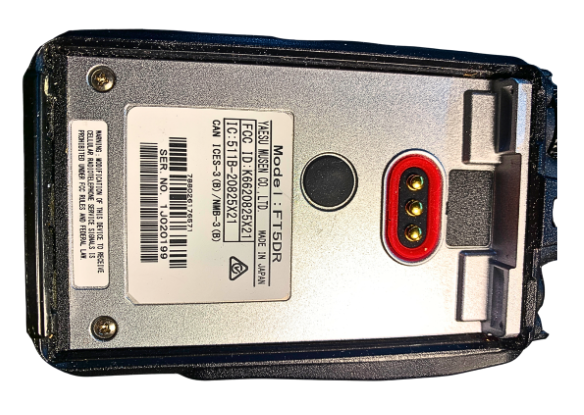
Next, inspect the rear chassis area of the radio body where the battery normally sits. You will see a small round rubber insert recessed into the metal or plastic frame.
This plug seals the factory access point to the configuration resistor used to set transmit limits. Therefore, removing this plug exposes the exact component used for the MARS modification.
Step 3 — Remove the Rubber Plug
Now carefully lift the edge of the rubber insert using a plastic pick, fine tweezers, or a non-metal probe. Do not puncture the plug if you intend to reinstall it later.
Slowly pull the plug straight out of the opening. Once removed, set it aside somewhere clean and safe.
You will now see a small recessed cavity with a surface-mount resistor or solder pad visible at the bottom.
Step 4 — Identify the Restriction Resistor
Look directly into the access hole using magnification if available. At the bottom, you should see a very small rectangular surface-mount resistor bridging two contact pads.
This component provides the region configuration signal that limits transmit range. Therefore, removing or opening this resistor disables the restriction.
Confirm that you clearly see the component before proceeding.
Step 5 — Choose a Removal Method
Because the resistor sits inside a narrow access well, you must use a very fine tool. Operators typically use one of the following methods:
• Precision micro flush cutters
• Fine dental pick or needle to break the resistor
• Ultra-fine soldering tip to lift one side
The goal is simple — electrically open the connection so the resistor no longer bridges the pads.
Step 6 — Remove or Break the Resistor
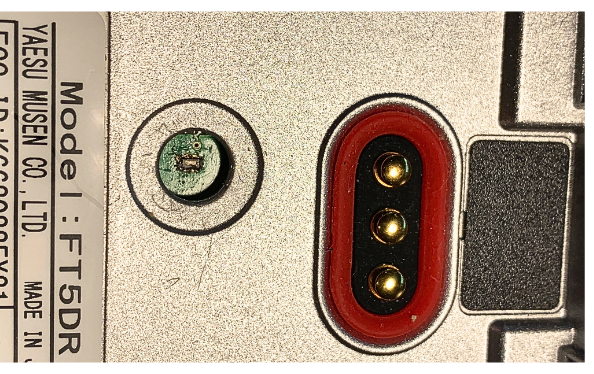
Carefully insert your chosen tool straight down through the access opening. Then gently apply pressure to the resistor. If using a needle or pick, press sideways to crack or lift the component. If using a soldering tip, heat one end briefly and lift it free.
Work slowly because slipping can damage surrounding pads. However, minimal force is usually sufficient because these resistors are very small. Once the resistor breaks loose or separates from one pad, the electrical path is open and the modification is complete.
Step 7 — Verify the Resistor Is Fully Open
After removal or breakage, inspect the cavity again. You should see either:
•The resistor missing entirely, or
•The resistor no longer touching both pads
If any fragment still bridges the contacts, remove it carefully. A clean open circuit is required for the radio to detect the new configuration.
Step 8 — Clean the Access Are
You can see I have the to pad clean, the bottom pad has some solder on it but they are not touching. Since it is so small and with the limited access I decided to leave it there,
If debris remains in the cavity, gently remove it with compressed air or a soft non-conductive probe. Cleanliness matters because conductive fragments could reconnect the pads or cause instability.
Step 9 — Reinstall the Rubber Plug
Once you confirm the resistor is fully open, press the rubber plug back into the access hole.
This step restores the environmental seal and protects the internal electronics from dust and moisture.
Ensure the plug sits flush with the surrounding surface.
Step 10 — Reinstall Battery and Power On
Now reinstall the battery pack and reattach the antenna. Then power the radio on normally.
At this stage, the hardware change exists, but the radio may still operate with old configuration data. Therefore, you must reset the radio.
Step 11 — Perform a Full Factory Reset
Initiate the FT5DR full reset procedure to clear stored configuration memory. This reset forces the processor to read the new hardware coding created by removing the resistor.
Because this step erases stored channels and settings, restore programming afterward if needed.
Step 12 — Confirm Expanded Transmit Operation
After reset, enter a frequency that previously would not allow transmission but remains within the radio’s hardware capability.
Key the transmitter briefly. If transmission occurs normally, the modification succeeded.
However, if transmit remains blocked, power off and re-inspect the resistor cavity to ensure the electrical bridge is completely open.
Step 13 — Perform Functional Checks
Finally, verify that normal radio operation remains stable. Check receive audio, transmit audio, power output, and menu functions.
Risks Involved With the Modification
The modification carries both technical and operational risks.
First, physical damage is possible during disassembly or soldering. Surface-mount components are delicate, and lifting pads can permanently destroy the board.
Second, warranty coverage usually becomes void once internal modifications occur. Therefore, manufacturer repair support may no longer apply.
Third, unintended transmission outside legal allocations can occur easily after expansion. Consequently, regulatory violations become more likely if operators are not careful.
Fourth, RF performance outside amateur bands may degrade. Harmonics or spurious emissions could exceed acceptable limits because the radio was not optimized for those ranges.
Legal and Regulatory Considerations
The modification does not automatically authorize operation on new frequencies.
Transmission authority depends entirely on licensing and official assignment. For example, MARS or CAP members receive specific frequency authorization through their organizations.
Without proper authorization, transmitting outside amateur allocations violates communication regulations.
Therefore, many operators perform the modification but only transmit within amateur bands unless officially assigned otherwise.
Operational Effects After Modification
Once modified, the FT5DR behaves more like a wideband communications transceiver. Programming flexibility increases dramatically. However, operational discipline becomes more important because safeguards no longer prevent out-of-band transmission.
Memory management also changes. Operators often label expanded-range channels carefully to prevent accidental keying. In addition, some digital features may not function correctly on non-standard channels. For example, network-linked digital systems expect specific band usage.
When the Modification Makes Sense
The modification makes practical sense under certain conditions. Authorized auxiliary service members need expanded transmit capability for official duties. Likewise, technical experimenters may require unrestricted tuning for RF evaluation.
However, casual operators who only use amateur repeaters typically gain little benefit. Therefore, many users choose not to modify modern handhelds unless a specific operational requirement exists.
Technical Best Practices After Expansion
After completing the modification, operators should verify transmitter performance across any newly used frequencies. Measuring output power, deviation, and spectral cleanliness ensures safe operation. Additionally, careful frequency labeling helps prevent accidental misuse.
Regularly reviewing programming also helps maintain compliance and operational clarity.
Yaesu FT5DR Mars Modification
The Yaesu FT5DR MARS modification does not change the radio’s core RF design. Instead, it removes regulatory transmit restrictions built into configuration logic. Consequently, the transceiver gains wideband transmit capability while retaining its original hardware characteristics.
For authorized users, this modification enables multi-service communications flexibility. However, it also shifts full responsibility for frequency control to the operator. Understanding that responsibility, both technical and regulatory is the most important part of operating a modified FT5DR correctly.
Please consider Donating to help support this channel