
Complete Guide to Ham Radio Antenna Tuners
Complete Guide to Ham Radio antenna tuners, the antenna tuner is one of the most misunderstood yet essential tools in a ham radio station. While antennas radiate the signal and transmitters generate power, the tuner ensures that RF energy flows efficiently from the radio into the antenna system. Without proper impedance matching, much of your transmitted power can reflect back toward the transmitter instead of reaching the antenna. A tuner solves this mismatch and allows your station to operate efficiently across multiple frequencies.
Despite the name, an antenna tuner does not actually tune the antenna itself. Instead, it matches the electrical impedance of the antenna system to the impedance expected by the transmitter, typically 50 ohms. This matching process allows maximum power transfer and protects sensitive radio components from excessive reflected energy.
Understanding how tuners work, when to use them, and how to select the right type is critical for efficient operation, especially when working multiple bands or using non-resonant antennas.
Please consider Donating to help support this channel
Why Impedance Matching Matters
Every antenna system has an electrical impedance that varies with frequency, height above ground, surrounding objects, and feedline characteristics. When the impedance of the antenna system differs from the output impedance of the transmitter, some of the transmitted energy reflects back toward the radio instead of radiating outward.
This reflected energy is measured as Standing Wave Ratio, or SWR.
High SWR can cause:
reduced transmitted power
distortion in transmitted signal
heating in feedline components
stress on transmitter output stages
automatic power reduction in modern radios
An antenna tuner adjusts the impedance seen by the transmitter so that energy flows efficiently into the feedline and antenna.
What an Antenna Tuner Actually Does
A tuner uses inductors and capacitors to transform impedance. By adjusting these reactive components, the tuner creates a matching network that presents a 50-ohm load to the transmitter, even if the antenna system itself is not 50 ohms.
This allows the transmitter to operate normally and deliver full power.
However, the tuner does not eliminate loss in the antenna system. If the antenna or feedline is inefficient, the tuner simply allows the transmitter to feed power into that system more effectively. It does not make a poor antenna perform like an ideal one.
Types of Antenna Tuners
Different tuner designs serve different station requirements. Choosing the right type depends on operating style, antenna configuration, and power level.
Manual Antenna Tuners
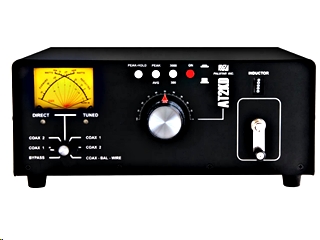
Manual tuners use adjustable controls that allow the operator to select capacitor and inductor values. The operator adjusts controls while monitoring SWR or reflected power until a proper match is achieved.
Advantages include flexibility, wide matching range, and ability to handle difficult loads. Manual tuners are popular with multiband wire antennas, ladder line systems, and experimental antenna configurations.
They require operator skill and time to adjust, especially when changing frequency.
Automatic Antenna Tuners
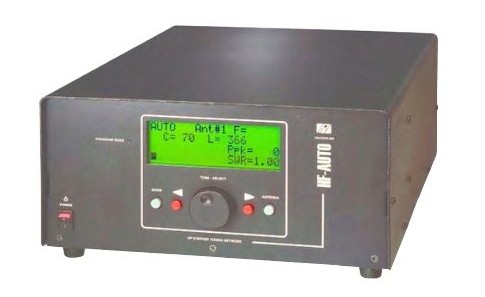
Automatic tuners use relays and microprocessor control to select matching components automatically. When the operator transmits briefly, the tuner measures impedance and selects the best match within seconds.
Advantages include convenience, rapid band changes, and ease of operation. Many modern transceivers include internal automatic tuners, though these typically handle only moderate mismatches.
External automatic tuners often provide wider matching range and higher power capability.
Internal vs External Tuners
Many transceivers include built-in automatic tuners. These are convenient and compact, but they typically handle limited SWR ranges and moderate power levels.
External tuners provide greater flexibility and performance. They can handle larger mismatches, higher power levels, and more complex antenna systems. External tuners are commonly used with long-wire antennas, multiband dipoles, and ladder-line-fed systems.
Balanced and Unbalanced Tuners
Feedlines can be balanced or unbalanced. Coaxial cable is unbalanced, while ladder line and open-wire line are balanced.
Some tuners are designed specifically for one type, while others include internal baluns or balanced output terminals. Using the correct tuner type helps maintain proper current distribution and reduces unwanted RF in the station.
Tuner Circuit Designs
Several matching network designs are commonly used.
The L-network uses one inductor and one capacitor. It is simple and efficient but may have limited matching range.
The T-network uses two capacitors and one inductor. It offers wide matching capability and is common in manual tuners.
The Pi-network uses two capacitors with an inductor between them. It is often used in transmitter output stages and some tuner designs.
Each design offers tradeoffs between efficiency, tuning range, and complexity.
Where to Place the Antenna Tuner
Most operators place the tuner between the transmitter and the feedline. This protects the transmitter from mismatch and ensures proper power delivery into the feedline.
However, when feedline loss is high due to severe mismatch, placing the tuner at the antenna feedpoint may improve efficiency. Remote tuners mounted outdoors are common in long-wire and vertical antenna systems.
Using Tuners with Multiband Antennas
Many antennas are resonant only on specific frequencies. A tuner allows operation across multiple bands by compensating for impedance changes as frequency shifts.
This makes tuners especially valuable with:
- long-wire antennas
- off-center-fed dipoles
- random wire antennas
- ladder-line-fed antennas
- non-resonant multiband systems
Tuners provide flexibility that allows a single antenna to operate across many bands.
Tuner Power Ratings
Tuners must be rated for the power level of the transmitter. Using a tuner beyond its rated capacity can cause component overheating, arcing, or failure.
Digital modes with continuous transmission require special attention because average power is sustained for long periods.
Always select a tuner with adequate power margin.
Losses and Efficiency
Tuners introduce small losses due to component resistance and heating. In well-designed systems, these losses are minor. However, when matching extremely high impedance ratios, losses may increase.
Minimizing feedline loss and using efficient antennas remains important even when using a tuner.
Common Misconceptions About Tuners
A tuner does not make an antenna resonant.
A tuner does not improve radiation efficiency.
A tuner does not eliminate feedline loss.
A tuner simply allows the transmitter to deliver power into the antenna system effectively.
When You Need an Antenna Tuner
A tuner is useful when operating multiband antennas, non-resonant antennas, portable wire systems, or installations where antenna adjustment is impractical.
Operators using resonant single-band antennas with proper matching may not need a tuner at all.
Practical Operating Tips
Tune at reduced power when possible.
Avoid tuning on occupied frequencies.
Verify SWR after band changes.
Monitor tuner temperature during long transmissions.
Use appropriate feedline for antenna type.
Proper tuning habits extend equipment life and improve signal quality.
Complete Guide to Ham Radio Antenna Tuners
Complete Guide to Ham Radio Antenna Tuners, the antenna tuner is a critical interface between the transmitter and antenna system. It ensures efficient power transfer, enables multiband flexibility, and protects radio equipment from impedance mismatch. While it cannot compensate for poor antenna design or excessive feedline loss, it allows operators to use a wide range of antenna systems effectively across multiple frequencies.
Understanding how tuners work and how to use them properly gives operators greater flexibility, better station performance, and more reliable communication across the amateur radio spectrum.
Please consider Donating to help support this channel