
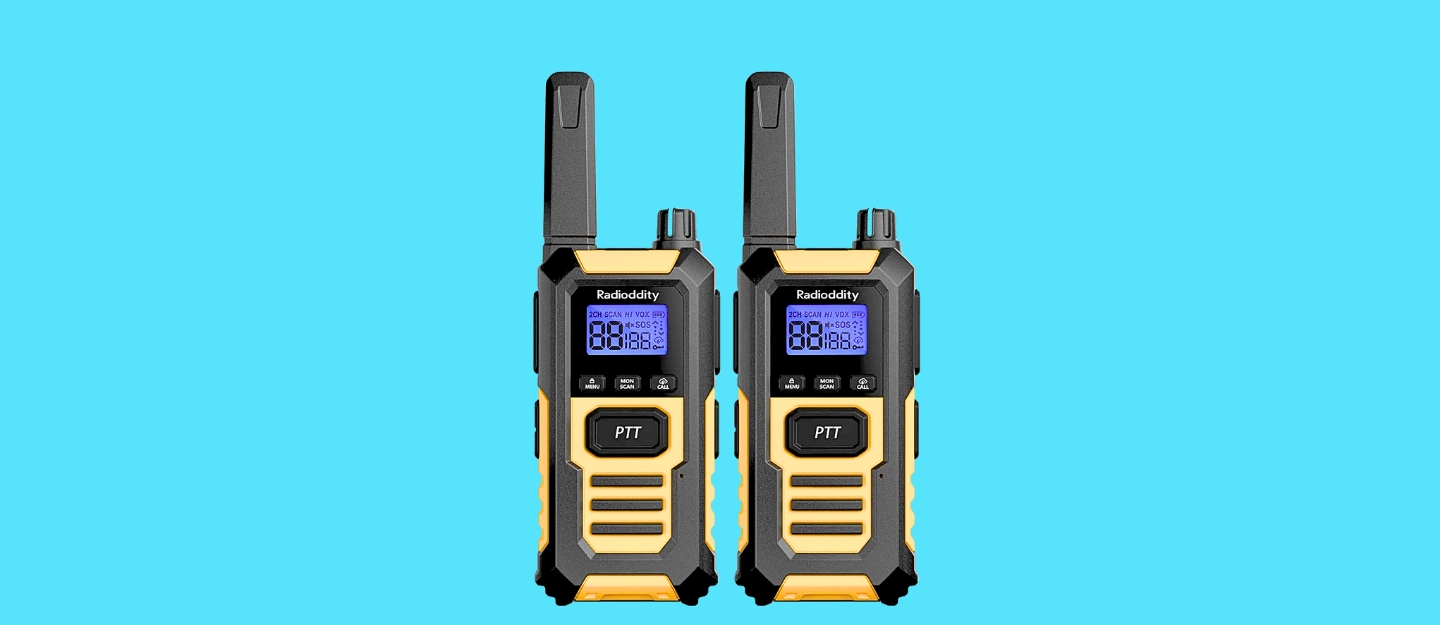
Finding the best FRS radios and antennas helps improve short-range communication for camping trips, off-road travel, community events, and everyday outdoor use. FRS, or Family Radio Service, uses license-free UHF channels for simple local communication without complicated setup.
FRS radios are popular because they are easy to use, widely available, and practical for families, hikers, and casual users who need dependable voice communication. While terrain and obstructions affect range, stronger radio design and better signal efficiency can improve clarity and real-world performance.
For users who need simple communication without licensing, FRS remains one of the most practical and accessible radio services available.
For a full overview of this technology and related systems, see our Complete Guide to Two-Way Radios
Understanding How FRS Radios Work
FRS radios use narrowband FM on frequencies between 462 and 467 MHz and are limited to 2 watts of power with fixed antennas. Because of these limits, they don’t require an FCC license.
Some FRS and GMRS radios share channels, allowing limited cross-compatibility, but FRS users cannot use repeaters. The fixed antenna design means performance depends largely on antenna quality, location, and the surrounding environment.
What Makes a Great FRS Radio
The best FRS radios deliver consistent range, crisp audio, and durable construction. Features like NOAA weather alerts, privacy codes, and hands-free VOX add usability. Many FRS radios include rechargeable battery packs and support AA batteries for flexibility.
Although claims of 30-mile range are common, real-world performance typically ranges from one to five miles depending on terrain, weather, and interference.
Recommended FRS Radios
- Radioddity HD-1 -It offers dual-band DMR and analog capability, GPS support, and rugged design, perfect for reliable amateur radio communication.
- Motorola Talkabout T800 – A modern FRS radio with Bluetooth connectivity and app integration, allowing text messaging and GPS location sharing. It is ideal for groups that want both voice and data communication in areas without cell coverage.
- Midland X-Talker T77VP5 – Known for solid build quality, long battery life, and clear sound. This model includes privacy codes, headsets, and dual charging options, making it a practical choice for families or teams in the field.
- Cobra CXT195 –Compact and affordable, the CXT195 delivers reliable short-range communication and simple operation. It is a strong fit for casual users who want basic performance and good value.
- Motorola Talkabout T605 H2O – Its waterproof floating design makes it well suited for boating, wet weather, and outdoor use where added durability matters. It also includes weather alerts and emergency lighting.
- Midland LXT600VP3 – Offers practical value with 36 channels, 121 privacy codes, and rechargeable battery packs. It is a solid option for outdoor trips and general everyday communication.
Antennas That Improve FRS and GMRS Performance
FRS radios use fixed antennas, so direct antenna upgrades are not part of standard FRS operation. Because of that, real FRS range improvement comes from better radio placement, better terrain, and cleaner line of sight.
Antenna upgrades become more relevant in GMRS or combination radio setups where external antennas can improve signal performance and usable range. The following antennas are commonly used in GMRS-capable mobile, handheld, or mixed-service setups:
- Nagoya UT-72G Magnetic Mount Antenna – This 19-inch antenna offers excellent gain and flexibility for mobile GMRS use. The magnetic base allows easy mounting on vehicles and provides significantly better range than built-in handheld antennas.
- Midland MXTA26 6dB Gain Whip – Designed for Midland Micro-Mobile radios, it provides increased gain and solid performance for longer-distance communication. Its stainless-steel construction resists wind and weather.
- BTECH Nagoya NA-771G – Suitable for GMRS and amateur bands, the Tram 1170 provides wide coverage with strong durability for fixed or vehicle setups.
- Tram 1170 Dual-Band Antenna – Suitable for both GMRS and amateur bands, the Tram 1170 provides wide coverage with excellent durability. It’s ideal for fixed or vehicle setups where higher performance is needed.
- Diamond MR77 Dual-Band Magnetic Mount – Known for reliable signal handling and easy installation, this antenna is a practical choice for users who operate GMRS and VHF/UHF systems.
Factors That Affect FRS Radio Range
FRS range depends more on terrain, obstructions, and line of sight than advertised distance claims. Buildings, hills, trees, and dense urban areas can reduce usable range quickly, even with good radios.
In open areas, FRS radios can cover several miles with a clear signal path. In forests, neighborhoods, or rough terrain, range often drops significantly. Elevation, fewer obstructions, and cleaner signal paths usually improve performance more than radio branding alone.
Tips for Getting the Best Performance
Always keep your radios fully charged, and test them before heading out. Use VOX for hands-free operation when hiking or working with gear. Regularly inspect the antenna and battery contacts for dirt or corrosion. For vehicle use, ensure the magnetic mount antenna is well-grounded to maximize signal strength.
FRS vs GMRS for Everyday Use
FRS is best for simple license-free communication with fixed antennas and easy operation. GMRS offers more power, removable antennas, and repeater access, but it requires a license.
For casual users, FRS is usually the simpler choice. For users who need more range and flexibility, GMRS is often the better long-term option.
Final Thoughts on the Best FRS Radios & Antennas
The best FRS radios are the ones that deliver clear audio, dependable short-range communication, and simple operation in real-world conditions. For most users, battery life, ease of use, and reliable signal performance matter more than advertised range claims.
Please consider Donating to help support this channel