
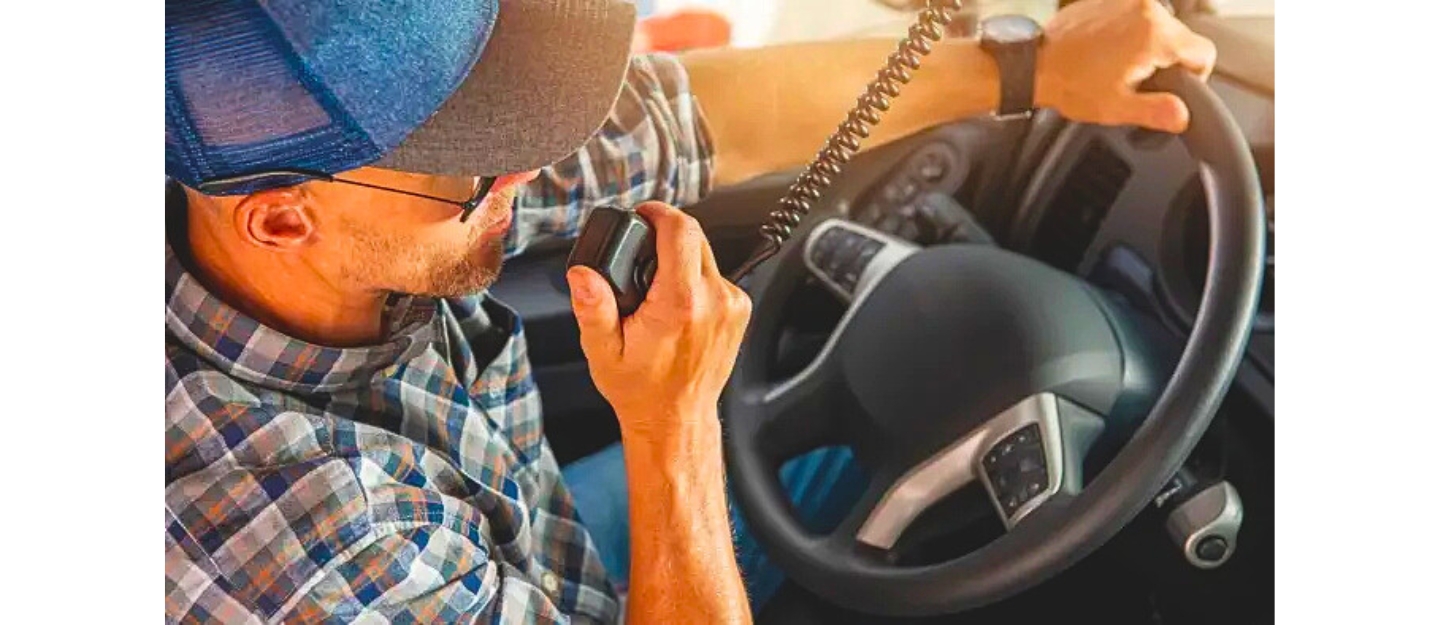
Citizens Band radio lingo began with CB as a practical communication service designed for everyday people rather than trained radio professionals. In the mid-20th century, governments recognized the need for short-range personal communications, and therefore they created a radio service that required minimal technical knowledge.
Initially, CB radio served businesses such as delivery services, small contractors, and local operations. However, hobbyists quickly discovered its potential, and they embraced it as a new way to connect with others beyond the reach of the telephone.
For a full overview of this technology and related systems, see our Complete Guide to Two-Way Radios
Early Adoption and Public Interest
As CB radios became more affordable, interest grew rapidly among the general public. Meanwhile, manufacturers improved equipment design, which made radios smaller, more reliable, and easier to install in vehicles. Consequently, CB radio moved from a niche utility into mainstream culture.
Additionally, truck drivers adopted CB as a vital tool for sharing road conditions, traffic alerts, and safety warnings. Because of this practical value, CB radio developed a strong identity tied to the open road.
Expansion During the 1970s Boom
The 1970s marked explosive growth for CB radio. During this period, fuel shortages and lower speed limits made real-time road communication essential. Therefore, millions of drivers installed CB radios in cars and trucks. Moreover, popular music, movies, and television shows celebrated CB culture, which pushed it even further into the public spotlight. As a result, CB radio shifted from a simple communications tool into a full-fledged social phenomenon.
Trucker Popularity
CB radio gained massive popularity with truckers because it solved real problems in real time. As long-haul trucking expanded, drivers needed a fast way to share road conditions, traffic jams, weather hazards, and speed traps.
Therefore, CB radios became essential tools inside truck cabs. Unlike telephones, CB allowed instant group communication, and because drivers could talk to anyone nearby, information spread quickly along highways.
Moreover, truckers used CB radio to break the isolation of long drives. While traveling hundreds of miles alone, drivers connected through conversation, jokes, and shared experiences.
CB created a sense of camaraderie and support on the road. Drivers warned each other about accidents, helped with directions, and coordinated during breakdowns. As trucking culture grew, CB radio became part of its identity, complete with handles, slang, and a shared code of respect that strengthened its popularity across the nation’s highways.
Technology Improvements and Channel Standardization
As usage increased, authorities standardized CB radio channels to reduce interference and confusion. This structure allowed users to know where to listen and transmit for specific purposes. Furthermore, improved modulation techniques and better receiver sensitivity enhanced audio clarity.
Because manufacturers competed aggressively, they added features like noise limiters, signal meters, and external speaker options. Consequently, CB radios became more capable while remaining easy to operate.
CB Radio and Community Building
CB radio created communities long before online social networks existed. Operators used handles instead of real names, and they built reputations through regular on-air interaction. Additionally, local CB clubs formed, which organized meetups, charity events, and group communications.
Therefore, CB radio did more than transmit voices; it created shared identities and friendships. Even today, many operators remember this era as a unique blend of technology and human connection.
Decline and Continued Relevance
Although CB radio declined in popularity with the rise of cellular phones and the internet, it never disappeared. Instead, it shifted back toward its practical roots. Truckers, off-road enthusiasts, and emergency planners continue to rely on CB radio because it works without infrastructure. Moreover, CB remains valuable during disasters when cellular networks fail. As a result, the service maintains relevance despite changing technology.
Modern CB Radio Use
Modern CB radios have come a long way from the basic units of past decades, and they now offer features that expand usability, performance, and operator flexibility. While traditional CB setups focused on simple push-to-talk voice communication over 40 channels, today’s models integrate features like advanced squelch control, noise reduction circuitry, and backlit displays that improve readability and ease of use.
Because operators expect more from their gear, manufacturers have responded with units that deliver cleaner audio and more intuitive operation than ever before. Consequently, users enjoy more dependable communication whether they’re on the road, at work, or out on adventures.
In addition to improved user interfaces, modern CB radios often include export power options that exceed standard legal limits in certain regions. These high-power units deliver stronger RF output, and because they push more energy into the antenna system, they often achieve greater effective range under real-world conditions. While being sold as 10 meter radios, its clear they are hopped up CBs.
Although legal power limits and requirements vary by country, export models are popular among hobbyists who want robust communication for off-road groups, rural travel, and convoy coordination. Therefore, operators must always ensure they comply with their local regulations while benefiting from enhanced performance.
Furthermore, many new CB radios support expanded channel capabilities, often adding additional frequencies beyond the classic 40-channel layout. These expanded CB band options let users access more communication paths, which reduces congestion and interference from heavy usage on standard channels.
Along with expanded channels, modern units may include programmable memory, the ability to lock out noisy frequencies, and dynamic scanning features that help users find active conversations quickly. Because these advances add versatility, even experienced CB enthusiasts appreciate the flexibility they provide on crowded airwaves.
Common CB Lingo
CB radio developed its own language (Citizens Band Radio Lingo) to speed communication and add personality to conversations. Because operators often needed quick exchanges, slang became both practical and entertaining. Below are common CB terms still heard today:
How Truckers Talk to Each Other
Truckers, who often pass the time talking to other truckers, are probably the single group most responsible for creating CB lingo. They were responsible for its explosion in popularity in the ’70s and are still its primary users. Using this slang makes the CB experience more fun.
Common Citizens Band Radio Lingo
- Breaker-Breaker. This is used to join a conversation or ask for things like a smokey report or radio check. It is often followed by the channel number you are trying to access.
- Smokey/Bear. Police that are on the roads looking for lawbreakers.
- Eye in the Sky. A police helicopter that may be checking for speeders.
- Pictures Takers/Taking Pictures. Police who are set up to catch speeders with radar.
- Plain White Wrapper. An undercover police car with no markings.
- Local Yocals. Local or city cops who do not usually stop trucks for DOT infractions.
- County Mounties. County officers who may or may not stop for DOT infractions.
- Handle. A “handle” is the name you call yourself on the radio. This is what you will be known by on the air.
- SWR. Standing wave ratio: the reading of the radio, coax, and antenna tuned to work together. An SWR that is too high will burn out your radio.
- Radio Check. A request that other operators tell you how your radio sounds.
- Skip. Temporary atmospheric conditions that let you talk to operators far away. The signal will bounce off of the ionosphere and return to Earth in distant places.
- 10-4. 10-4 means “OK, “affirmative,” or “copy.” There is a series of codes that range from 10-1 to 10-100 and higher, and each one has a meaning. Not many of them are used today but a few are still very common, including 10-4.
- Hammer Down/Pedal to the Metal. You are traveling as fast as you can; you have the pedal to the floor.
- Convoy. A group of trucks traveling together. It can be three or three hundred.
- Mud Duck. Used as an insult, it refers to an operator with a weak signal or radio.
- Between the Ditches. Keep the truck on the road.
More Lingo
- Front/Back Door. The front door, aka the first truck in line, watches for smokey. The back door is the last truck and watches for smokey sneaking up from the rear.
- Stepped On. A closer or more powerful station talks over you when you are talking.
- Uppers/Lowers. Extra channels added to the radio to have more channels to talk on. This was more common in the ’70s and ’80s.
- Peaked/Tuned. The work done to your radio to get more power and modulation out of it.
- Lot Lizard. Usually, a female who works the truck stops performing sexual favors for green stamps. Sometimes, it’s a man.
- Green Stamps. Money.
- Catch You on the Flip Flop/Side. Talk to you next time I hear you; talk tomorrow.
- 73s and 88s. A farewell; a way to say goodbye and wish the person well.
- Beavers/Seat Covers. Women in or near your truck.
- Fender Bender. An accident in a car or truck.
- Jaw Jackin/Rachet Jawin. Talking for a while to pass the time or stay awake.
- Double Nickle. Two 5s; 55 miles per hour.
- Base Station. A fixed station with bigger antennas and more range.
- Mobile/Portable. Radio in an automobile or truck, or a handheld radio.
- 4 Wheel Money Maker. A four-wheel car or truck used for work or to get to work.
Citizens Band Radio Lingo
CB radio and Citizens Band radio lingo stands as a lasting example of how simple technology can shape communication, culture, and community. Although newer tools have changed how people connect, CB radio continues to prove its value through reliability, accessibility, and independence from modern infrastructure.
Moreover, it preserves a unique spirit built on shared language, mutual assistance, and real-time interaction. As long as people value direct communication and community over distance, CB radio will remain a familiar voice on the airwaves.
Please consider Donating to help support this channel