
Complete Guide to Portable Ham Radio Operations
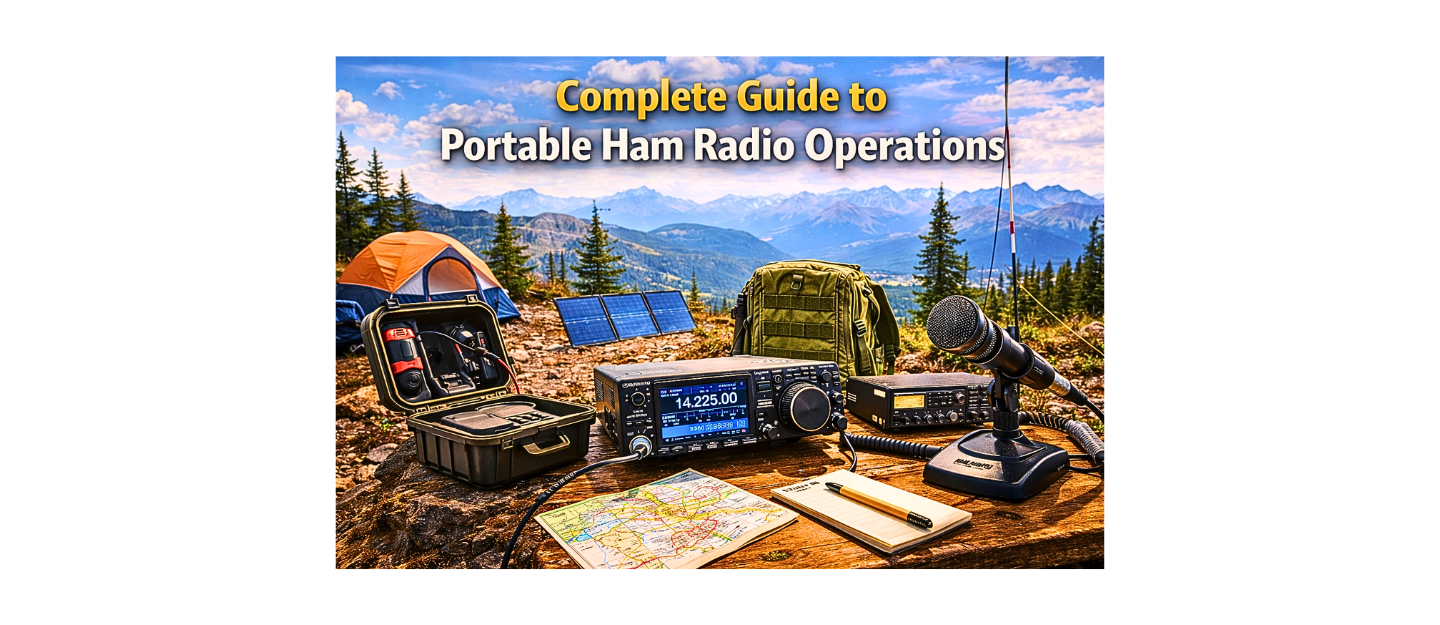
Complete Guide to Portable Ham Radio Operations, is all about taking amateur radio out of the shack and into the real world. Instead of relying on permanent installations, fixed power sources, and dedicated antenna structures, portable operators build temporary stations that can function anywhere. Whether operating from parks, mountain summits, vehicles, remote campsites, or emergency deployment locations, portable radio emphasizes flexibility, efficiency, and self-contained capability.
Portable operation combines equipment selection, power management, antenna deployment, and environmental awareness into a single integrated skill set. When done well, a portable station can deliver excellent performance with minimal infrastructure while allowing communication from almost any location.
What Portable Operation Means in Amateur Radio
Portable operation refers to any amateur radio activity conducted away from a permanent station. Equipment must be transported, assembled, powered, and operated in temporary environments. Every component must balance performance with weight, size, and efficiency.
Operators often set up stations in:
- Parks and recreation areas
- Mountain summits
- Shorelines and islands
- Vehicles and mobile platforms
- Remote campsites
- Temporary emergency locations
Because infrastructure is limited, portable operation requires careful planning and adaptable equipment.
Why Portable Operation Is So Popular
Portable ham radio combines technical skill with real-world adventure. Operators enjoy flexibility, independence, and the ability to operate from unique geographic locations that can enhance propagation performance.
Portable activity is especially popular because it offers:
- Access to low-noise environments
- Improved signal propagation from elevated terrain
- Flexibility to operate anywhere
- Emergency communication capability
- Hands-on technical experience
- Recreational and outdoor enjoyment
Operating outside the home station also helps operators develop practical problem-solving skills that improve overall technical competence.
Common Portable Operating Programs
Several organized activities encourage portable operation by providing structured goals and recognition.
- Parks on the Air focuses on operating from designated park locations.
- Summits on the Air involves operating from mountain summits.
- Islands on the Air centers on island-based operation.
- Field Day demonstrates emergency communication readiness.
These programs encourage operators to deploy portable stations efficiently and make contacts under real-world conditions.
Planning a Portable Station
Successful portable operation begins with planning. Operators must consider transportation, terrain, setup time, power availability, and expected propagation conditions.
Planning typically includes:
- Equipment selection
- Antenna strategy
- Power requirements
- Weather considerations
- Site accessibility
- Operating duration
Careful preparation reduces setup time and prevents equipment problems in the field.
Portable Transceivers
Portable radios must be compact, efficient, and durable. Many portable operators use lightweight HF transceivers or multi-band mobile radios. Low power radios are common because they reduce energy consumption and simplify battery requirements.
Important portable radio characteristics include:
- Low current draw
- Compact size
- Rugged construction
- Simple control interface
- Wide band coverage
Efficiency is more important than maximum power in portable environments.
Portable Antennas
Portable antennas must deploy quickly and operate effectively without permanent supports. Many portable antennas use lightweight wire elements suspended from trees, telescoping poles, or temporary supports.
Common portable antenna types include:
- End-fed wire antennas
- Lightweight dipoles
- Vertical antennas with ground radials
- Magnetic loop antennas
- Telescoping whip systems
Portable antennas must balance performance with simplicity and rapid deployment.
Antenna Deployment Techniques
Site conditions determine antenna configuration. Operators must evaluate available supports, ground conditions, and surrounding obstacles.
Typical deployment methods include:
- Throw lines over tree branches
- Telescoping masts
- Tripod supports
- Vehicle-mounted antennas
- Temporary guyed pole
Efficient deployment reduces setup time and improves operating efficiency.
Portable Power Systems
Power management is one of the most critical aspects of portable operation. Without stable power, the station cannot function. Portable operators typically rely on rechargeable battery systems designed for efficient energy storage and safe transport.
Common power sources include:
- Lithium iron phosphate batteries
- Sealed lead acid batteries
- Solar charging systems
- Vehicle power systems
Energy capacity must match expected operating time and transmit duty cycle.
Power Consumption Management
Portable stations must conserve energy. Operators reduce consumption by using efficient radios, moderate transmit power, and limited transmission time.
Power management strategies include:
- Lower transmit power levels
- Efficient operating schedules
- Battery monitoring
- Solar recharging when possible
Energy efficiency directly determines operating duration.
Portable Operating Positions
Operating location affects comfort, safety, and performance. Operators must choose positions that protect equipment from weather while maintaining effective antenna placement.
Portable stations may be set up:
- On folding tables
- Inside shelters
- Under shade structures
- In vehicles
- On ground mats
Comfortable operating conditions help maintain focus during long sessions.
Propagation Awareness in Portable Operation
Portable operators often choose locations that improve signal propagation. Elevated terrain, open environments, and low electrical noise can significantly enhance communication range.
Operators benefit from understanding:
- Time-of-day propagation changes
- Band selection based on conditions
- Terrain influence on signal paths
- Noise floor differences between urban and rural locations
Propagation awareness allows efficient use of limited transmit power.
Digital Modes in Portable Stations
Digital modes are especially valuable in portable environments because they perform well at low power and under weak signal conditions. Efficient digital communication allows reliable contacts even when antennas and power systems are limited.
Portable digital operation requires:
- Computer or interface device
- Stable audio connection
- Accurate time synchronization
- Careful power management
Digital modes expand communication capability without increasing station size.
Logging and Contact Management
Portable operators record contacts using paper logs, handheld devices, or computer logging software. Accurate logging is important for activity programs and award tracking.
Efficient logging systems reduce workload and ensure reliable record keeping in field conditions.
Safety Considerations
Portable operation involves environmental exposure and physical setup tasks. Operators must manage weather, terrain hazards, and equipment safety.
Important safety practices include:
- Secure antenna supports
- Proper cable routing
- Weather awareness
- Adequate hydration and protection
- Safe battery handling
Preparation prevents accidents and equipment damage.
Transport and Equipment Organization
Portable equipment must be easy to transport and protect during travel. Organized packing systems reduce setup time and prevent component loss.
Operators often use:
- Protective cases
- Modular storage containers
- Labeled cable systems
- Compact tool kits
Efficient transport improves overall operating experience.
Rapid Deployment Techniques
In many portable situations, especially emergency communication, setup speed is critical. Operators develop standardized procedures that allow quick station assembly.
Rapid deployment involves:
- Preassembled antenna components
- Prewired power connections
- Compact mounting systems
- Organized packing layout
Preparation enables reliable operation under time constraints.
Advantages of Portable Operation
Portable operation develops technical skill, increases operating flexibility, and allows communication from locations that may outperform permanent stations. Many operators find portable radio more engaging because it combines engineering, outdoor activity, and real-time problem solving.
Portable operation also demonstrates radio independence by proving that effective communication does not require fixed infrastructure
Limitations and Challenges
Portable stations face constraints that fixed stations do not. Limited power, temporary antenna supports, and environmental exposure require careful management. Equipment weight, transport logistics, and setup complexity also present challenges.
Despite these limitations, proper planning and efficient equipment design allow excellent performance in most portable environments.
Choosing the Right Portable Strategy
Every portable station reflects operator goals. Some prioritize ultra-lightweight backpack operation, while others emphasize maximum performance from vehicle-based stations. The best strategy balances mobility, capability, and operating duration.
Understanding personal operating style helps determine appropriate equipment and configuration.
Complete Guide to Portable Ham Radio Operations
Complete Guide to Portable Ham Radio Operations represents one of the most practical and rewarding aspects of amateur radio. It transforms communication from a fixed installation into a flexible, location-independent capability. By combining efficient equipment, smart power management, adaptable antenna systems, and environmental awareness, operators can build reliable stations almost anywhere.
Portable operation demonstrates the true versatility of amateur radio. It proves that effective communication depends not only on equipment, but on preparation, adaptability, and technical skill applied in real-world conditions.
Please consider Donating to help support this channel