
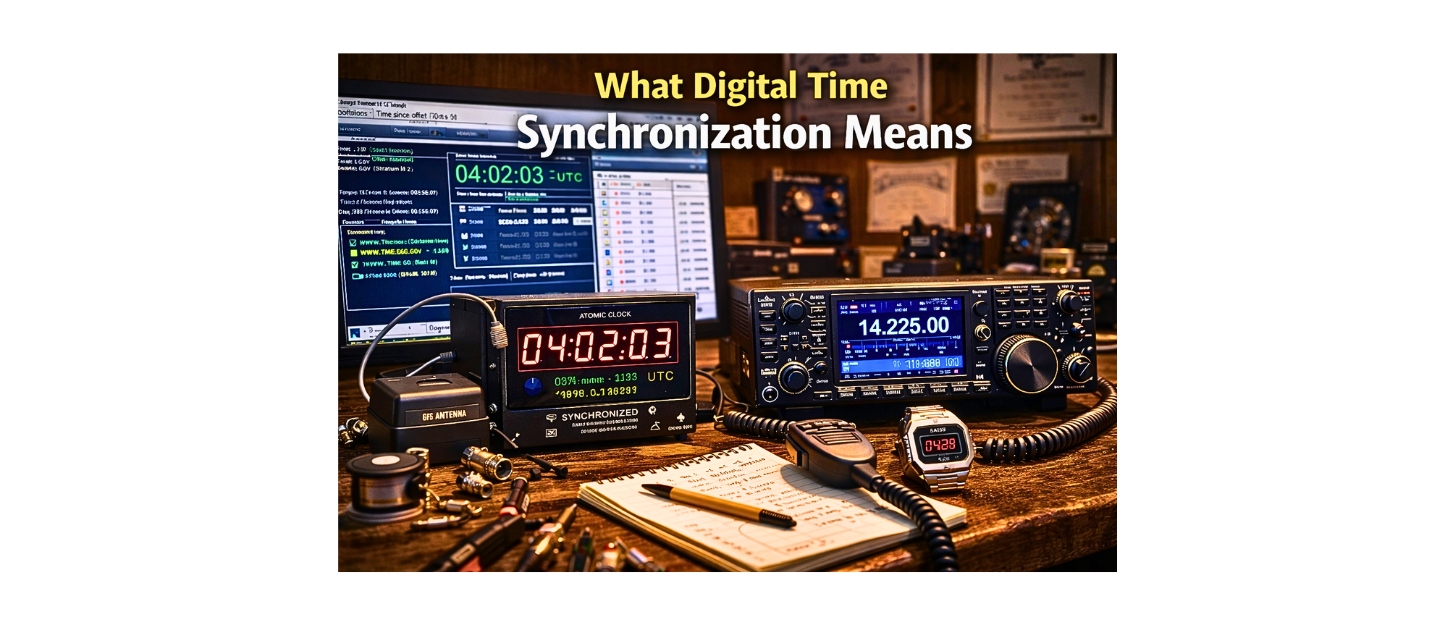
Digital time synchronization in ham radio aligns the internal clocks of radios, computers, and software so they operate on the same precise time reference. Because many modern amateur radio modes depend on exact timing windows, synchronized clocks ensure signals transmit and decode correctly. When equipment shares a common time base, operators can communicate reliably using structured digital transmissions that must begin and end at precise moments.
Traditionally, amateur radio relied on human timing and analog signal exchange. However, digital modes introduced strict timing requirements that exceed what manual adjustment can maintain. Therefore, operators now depend on automated clock synchronization to keep their systems accurate within fractions of a second.
Digital time synchronization does not simply keep clocks correct for convenience. Instead, it allows digital protocols to function at all. Without accurate time alignment, transmissions overlap, decoding fails, and communication becomes unreliable.
New to digital operation? Read our Complete Guide to Digital Modes.
(adsbygoogle = window.adsbygoogle || []).push({});Why Digital Time Synchronization Matters in Digital Modes
Digital communication methods divide transmissions into fixed time slots. Because stations must transmit and receive within these defined intervals, even small clock errors can disrupt communication.
For example, structured digital modes often use synchronized transmission cycles that last only a few seconds. If one station transmits early while another transmits late, signals collide or miss the expected decoding window. Consequently, the receiving software cannot interpret the data correctly.

Additionally, contesting and coordinated operating events depend on synchronized schedules. Operators follow shared timing conventions so multiple stations can communicate efficiently without interference. As a result, precise clock alignment improves overall spectrum efficiency.
The Relationship Between Digital Modes and Time Windows
Modern digital ham radio modes structure transmissions around synchronized intervals. Because each transmission begins at a specific second within a repeating cycle, every participating station must follow the same timing pattern.
These modes often alternate between transmit and receive phases. Meanwhile, decoding software expects incoming signals during defined windows. If a station’s clock drifts outside that window, its transmission becomes invisible to properly synchronized receivers.
Furthermore, timing determines how software aligns received audio for decoding. Digital processing algorithms depend on known start times to reconstruct data frames. Consequently, incorrect time alignment produces decoding errors even when signal strength remains adequate.
Digital time synchronization therefore supports both transmission scheduling and signal interpretation. Without it, digital modes lose their fundamental operating structure.
Common Methods of Time Synchronization for Ham Radio
Operators synchronize system clocks using several reliable techniques. Because most digital ham radio activity connects to computers, software-based synchronization provides the primary solution.
Network time synchronization services adjust computer clocks automatically by referencing highly accurate time servers. As a result, most operators maintain sub-second accuracy with minimal effort.
However, internet access is not always available during portable or emergency operation. Therefore, many operators use satellite-based timing receivers that derive precise time from navigation satellites. These receivers provide highly stable timing even in remote locations.
Some advanced stations also use disciplined oscillators that lock internal frequency standards to external timing references. Consequently, they maintain stable time even during temporary signal loss.
Each method offers different levels of precision and independence. Nevertheless, all aim to keep station clocks aligned closely enough to meet digital mode requirements.
Computer Clocks and Software Control in the Ham Shack
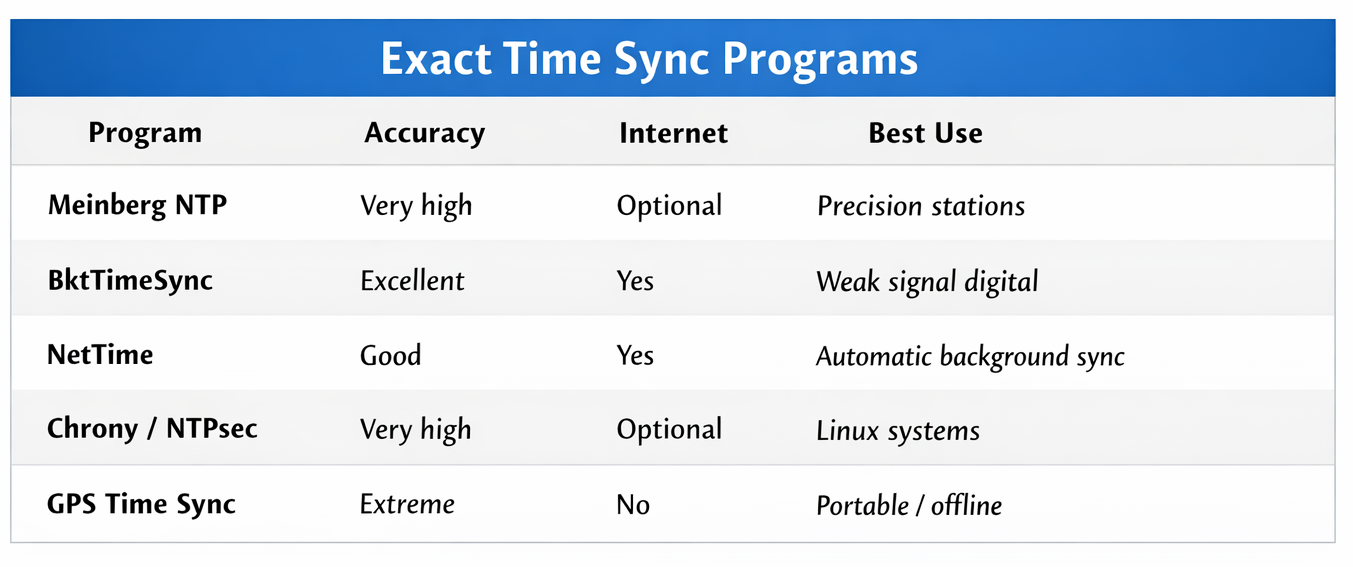
In most modern ham radio stations, the computer acts as the timing authority. Because digital mode software generates and decodes signals, the computer’s system clock determines transmission timing.
Synchronization software continuously compares the local clock to an external reference. Then it applies small adjustments to correct drift gradually. As a result, time remains stable without causing abrupt changes that could disrupt ongoing operation.
Temperature changes, processor load, and oscillator quality all influence clock stability. Therefore, continuous synchronization ensures long-term accuracy.
Operators often monitor clock offset values to confirm proper synchronization. Meanwhile, automated updates keep the system aligned without manual intervention.
Weak Signal Digital Communication and Timing Sensitivity
Weak signal digital modes place extreme demands on timing accuracy. Because these modes compress information into very short transmission intervals, precise alignment becomes critical.
Software decoders analyze incoming signals based on expected time boundaries. If timing shifts outside acceptable tolerance, decoding algorithms cannot align signal patterns correctly. Consequently, even strong signals may fail to decode.
Accurate time also supports coherent signal detection. Some digital modes rely on phase and frequency relationships that remain stable only when transmission timing is predictable. Therefore, clock accuracy directly influences decoding performance.
Operators pursuing long-distance or low-power communication depend heavily on synchronization. Without it, weak-signal advantages disappear quickly.
Coordinated Operating and Shared Timing Standards
Ham radio activities often involve coordinated operation across wide geographic regions. Because stations follow shared schedules, synchronized clocks ensure orderly communication.
Special operating events, digital nets, and experimental protocols all rely on predictable timing. Meanwhile, synchronized time allows operators to schedule transmissions without direct coordination.
Emergency communication also benefits from accurate timing. When multiple stations share limited frequencies, structured time slots prevent interference and maintain message flow. Consequently, digital time synchronization improves operational efficiency during critical situations.
Frequency Stability and Time Stability
Frequency and time share a close relationship in radio systems. Because precise timing depends on stable oscillators, frequency drift directly affects clock accuracy.
High-quality reference oscillators improve both signal stability and timekeeping. Therefore, stations that maintain precise frequency control often achieve better synchronization performance.
Some advanced equipment locks frequency standards to external references derived from satellite timing signals. As a result, both transmitted frequency and system time remain tightly controlled.
This relationship highlights how digital time synchronization extends beyond software settings. Instead, it connects directly to the physical stability of radio hardware.
Portable Operation and Field Synchronization
Portable and remote operation introduces additional timing challenges. Because field stations may lack internet connectivity, operators must rely on independent time references.
Satellite timing receivers provide reliable solutions in remote environments. Meanwhile, battery-powered disciplined oscillators maintain stability during extended deployments.
Operators often verify synchronization manually before beginning digital activity. Consequently, they ensure reliable communication even under austere conditions.
Field synchronization supports emergency preparedness, portable contesting, and scientific experimentation. Therefore, reliable timing infrastructure remains essential beyond the fixed station environment.
Logging Accuracy and Event Documentation
Accurate time synchronization improves logging precision in digital ham radio. Because contact records include timestamps, synchronized clocks ensure consistent documentation across stations.
Contest scoring, award verification, and propagation studies all depend on reliable time records. Meanwhile, synchronized logs allow operators to compare activity accurately across different locations.
Timing consistency also supports technical experimentation. Researchers analyzing signal propagation or interference patterns rely on synchronized timestamps to correlate observations.
Therefore, digital time synchronization enhances both operational accuracy and scientific value.
Error Sources That Affect Synchronization
Several factors can degrade timing accuracy in a ham radio station. Hardware clock drift occurs naturally as oscillators change with temperature and age. Meanwhile, unstable power supplies may introduce additional variation.
Software interruptions can also delay timing updates. Because operating systems manage multiple processes, synchronization routines may not execute at perfectly regular intervals.
Signal reception problems can disrupt external time references. For example, poor satellite visibility or network congestion may reduce update reliability.
Operators address these issues through redundancy, monitoring, and stable hardware selection. Consequently, they maintain consistent timing despite environmental and technical challenges.
Best Practices for Maintaining Accurate Time in Ham Radio
Operators should synchronize system clocks automatically and continuously. Because manual adjustment cannot maintain required precision, automated correction remains essential.
They should verify synchronization performance regularly. Meanwhile, monitoring clock offset helps detect drift or hardware problems early.
Using stable oscillators improves holdover performance when external references become unavailable. Therefore, high-quality hardware enhances reliability.
Portable operators should prepare independent timing solutions. Consequently, field operation remains fully functional without network connectivity.
Maintaining accurate time should become routine station practice rather than occasional maintenance.
The Expanding Role of Time in Modern Amateur Radio
Amateur radio continues to evolve toward increasingly structured digital communication. Because new modes emphasize efficiency and weak-signal capability, timing requirements grow more demanding.
Advanced experimentation also depends on synchronized operation across distributed stations. Meanwhile, collaborative research projects rely on precise time alignment to compare data accurately.
Digital time synchronization therefore supports innovation throughout the amateur radio community. As technology advances, precise timing becomes even more central to successful operation.
A Shared Clock for a Connected Radio Community
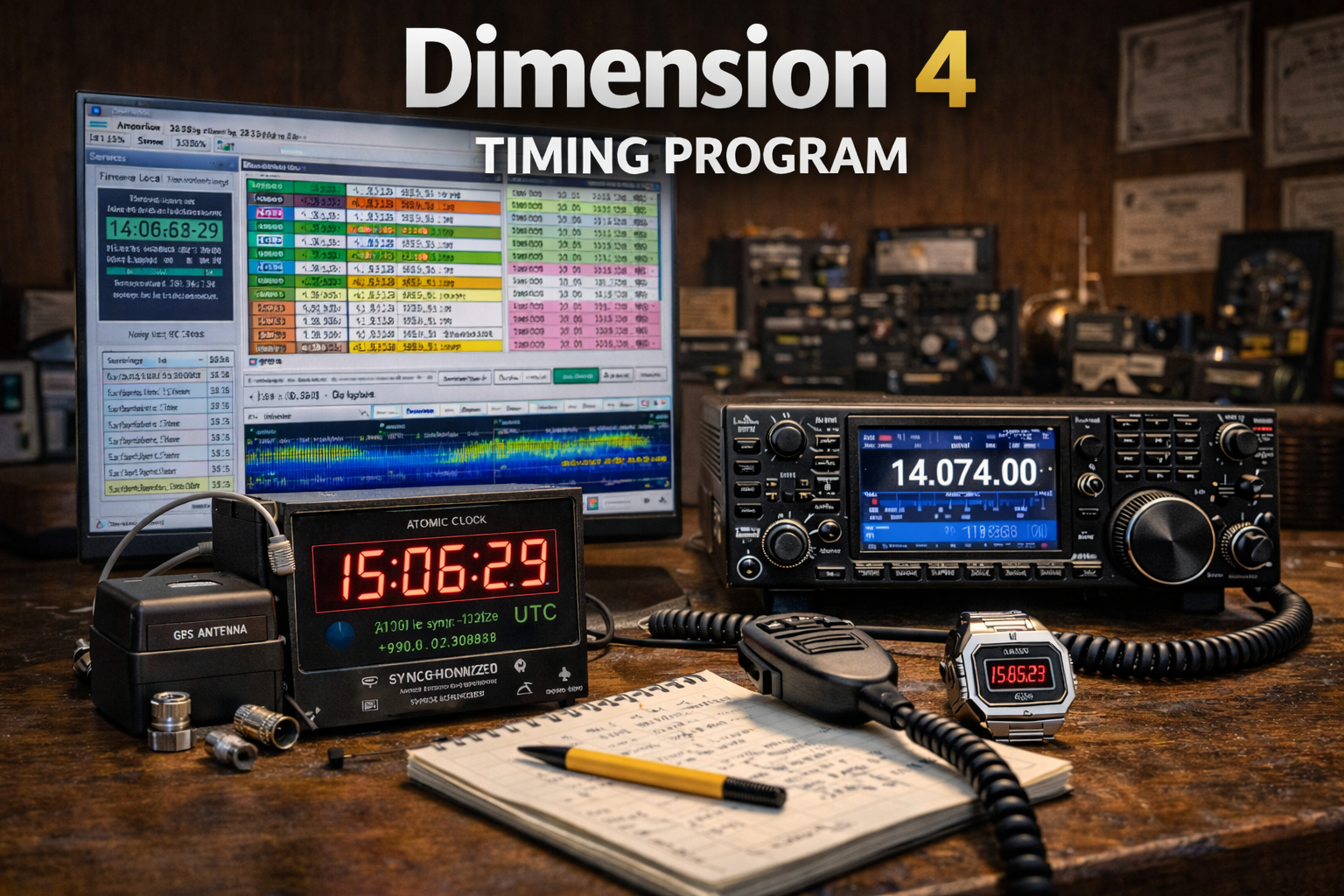
Digital time synchronization gives ham radio operators a shared temporal framework. Because digital modes depend on coordinated transmission windows, synchronized clocks enable reliable communication across vast distances.
Accurate time supports weak-signal decoding, structured scheduling, precise logging, and experimental research. Consequently, it transforms modern amateur radio into a highly coordinated technical system.
When every station aligns to the same reference time, communication becomes predictable, efficient, and dependable. Therefore, digital time synchronization stands as a fundamental requirement for effective digital ham radio operation.
Frequently Asked Questions
Why is time synchronization important in ham radio digital modes?
Digital modes transmit in precise time windows. If a station’s clock is not synchronized, transmissions may occur outside the decoding window and other stations will not receive or decode the signal.
How accurate does time need to be for digital ham radio modes?
Most digital modes require clocks to be accurate within about ±1 second. Better accuracy improves decoding reliability, especially for weak-signal modes.
What is the most common way to synchronize time in a ham radio station?
Most operators use Network Time Protocol (NTP) software, which automatically synchronizes the computer clock with highly accurate internet time servers.
Can ham radio operators synchronize time without the internet?
Yes. GPS receivers provide highly accurate timing directly from navigation satellites and work well for portable or emergency operations.
What happens if a station’s clock is not synchronized?
Signals may transmit outside the expected time window, causing decoding failures and missed contacts.
How can operators check if their system time is accurate?
Synchronization software usually displays clock offset, showing how far the system clock differs from the reference time.
About the Author
Vince, W2KU, is a licensed Extra class amateur radio operator and the founder of Ham Shack Reviews. He was named Amateur of the Year in 2026 for contributions to practical amateur radio education and equipment evaluation.
He primarily operates HF, knows propagation very well, operates mobile and handhelds daily. Vince exchanges QSL cards for DXCC, contest confirmation, and award tracking and is the club QSL manager. His guidance focuses on practical operating procedures, accurate logging, and real-world amateur radio practices.
Please consider Donating to help support this channel