
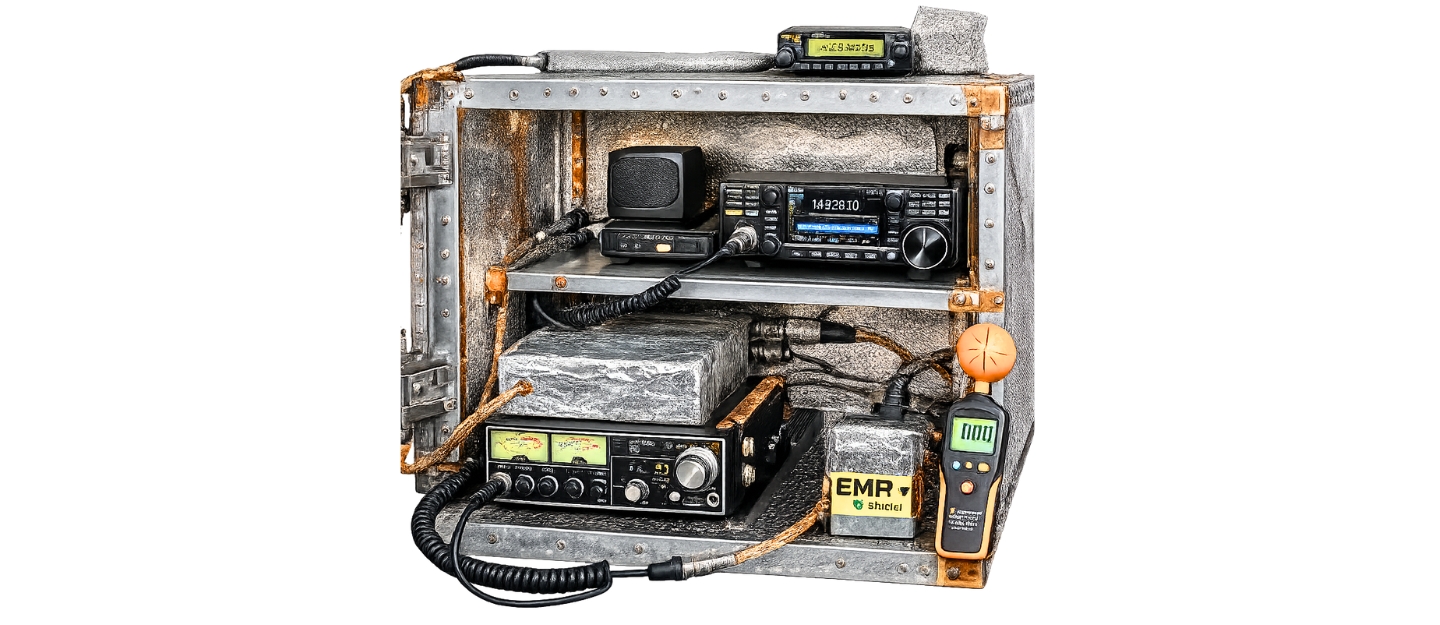
EMP Proofing A Ham Shack involves several strategies working together: shielding sensitive electronics, improving grounding systems, protecting feedlines, maintaining redundant equipment, and storing backup gear in protected containers. When implemented properly, these measures significantly improve the likelihood that your station will remain operational after an electromagnetic event.
This guide explains how EMPs affect radio equipment, which ham radio components are most vulnerable, and the practical steps amateur radio operators can take to protect their stations.
Electromagnetic pulse (EMP) events are often discussed in preparedness and emergency communications communities, yet many amateur radio operators underestimate how vulnerable their stations can be. A strong EMP has the potential to damage sensitive electronic equipment instantly, rendering modern radios and supporting gear unusable.
For ham radio operators who rely on their stations for emergency communication, disaster response, or preparedness scenarios, protecting equipment from an EMP is more than a theoretical exercise.
Communication infrastructure may fail during large-scale disasters, leaving amateur radio as one of the few remaining communication methods. If your equipment survives the event, your ability to communicate could become critically important.
EMP Proofing A Ham Shack and Why It Matters
An electromagnetic pulse is a sudden burst of electromagnetic energy capable of inducing large electrical currents in conductors. These conductors can include power lines, antenna wires, feedlines, and electronic circuits.
EMP events can occur from several different sources.
• High-altitude nuclear detonations
• Severe solar geomagnetic storms
• Specialized non-nuclear EMP devices
• Lightning-induced electromagnetic surges
While solar storms primarily affect long conductors such as power grids and pipelines, a nuclear-generated EMP can affect nearly any unprotected electronic device.
For amateur radio operators, this means multiple parts of the station can be vulnerable. Radios, power supplies, computers used for digital modes, and antenna systems can all become entry points for damaging electrical surges.
Modern amateur radio equipment relies heavily on integrated circuits and microprocessors. These components are extremely sensitive to voltage spikes, which means they can fail even when exposed to short-duration pulses.
Understanding this vulnerability is the first step in designing a station that is more resistant to electromagnetic threats.
How EMPs Damage Radio Equipment
EMP energy typically arrives in three distinct phases, commonly called E1, E2, and E3. Each phase behaves differently and affects electronics in unique ways.
| EMP Phase | Duration | Typical Effects |
|---|---|---|
| E1 | Nanoseconds | Damages microelectronics and semiconductors |
| E2 | Microseconds | Similar to lightning surges |
| E3 | Seconds to minutes | Induces currents in long conductors and power grids |
The E1 pulse is the most dangerous to modern electronics. It rises extremely quickly and can induce high voltages directly into circuit traces and semiconductor components.
The E2 pulse behaves similarly to lightning and can be mitigated using surge protection and grounding systems.
The E3 pulse is slower but capable of inducing strong currents in long conductors such as power lines and large antennas.
These pulses can enter a ham radio station through several pathways.
• Antenna feedlines
• AC power cables
• Ground loops
• Control cables
• USB and Ethernet connections
Even equipment that is powered off may still be damaged because the induced voltage can travel through wiring and circuit traces.
Which Ham Equipment Is Most Vulnerable
Not all amateur radio equipment reacts the same way to electromagnetic pulses. The design and technology used in each device plays a major role in determining its vulnerability.
The most sensitive equipment typically includes modern semiconductor-based electronics.
Examples include:
• Modern HF transceivers
• Software-defined radios (SDR)
• Digital-mode computers and interfaces
• Automatic antenna tuners
• Switching power supplies
• Solid-state amplifiers
Older vacuum-tube radios often tolerate voltage spikes better because their components are physically larger and operate at higher voltages. However, tube equipment can still be damaged through power systems or antenna connections.
Handheld radios are also vulnerable. Despite their small size, handheld transceivers contain dense microelectronics that can be easily damaged by high-voltage pulses.
Because modern ham stations rely heavily on integrated digital equipment, protecting these devices is critical.
Faraday Cages: The Most Effective Protection
A Faraday cage is one of the most effective ways to protect electronic equipment from EMP damage. A Faraday cage works by surrounding electronic devices with a conductive enclosure.
When electromagnetic energy strikes the enclosure, the energy travels around the outside surface rather than penetrating the interior. For amateur radio operators, Faraday cages are commonly used to store backup equipment.
Popular Faraday cage options include:
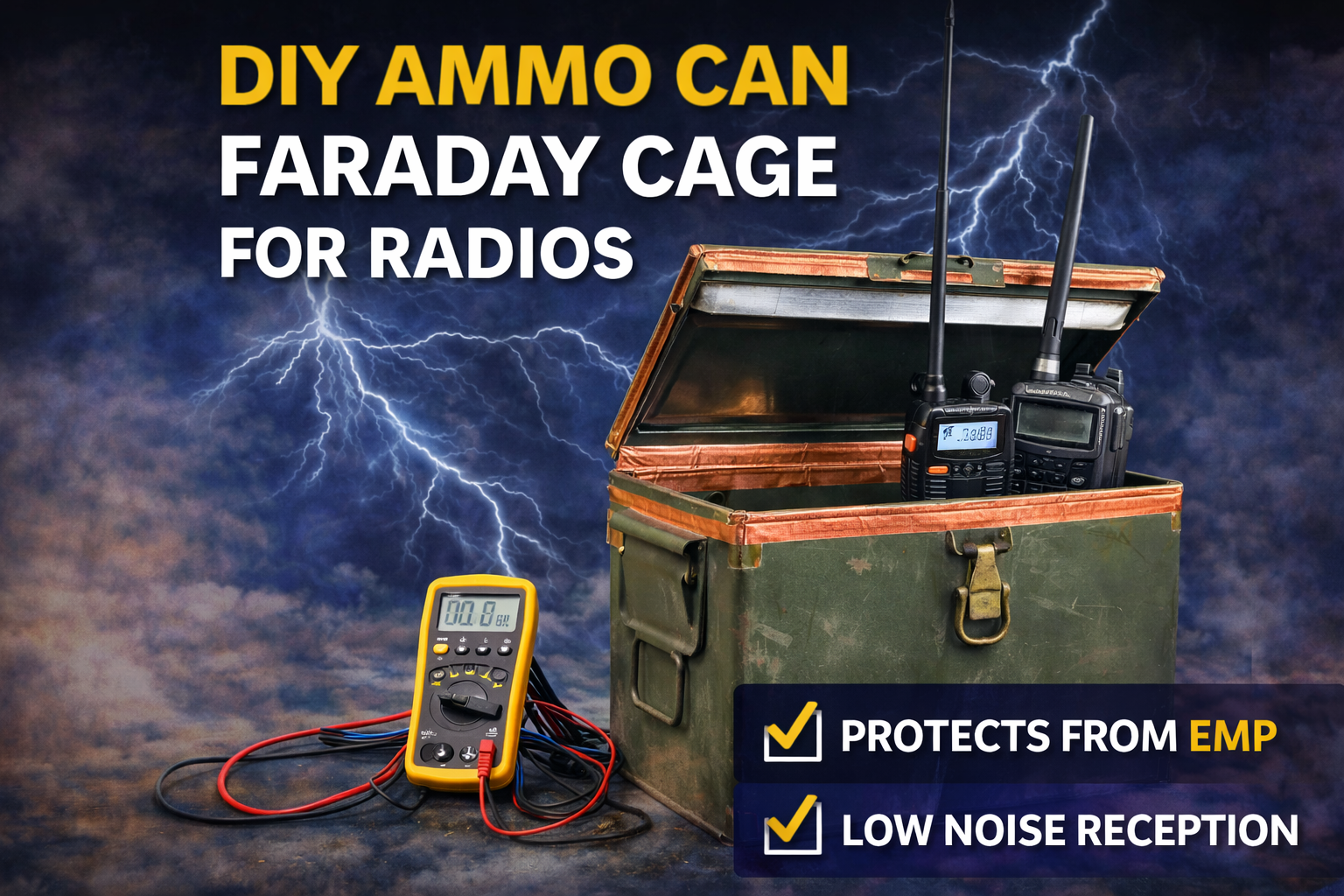
• Metal ammunition cans
• Steel garbage cans with tight lids
• Aluminum equipment cases
• Metal filing cabinets
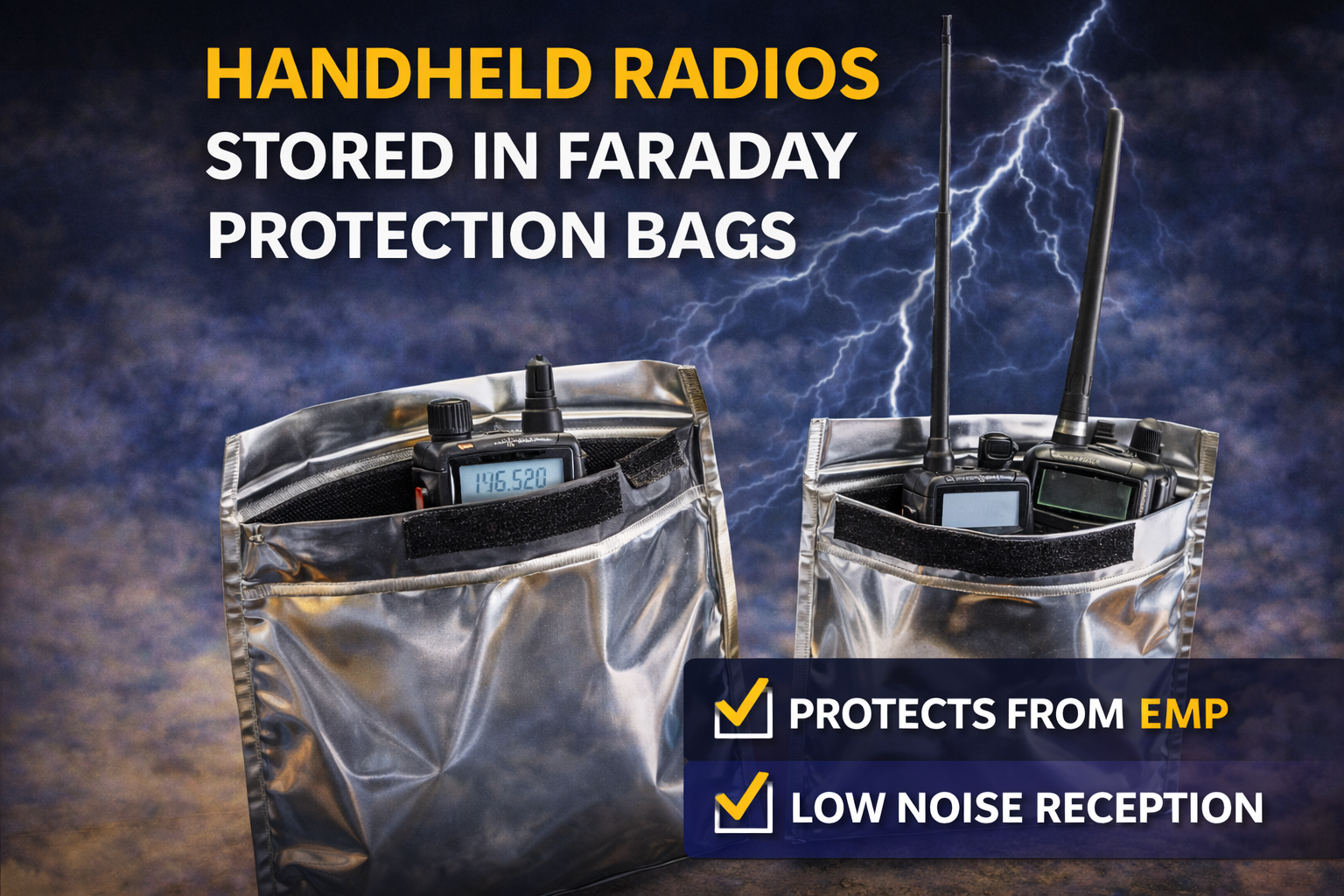
• Specialized EMP protection bags
To function properly, a Faraday cage must meet several requirements.
First, the enclosure must form a continuous conductive barrier. Large gaps or seams can allow electromagnetic energy to penetrate.
Second, the equipment inside must be electrically isolated from the metal container. If electronics touch the metal surface, induced currents could still reach the equipment.
Third, the lid must make solid metal-to-metal contact with the container body.
Many amateur radio operators build simple Faraday cages using surplus ammunition cans. By lining the interior with cardboard, foam, or wood, equipment can be insulated from the metal shell while maintaining effective shielding.
Inside these containers you might store:
• Backup handheld radios
• Spare HF transceiver
• Power supplies
• Spare microphones and cables
• Digital mode interface devices
• USB drives containing radio software
Keeping a small set of backup equipment protected in this way greatly increases the chances that communication capability survives an EMP event.
Grounding and Surge Protection for Operating Equipment
While Faraday cages protect stored equipment, the gear actively operating in your shack also needs protection strategies.
Grounding is one of the most important parts of station protection.
A properly grounded ham shack reduces unwanted electrical potential differences and provides a path for surge energy to dissipate safely.
A good grounding system typically includes:
• A single-point ground bus inside the shack
• Ground rods installed outside the station
• Heavy copper grounding straps
• Bonding between all station equipment
Grounding will not completely eliminate EMP risk, but it can significantly reduce voltage buildup inside the station. Feedline surge protection is also essential.
Lightning arrestors installed where coax enters the building help divert surges away from sensitive electronics. Best practices include installing coax grounding blocks and lightning protectors at the station entry panel.
These devices connect the outer shield of the coax cable to the grounding system, providing a controlled path for surge energy.
Power System Protection
Power systems represent another major vulnerability during electromagnetic events.
Grid-connected power supplies can act as antennas, collecting electromagnetic energy and delivering damaging surges directly into connected electronics. Protecting the power system can significantly improve station resilience.
Recommended strategies include:
• Disconnecting equipment from AC outlets when not in use
• Maintaining battery-based power options
• Storing spare power supplies in Faraday protection
• Using robust linear power supplies when possible
Linear power supplies tend to be more durable than switching power supplies because they rely on simpler circuitry and larger components.
Many preparedness-focused amateur operators also maintain off-grid power solutions.
Examples include:
• Deep-cycle battery banks
• Portable solar panels
• Solar generators
• DC battery power systems
These options allow radio operation even if the electrical grid is compromised.
Redundant Communication Equipment
Redundancy is one of the most effective preparedness strategies. Even with protective measures in place, it is possible that primary station equipment could be damaged during an electromagnetic event.
Maintaining backup communication gear ensures that communication capability remains available.
Useful redundant equipment includes:
• Spare handheld transceivers
• Secondary HF radios
• Backup microphones and cables
• Portable antennas
• Manual antenna tuners
These items should ideally be stored in Faraday cages or EMP-resistant containers.
Even relatively inexpensive handheld radios can provide vital communication capability after an emergency event.
Antenna Considerations for EMP Protection
Antennas are large conductors designed specifically to capture electromagnetic energy. Because of this, they can act as pathways that deliver surge energy into a radio station.
Although antennas themselves cannot be fully protected from EMP effects, how they connect to your station can reduce risk.
Helpful practices include:
• Disconnecting antennas when equipment is not in use
• Installing grounding switches
• Using coax lightning arrestors
• Grounding feedlines where they enter the building
Many operators install an antenna entrance panel that allows coax cables to be easily grounded when the station is inactive.
This simple step can greatly reduce the amount of surge energy that reaches station equipment.
Building a Practical EMP Preparedness Kit
Preparedness-minded amateur radio operators often assemble a dedicated EMP-resistant communication kit.
This kit contains everything required to establish radio communication even if the main station becomes unusable.
Typical EMP-resistant communication kits include:
• Portable HF or VHF/UHF transceiver
• Handheld backup radios
• Compact antenna systems
• Coaxial feedline
• Manual antenna tuner
• Rechargeable battery packs
• Solar charging system
• Printed frequency lists and manuals
Storing the entire kit inside a Faraday cage ensures that it remains protected until needed.
If an EMP event occurs, this backup kit can quickly restore communication capability.
Realistic EMP Risk for Amateur Radio Operators
EMP events receive significant attention in preparedness discussions, but it is useful to understand their real-world likelihood.
Solar geomagnetic storms occur periodically and can affect large electrical infrastructure. Their effects on small electronics are less predictable.
High-altitude nuclear EMP events are extremely rare but remain a theoretical concern in national security planning.
Regardless of probability, many amateur radio operators choose to take basic protective measures because the cost of preparation is relatively low.
For operators involved in emergency communications organizations such as ARES or RACES, maintaining resilient communication equipment is particularly important.
Preparedness ensures that amateur radio can continue serving as a reliable communication resource during disasters.
Practical EMP Hardening Checklist
Operators looking to improve station resilience can start with several straightforward steps.
Priority protection actions include:
• Building at least one Faraday cage for backup radios
• Storing spare handheld radios in shielded containers
• Installing coax grounding and lightning protection
• Implementing a single-point grounding system
• Maintaining a portable backup station
Advanced preparedness measures may include:
• Storing spare power supplies and cables
• Maintaining battery-based off-grid power systems
• Keeping backup antennas stored separately
• Maintaining printed operating information and frequency lists
Even small improvements significantly increase the chance that equipment survives electromagnetic disturbances.
EMP Proofing A Ham Shack
EMP proofing a ham shack is about improving resilience rather than achieving absolute protection. No system can guarantee complete immunity from a powerful electromagnetic pulse, but layered defensive strategies greatly improve the odds of equipment survival.
Faraday cages, grounding systems, redundant radios, and off-grid power sources all play a role in protecting amateur radio stations.
Implementing practical protection measures now allows amateur radio operators to ensure their stations remain capable of providing communication when it is needed most.
Preparedness has always been part of the amateur radio tradition. Protecting your equipment from electromagnetic threats helps preserve one of the most reliable communication tools available during emergencies.
FAQ
Can an EMP destroy ham radios that are turned off?
Yes. Even when equipment is powered off, EMP energy can induce electrical currents in circuits and wiring, potentially damaging sensitive components.
What is the best way to protect ham radios from EMP?
Storing backup radios and accessories inside a properly constructed Faraday cage is one of the most effective protection methods.
Do Faraday cages really work against EMP?
Yes. A properly sealed conductive enclosure significantly reduces electromagnetic energy from reaching the equipment inside.
Are tube radios safer during an EMP event?
Vacuum-tube radios generally tolerate voltage spikes better than solid-state radios, but power or antenna connections can still damage them.
Should antennas be disconnected for EMP protection?
Yes. Disconnecting antennas helps prevent them from acting as pathways that deliver induced currents into radio equipment.
About the Author
Vince, W2KU, is a licensed Extra class amateur radio operator and the founder of Ham Shack Reviews. The organization named him Amateur of the Year in 2026 for his contributions to practical amateur radio education and equipment evaluation.
He primarily operates HF, knows propagation very well, operates mobile and handhelds daily. Vince exchanges QSL cards for DXCC, contest confirmation, and award tracking and is the club QSL manager. His guidance focuses on practical operating procedures, accurate logging, and real-world amateur radio practices.
Please consider Donating to help support this channel