
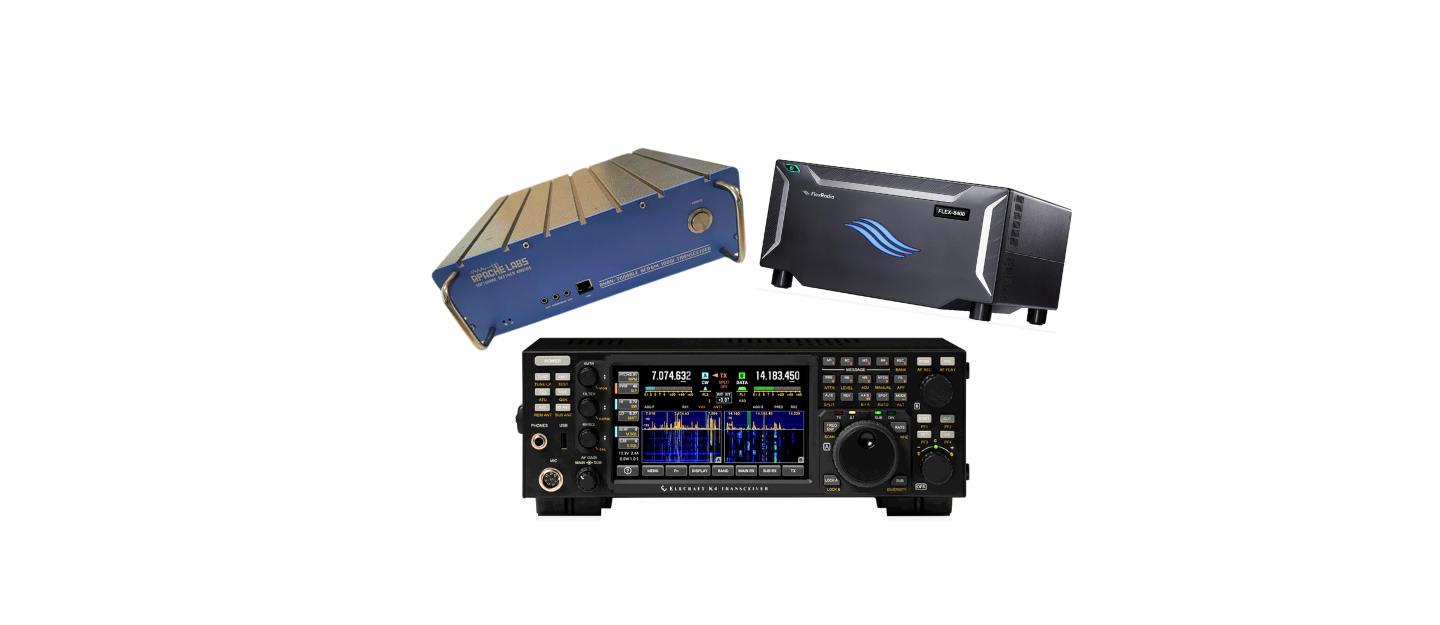
The Software Defined Radio
As computing power has increased, SDR technology has become practical for everyday amateur radio use. Modern radios can analyze wide portions of the radio spectrum, apply advanced filtering techniques, and support new digital communication modes through software updates. Because of these capabilities, software defined radios are increasingly common in both experimental and commercial amateur radio equipment.
Software defined radios are transforming amateur radio by moving many traditional radio functions from hardware into software. Instead of relying entirely on analog filters, mixers, and detectors, SDR systems use digital signal processing to perform these tasks. This shift allows radios to process signals more flexibly and enables new features that were difficult or impossible with purely hardware-based designs.
As computing power has increased, SDR technology has become practical for everyday amateur radio use. Modern radios can analyze wide portions of the radio spectrum, apply advanced filtering techniques, and support new digital communication modes through software updates. Because of these capabilities, software defined radios are increasingly common in both experimental and commercial amateur radio equipment.
Software defined radios are transforming amateur radio by moving many traditional radio functions from hardware into software. Instead of relying entirely on analog filters, mixers, and detectors, SDR systems use digital signal processing to perform these tasks. This shift allows radios to process signals more flexibly and enables new features that were difficult or impossible with purely hardware-based designs.
If you would like to see more radios including other models and brands, check out the Complete Guide to Ham Radio Transceivers.
What Is a Software Defined Amateur Radios
A software defined radio is a radio communication system in which many signal processing functions normally performed by analog hardware are instead performed by software. In traditional radios, components such as mixers, filters, modulators, and demodulators are implemented using electronic circuits. In an SDR system, these operations are handled by digital algorithms running on a computer or embedded processor.
The radio hardware still performs some basic tasks. A radio front end receives signals from the antenna and converts them into digital data using an analog-to-digital converter. Once the signal is in digital form, software can process it in many different ways.
Because signal processing occurs in software, the radio can support multiple modes, bandwidths, and filtering options without changing hardware components. This flexibility allows SDR radios to evolve over time through software updates rather than requiring new physical circuitry.
Because many signal processing functions are performed in software rather than hardware, SDR technology allows operators to adapt radio performance without changing physical circuitry. This flexibility is one of the defining characteristics of software defined amateur radios.
How Software Defined Radios Work
Software defined radios separate the radio system into two main parts: the radio front end and the digital signal processing system.
The front end receives signals from the antenna and converts them into an intermediate or baseband signal. This signal is then digitized using a high-speed analog-to-digital converter. Once the signal becomes digital data, software algorithms perform filtering, demodulation, and decoding.
Digital signal processing allows operators to adjust bandwidth, filtering characteristics, and demodulation modes directly through software controls. For example, an operator can narrow a filter to isolate a weak signal or widen it to improve audio clarity.
Modern SDR systems often include spectrum and waterfall displays that show large portions of the radio spectrum in real time. These visual displays help operators identify signals quickly and analyze interference patterns.
Separating the radio front end from digital signal processing allows SDR systems to process, analyze, and display radio signals with a level of flexibility that traditional hardware alone cannot provide.
Many SDR receivers also use direct sampling architectures, allowing them to capture wide segments of the spectrum with high dynamic range and minimal analog circuitry.
| Key Features of Software Defined Radios |
|---|
| Flexible and reconfigurable design through software |
| Ability to adapt to changing communication protocols and standards |
| Reduced hardware complexity and cost |
| Improved reliability and easier upgradability |
| Significant utility for military and cell phone services |
| Expected to become the dominant technology in radio communications |
These software-controlled capabilities allow SDR systems to adapt as communication methods evolve while reducing the need for hardware modifications or replacement equipment.
Advantages of Software Defined Radios
Software defined radios offer several advantages compared with traditional hardware-based radio designs. Because signal processing occurs in software, operators gain greater flexibility and control over how signals are received and transmitted.
One major advantage is the ability to update radio capabilities through software. New digital modes, improved filtering algorithms, and performance enhancements can often be added without replacing hardware components.
SDR radios also provide detailed visual information about the radio spectrum. Real-time spectrum displays and waterfall graphs allow operators to see signals across wide frequency ranges simultaneously.
Key advantages of SDR technology include:
• Adjustable digital filters
• Real-time spectrum and waterfall displays
• Improved weak signal detection
• Flexible operating modes
• Remote operation capability
• Software updates that add new features
These capabilities allow SDR systems to adapt to changing communication needs and experimental radio techniques. The ability to improve radio performance through software updates gives SDR technology long-term flexibility while providing operators with advanced filtering, spectrum visualization, and digital communication capabilities
SDR vs Traditional Amateur Radios
Traditional amateur radios rely heavily on analog circuits to perform signal processing tasks. Filters, mixers, oscillators, and detectors are physically built into the radio and determine how signals are processed.
While traditional radios remain extremely reliable, their capabilities are largely fixed once the hardware is designed. Changing filter characteristics or adding new modulation methods often requires hardware modifications or entirely new radios.
Software defined radios move much of this functionality into software. Digital signal processing allows operators to modify filtering characteristics, visualize spectrum activity, and experiment with different communication techniques.
Many modern amateur radios combine traditional hardware with SDR processing. These hybrid designs provide the reliability of established radio architectures while benefiting from digital signal processing flexibility.
Today, many amateur radio transceivers combine proven analog radio design with software defined processing to deliver both familiar operation and advanced digital signal capabilities.
Common SDR Hardware Platforms
A wide range of SDR hardware platforms are available to amateur radio operators. These devices vary in capability, cost, and operating frequency range.
Some SDR systems are inexpensive receivers designed for experimentation, while others are high-performance transceivers used in advanced amateur radio stations.
Examples of SDR hardware commonly used in amateur radio include:
• RTL-SDR receivers used for low-cost signal monitoring
• SDRplay wideband receivers for spectrum analysis
• HackRF One experimental SDR platforms
• FlexRadio SDR transceivers used in advanced stations
• Apache Labs ANAN radios designed for high-performance SDR operation
Many modern transceivers from major manufacturers also incorporate SDR technology internally, combining digital signal processing with traditional radio designs.
These radios allow operators to monitor large sections of the spectrum simultaneously while applying sophisticated digital filtering and signal analysis techniques. When designed for beginners or advanced operators, SDR hardware continues to provide a wide range of options for experimentation, spectrum monitoring, and everyday amateur radio operation.

SDR Software Used by Amateur Radio Operators
The software component of SDR systems provides the signal processing capabilities that make these radios powerful. SDR programs allow operators to visualize signals, apply digital filters, and decode transmissions.
Most SDR software displays both a spectrum graph and a waterfall display. The spectrum graph shows signal strength across a frequency range, while the waterfall display shows signal activity over time.
Popular SDR software platforms include:
• SDR# (SDRSharp)
• HDSDR
• GNU Radio
• SDR Console
• CubicSDR
These programs allow operators to monitor wide sections of the radio spectrum, adjust filter bandwidth, and experiment with different demodulation modes.
Many SDR systems also integrate with digital communication software that decodes specialized signal formats used in amateur radio. The software component is what gives SDR technology much of its flexibility, allowing operators to visualize spectrum activity, adjust filters, and integrate with digital communication applications.
Practical Uses of SDR in Amateur Radio
Software defined radios have opened new possibilities for experimentation and signal analysis within amateur radio.
Because SDR receivers can display large portions of the spectrum simultaneously, operators can observe multiple signals at once instead of tuning individual frequencies.
Common uses of SDR systems include:
• Monitoring wide portions of the HF spectrum
• Searching for weak DX signals
• Digital mode experimentation
• Satellite communication monitoring
• Signal analysis and interference detection
• Remote station operation over the internet
SDR receivers are also useful for studying propagation conditions, observing band openings, and identifying interference sources. As SDR technology continues to mature, amateur radio operators are finding new ways to use these systems for communication, experimentation, signal analysis, and propagation monitoring.
SDR and Digital Communication Modes
Digital communication has become an increasingly important part of amateur radio. Software defined radios integrate naturally with digital communication systems because signal processing already occurs within a computer environment.
Digital modes use computer algorithms to encode and decode signals, allowing communication even when signals are extremely weak. Many digital modes operate efficiently using very low transmitter power.
Combining SDR technology with digital communication software allows operators to experiment with advanced signal processing techniques and explore new communication methods.
These systems are especially useful for weak-signal work, experimental communication protocols, and long-distance contacts. Because digital signal processing already takes place within the SDR environment, these radios naturally complement modern digital communication modes used throughout amateur radio.
Challenges of Software Defined Radios
Despite their many advantages, software defined radios also present some challenges.
SDR systems often rely on computers or embedded processors, which means they may require additional configuration and technical knowledge compared with traditional radios. Operators must sometimes install drivers, configure software settings, and troubleshoot computer hardware issues.
Processing large amounts of digital signal data also requires powerful processors and fast data connections between the radio hardware and computer.
Some operators also prefer the simplicity of traditional radios, where most functions are controlled directly through physical knobs and switches rather than computer interfaces. However, improvements in hardware design and user interfaces are gradually making SDR systems easier to operate.
Although SDR systems may require additional software configuration, ongoing improvements continue to simplify installation and everyday operation for amateur radio operators.
The Future of Software Defined Amateur Radios
Software Defined Amateur Radios technology continues to evolve rapidly as digital processing power increases and radio hardware becomes more capable.
Modern amateur radio transceivers increasingly incorporate SDR architectures that combine digital signal processing with traditional radio design principles. These hybrid radios provide both high performance and flexibility.
Future SDR systems may support wider spectrum coverage, improved signal analysis capabilities, and more advanced digital communication techniques. As computing power continues to grow, software defined radios will likely become even more powerful tools for amateur radio experimentation and communication.
The ability to update radio functionality through software ensures that SDR technology will remain adaptable as communication methods continue to evolve. As processing technology continues to improve, software defined amateur radios will continue providing greater flexibility, expanded capabilities, and new opportunities for communication and experimentation.
Key Takeaways
- Software defined radios perform many radio functions through software.
- Digital signal processing replaces many traditional analog circuits.
- SDR technology supports flexible filtering and multiple operating modes.
- Modern SDR radios provide real-time spectrum and waterfall displays.
- Software updates allow new features without changing hardware.
- SDR systems are widely used for experimentation, weak-signal work, and digital communications.
Frequently Asked Questions
What is a software defined radio in amateur radio?
A software defined radio uses digital signal processing software to perform many of the functions traditionally handled by analog radio hardware.
Are SDR radios better than traditional radios?
SDR radios provide powerful signal visualization and flexible filtering capabilities. Traditional radios often remain simpler to operate and highly reliable, so many operators use both types.
Do SDR radios require a computer?
Many SDR systems rely on a computer or embedded processor to perform digital signal processing. Some modern SDR transceivers contain built-in processors and do not require an external computer.
Can SDR radios transmit as well as receive?
Some SDR devices are receive-only, while others are full transceivers capable of transmitting and receiving signals across amateur radio bands.
Why are SDR radios important for the future of amateur radio?
SDR technology allows radios to evolve through software updates, making it easier to add new communication modes and signal processing techniques without redesigning hardware.
Final Thoughts
Software defined radios have become one of the most significant advances in modern amateur radio by combining flexible software with capable radio hardware. Their ability to adapt through software updates while supporting advanced signal processing ensures SDR technology will remain an important part of amateur radio for years to come.
About the Author
Vince, W2KU, is a licensed Extra class amateur radio operator and the founder of Ham Shack Reviews. He was named Amateur of the Year in 2026 for contributions to practical amateur radio education and equipment evaluation.
He primarily operates HF, knows propagation very well, operates mobile and handhelds daily. Vince exchanges QSL cards for DXCC, contest confirmation, and award tracking and is the club QSL manager. His guidance focuses on practical operating procedures, accurate logging, and real-world amateur radio practices.
Please consider Donating to help support this channel