
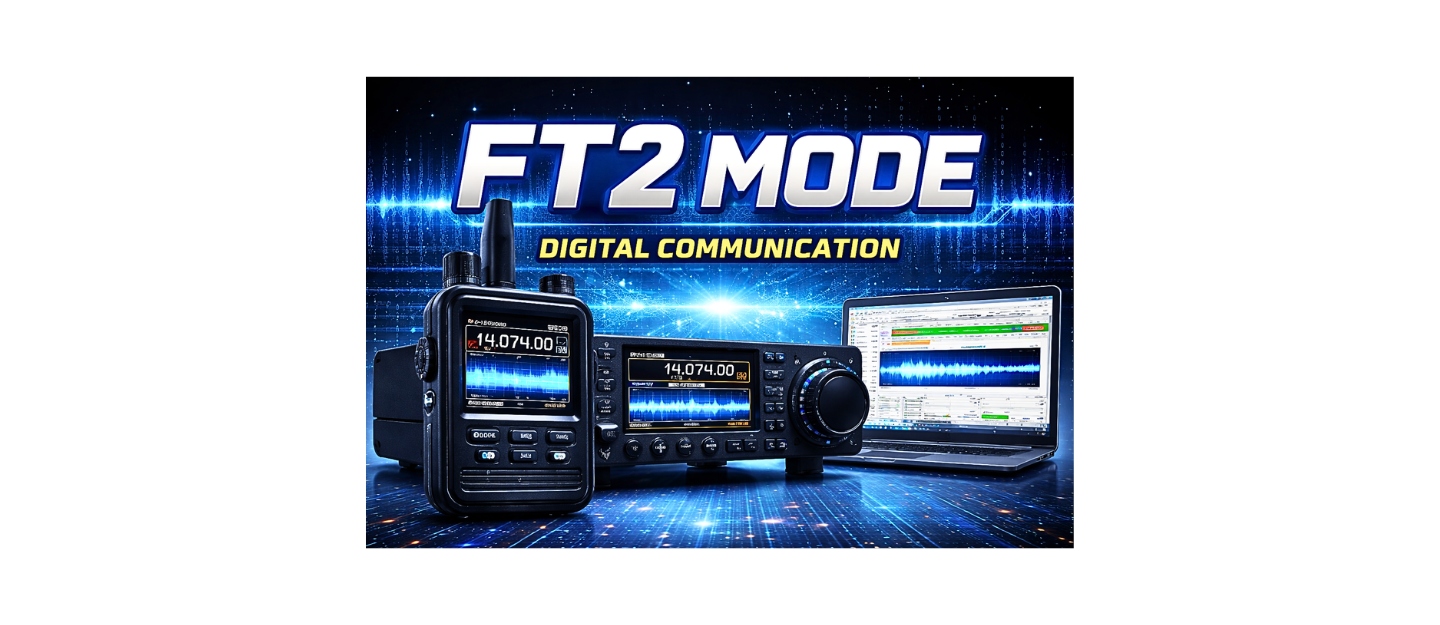
Digital communication has become one of the most important developments in modern amateur radio. Weak-signal digital modes allow operators to communicate over long distances using very low transmitter power while maintaining reliable decoding in noisy conditions. Among the experimental and emerging digital modes being explored by amateur operators is FT2, a fast, structured digital communication protocol designed for weak-signal operation.
FT2 belongs to the family of digital modes that rely on highly efficient signal encoding and computer-assisted decoding. These modes use digital signal processing algorithms to extract information from signals that may be barely detectable by human hearing. As computing power has increased and digital signal processing techniques have improved, weak-signal digital modes like FT2 have become powerful tools for amateur radio experimentation and communication.
New to digital operation? Read our Complete Guide to Digital Modes.
What Is FT2 Digital Mode
FT2 is a structured digital communication mode designed for weak-signal radio operation. Like other modern digital modes used in amateur radio, FT2 uses precise timing, forward error correction, and narrow bandwidth transmissions to allow reliable communication even when signals are extremely weak.
Digital modes such as FT2 rely on computers to encode and decode signals. Instead of transmitting voice audio, the radio sends digital tones that represent encoded information. A computer program interprets these tones and reconstructs the message.
Weak-signal digital modes typically operate in highly organized time intervals. Stations transmit during specific time slots while other stations listen and decode. This time synchronization allows many signals to coexist in a narrow portion of the radio spectrum without causing excessive interference.
How It Works
FT2 uses digital signal processing techniques to encode messages into a narrowband transmission. The transmitted signal is composed of precisely defined audio tones representing encoded digital data.
When a station transmits using FT2, the software converts text information such as call signs, signal reports, and grid locators into a digital message format. Error-correction coding is applied to ensure that the message can be decoded even when portions of the signal are lost due to noise or fading.
The resulting digital signal is transmitted through the radio as an audio frequency tone sequence. At the receiving station, software analyzes the incoming signal using advanced decoding algorithms that detect and reconstruct the transmitted message.
These algorithms allow FT2 signals to be decoded even when they are below the audible noise floor.
Key Characteristics of FT2 Communication
FT2 digital communication shares many characteristics with other weak-signal digital modes used in amateur radio.
Key characteristics include:
• Narrow bandwidth transmission
• Precise timing synchronization between stations
• Forward error correction for reliable decoding
• Automated message exchange sequences
• Weak-signal detection below the noise floor
Because FT2 uses structured message formats, contacts typically follow a predictable sequence of transmissions that confirm both stations’ call signs and signal reports.
This structured communication system allows reliable contacts with minimal transmitted power.
FT2 vs FT8 and Other Weak Signal Modes
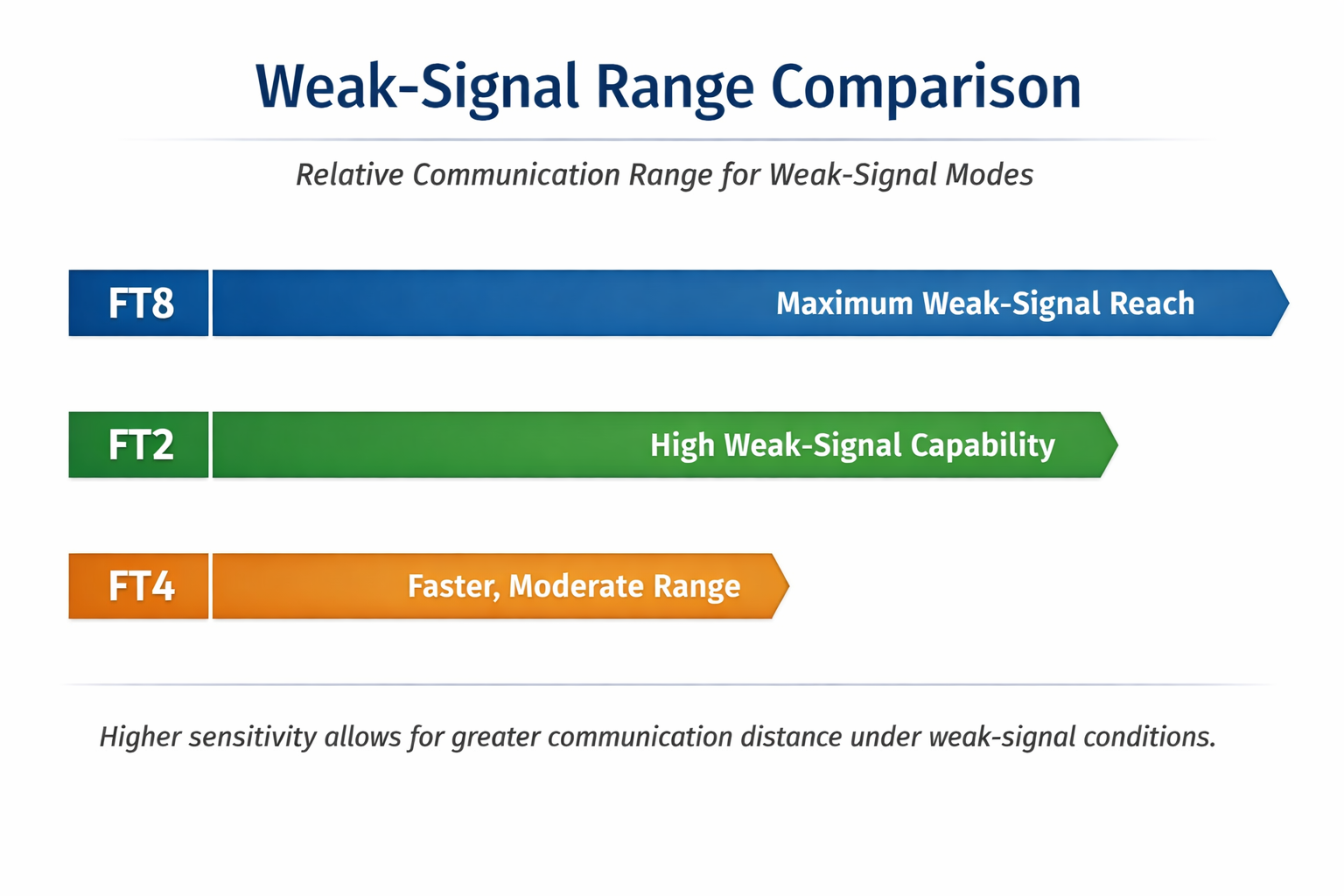
Many amateur radio operators are familiar with FT8, one of the most widely used weak-signal digital modes. FT2 follows similar design principles but may differ in timing structure, message format, and experimental signal encoding techniques.
FT8 is designed for extremely weak signals and uses 15-second transmission intervals. Other modes such as FT4 shorten these intervals to allow faster contacts while still maintaining good decoding performance.
FT2 experiments may explore different timing intervals, encoding strategies, or error-correction techniques in order to improve communication reliability or increase data throughput.
These variations allow researchers and amateur radio developers to study how different digital communication techniques perform under real-world radio conditions.
FT2 Operating Frequencies
Weak-signal digital modes typically operate within specific segments of the amateur radio bands so that multiple stations can transmit without interfering with voice or other operating modes. FT2 follows the same operating practice used by other structured digital modes, concentrating activity in narrow frequency segments where operators expect to find digital signals.
Although FT2 is still experimental compared with widely adopted modes such as FT8 or FT4, operators generally use the same digital-mode sub-bands commonly used for weak-signal digital communication.
Typical operating frequencies for weak-signal digital modes include:
160 meters
• 1.840 MHz
80 meters
• 3.573 MHz
40 meters
• 7.074 MHz
30 meters
• 10.136 MHz
20 meters
• 14.074 MHz
17 meters
• 18.100 MHz
15 meters
• 21.074 MHz
12 meters
• 24.915 MHz
10 meters
• 28.074 MHz
Operators experimenting with FT2 typically monitor these digital-mode segments to locate activity. Because digital modes share spectrum with other weak-signal modes, it is important to follow band-plan recommendations and avoid transmitting over ongoing contacts.
As with other digital modes, the exact dial frequency used may vary slightly depending on the software implementation and the audio offset used by the digital mode program. Operators should consult current band plans and digital-mode frequency listings for the most accurate operating information.
Equipment Needed for FT2 Operation
Operating FT2 digital mode requires relatively simple station equipment. Most amateur radio operators who already operate digital modes will already have the necessary hardware.
Typical station equipment includes:
• A transceiver capable of SSB operation
• A computer running digital mode software
• An audio interface between the radio and computer
• A stable antenna system
• Accurate computer clock synchronization
Many modern transceivers include built-in USB audio interfaces that simplify digital mode operation by eliminating the need for external sound card interfaces.
Accurate time synchronization is important because weak-signal digital modes rely on precise transmission timing.
Software Used for FT2 Digital Communication
Digital communication modes require specialized software that performs signal encoding and decoding. This software analyzes incoming audio signals and identifies digital tone patterns corresponding to transmitted messages.
Digital mode programs also manage timing synchronization, message sequencing, and logging functions during contacts.
Many digital communication programs integrate with amateur radio logging software and network services that allow operators to share reception reports and propagation data.
These software tools make digital mode operation efficient and accessible to both new and experienced amateur radio operators.
Setting Up an FT2 Station
Setting up an FT2 digital station typically involves configuring the radio, computer software, and audio interface.
First, the radio must be connected to the computer using an audio interface or USB connection. The digital mode software is then configured to use the correct audio input and output devices.
Operators must also configure the software with their call sign, grid locator, and preferred operating frequencies.
Accurate computer time synchronization is essential. Many operators use internet time servers to maintain precise system clocks required for digital mode timing.
Once configured, the station can monitor the digital mode frequencies and decode signals transmitted by other stations.
Operating Techniques for FT2 Contacts
FT2 contacts typically follow a structured sequence of transmissions similar to other weak-signal digital modes.
Operators select a signal on the waterfall display and respond during the next available transmission interval. The software automatically generates messages containing the call sign, signal report, and grid locator.
During the contact sequence, both stations exchange signal reports and confirm reception. The final transmission typically acknowledges the completed contact.
Because the message exchange process is largely automated, operators can monitor multiple signals simultaneously and complete contacts efficiently.
Propagation and Weak-Signal Performance
Weak-signal digital modes like FT2 perform well under challenging propagation conditions. The combination of narrow bandwidth transmission and advanced decoding algorithms allows communication even when signals are extremely weak.
Digital modes are especially useful during periods of poor band conditions when voice communication becomes difficult.
These modes also allow long-distance contacts using very low transmitter power levels. Many operators successfully complete contacts across continents using only a few watts of power.
Advantages and Limitations of FT2 Mode
FT2 provides several advantages for amateur radio experimentation and weak-signal communication.
Advantages include:
• Reliable decoding of weak signals
• Efficient use of spectrum bandwidth
• Low transmitter power requirements
• Automated message exchange sequences
• Compatibility with modern digital signal processing
However, structured digital modes also have limitations. Because message formats are predefined, they allow limited conversational flexibility compared with voice or keyboard digital modes.
Operators interested in experimentation and weak-signal contacts often find FT2 and similar modes extremely valuable tools.
The Role of FT2 in Amateur Radio Experimentation
Amateur radio has always been a platform for experimentation with new communication technologies. Digital signal processing and computer-based communication modes represent one of the most significant technological developments in recent decades.
Modes such as FT2 allow amateur operators to explore new encoding techniques, test propagation conditions, and develop more efficient communication systems.
As computing power continues to improve, digital communication techniques will likely continue evolving and expanding the capabilities of amateur radio communication.
Frequently Asked Questions
What is FT2 digital mode in amateur radio?
FT2 is a structured weak-signal digital communication mode that uses digital signal processing techniques to transmit and decode messages under challenging signal conditions.
How does FT2 compare to FT8?
FT8 is currently the most widely used weak-signal digital mode. FT2 experiments may explore different encoding techniques, timing structures, or message formats while maintaining similar weak-signal performance.
Do you need special equipment to use FT2?
Most amateur radio stations capable of operating digital modes can experiment with FT2 using a computer, digital mode software, and a compatible transceiver.
Why are weak-signal digital modes popular in amateur radio?
Weak-signal digital modes allow communication with extremely low power and under poor propagation conditions, making them valuable tools for long-distance contacts and experimentation.
About the Author
Vince, W2KU, is a licensed Extra class amateur radio operator and the founder of Ham Shack Reviews. He was named Amateur of the Year in 2026 for contributions to practical amateur radio education and equipment evaluation.
He primarily operates HF, knows propagation very well, operates mobile and handhelds daily. Vince exchanges QSL cards for DXCC, contest confirmation, and award tracking and is the club QSL manager. His guidance focuses on practical operating procedures, accurate logging, and real-world amateur radio practices.
Please consider Donating to help support this channel