
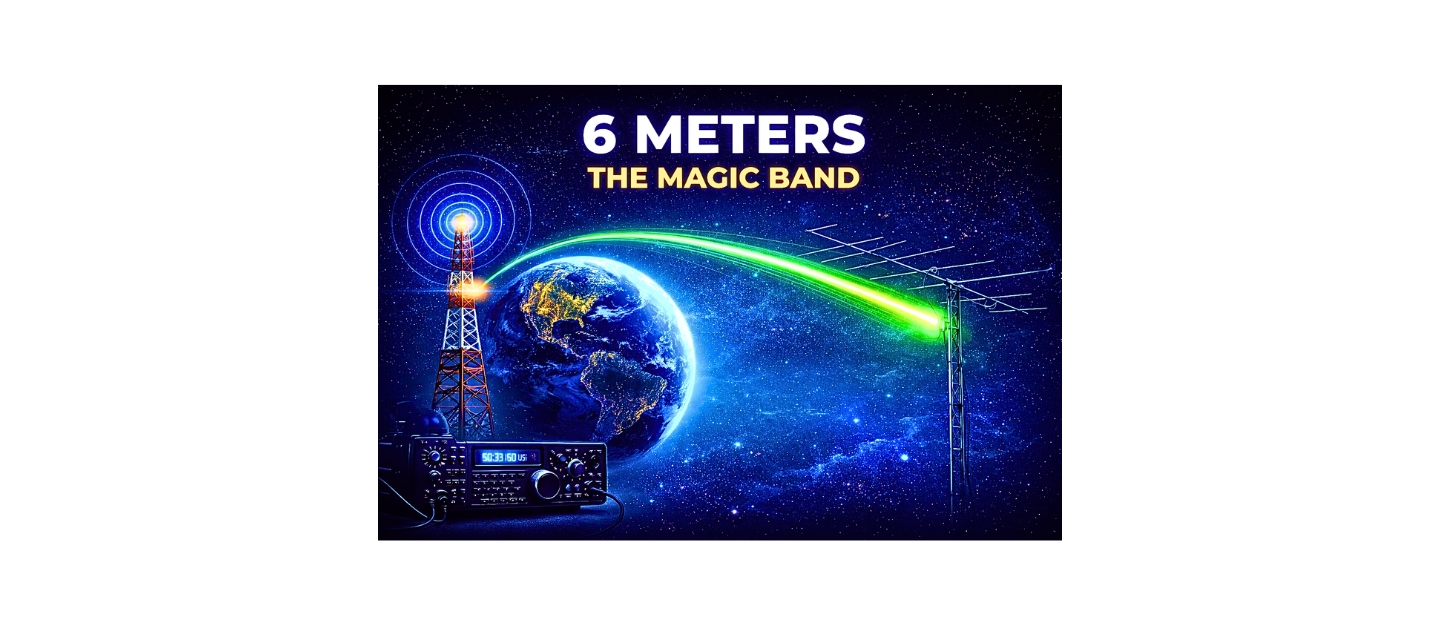
What Is The 6 Meters Band in Amateur Radio
The 6 meters band, also known as the 50 MHz band, is one of the most unique frequencies in amateur radio. It sits between high frequency HF and very high frequency VHF, giving it characteristics of both.
Operators use 6 meters for local communication, weak signal work, and long-distance DX when propagation conditions allow. Its unpredictable nature is what earned it the nickname “the magic band.”
The 6-meters band, fondly nicknamed “the magic band,” holds a special place in the hearts of amateur radio operators. Sitting just above the HF bands and below the VHF spectrum, it straddles the best qualities of both. Although not as predictable as HF bands, it often surprises hams with sudden long-distance openings.
Why Its Called the Magic Band
The 6 meter band earned its nickname because of its unpredictable propagation behavior. At times it behaves like a typical VHF band with limited range. At other times, it opens dramatically, allowing contacts over hundreds or even thousands of miles.
These sudden openings are caused by changing atmospheric and ionospheric conditions. Unlike HF bands, which often follow more consistent patterns, 6 meters can shift rapidly, rewarding operators who monitor the band regularly.
New to the hobby? Start with our Complete Guide to Ham Radio Fundamentals.
What Makes It Magic?
Many bands offer reliable propagation or stable local communication. However, 6 meters combines both worlds with an unpredictable twist. One moment it’s quiet and limited to local line-of-sight contacts. Suddenly, it bursts open and enables conversations thousands of miles away. Because of this, hams cherish the excitement and challenge it brings.
While HF bands rely mostly on ionospheric reflection, 6 meters can leverage multiple propagation modes. Sporadic E, tropospheric ducting, F2 layer, and even meteor scatter can all open this band. Therefore, operators must always listen and be ready for unexpected DX opportunities.
Common Propagation Modes on 6 Meters
Several propagation modes contribute to the unique behavior of the 6 meter band.
Sporadic E propagation is the most common and produces strong signals over medium distances. Tropospheric ducting allows signals to travel beyond the normal horizon, especially in coastal regions.
F2 propagation, although rare, enables worldwide communication during periods of high solar activity. Meteor scatter provides brief signal reflections during meteor showers, allowing short but usable contacts.
Understanding these modes helps operators recognize when the band may be opening.
When Does It Open?
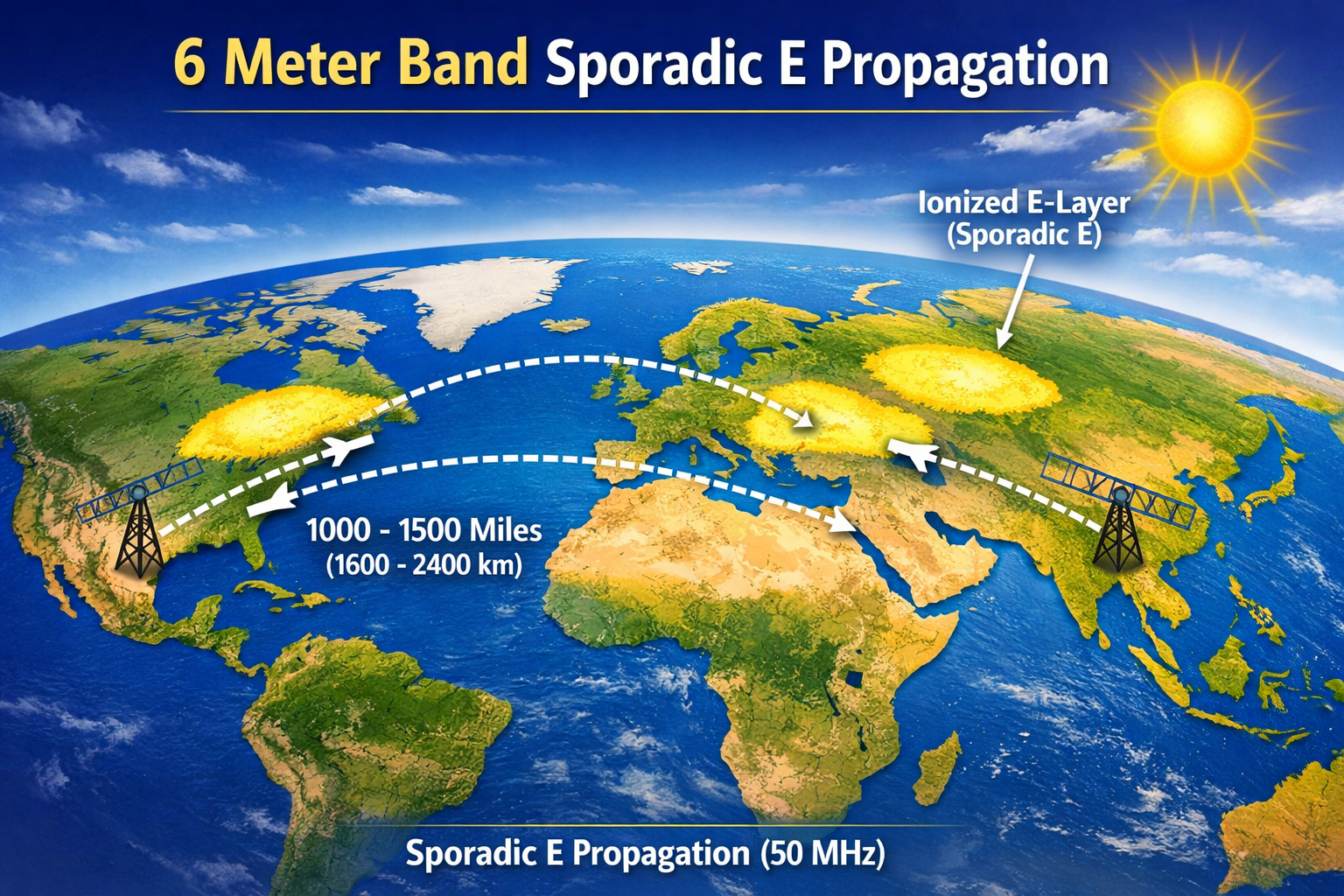
Generally, the best time for 6 meters is during late spring and early summer. Sporadic E propagation peaks in these months, allowing signals to bounce off dense ionized patches in the E layer. Consequently, contacts within 500 to 1550 miles become common. Occasionally, multiple E-layer hops occur, pushing signals even farther.
Additionally, during solar maximum years, the F2 layer can reflect 6-meter signals. This rare event allows worldwide communication similar to what hams enjoy on 10 meters. During winter, brief openings might still surprise you, especially around dawn and dusk.
Best Frequencies and Modes on 6 Meters
The 6 meter band supports multiple operating modes, each suited to different conditions. Single sideband SSB is commonly used for weak signal and DX operation, typically around 50.125 MHz. FM is used for local communication and repeaters, usually higher in the band.
Digital modes such as FT8 are extremely popular because they allow contacts even when signals are very weak. CW is also widely used for long-distance communication. Monitoring common calling frequencies helps operators quickly identify band openings.
How Propagation Affects 6 Meters
Propagation shapes every aspect of the magic band. Local communication often works through direct VHF paths, just like on 2 meters. But when ionospheric layers cooperate, they bend or reflect signals far beyond the horizon. Sporadic E forms quickly and unpredictably, so quick action is key.
Antennas for the 6 Meter Band
Antennas for 6 meters are relatively compact compared to lower HF bands, making them accessible for most operators.
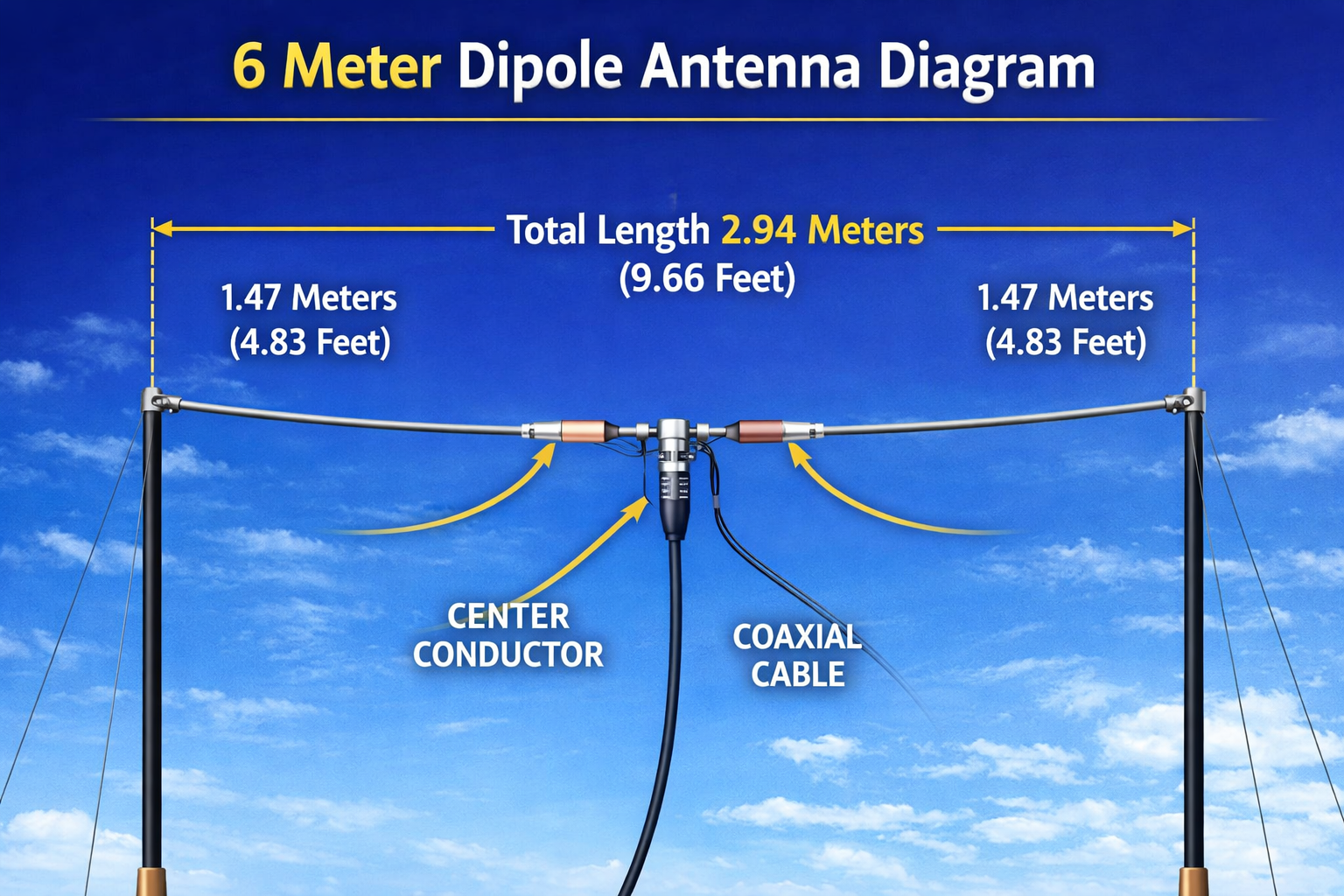
Simple dipole antennas work well and are easy to build. Vertical antennas are useful for FM and local communication. For better DX performance, directional antennas such as Yagis provide gain and improved signal direction.
For those building antennas, using a dipole calculator can help determine the correct element length for the 6 meter band before tuning.
With tropospheric ducting, operators near coastal areas sometimes enjoy extended VHF-range contacts. Furthermore, meteor scatter can briefly enhance the band. During meteor showers, short bursts of reflection help signals travel hundreds of kilometers in a blink.
Advantages of the Magic Band
One huge advantage of 6 meters is its flexibility. It behaves like VHF for local nets and repeaters, yet it surprises you with HF-style DX. This dual personality encourages experimentation with antennas and propagation techniques.
Moreover, antennas for 6 meters are small enough for most hams to build and mount easily. A simple dipole or vertical often works well. Because equipment designed for VHF often covers 6 meters too, many radios come ready for this band out of the box.
Additionally, newcomers love the excitement of catching that unexpected opening. It offers a taste of DX without needing high-power amps or huge beams. Once you work a distant station on a quiet band, you’ll understand why operators call it magic.
Equipment and Power Considerations
Most modern HF and VHF transceivers include 6 meter capability, making it easy to get started without additional equipment.
Power levels for 6 meters vary, but many successful contacts are made using low to moderate power. Because propagation can enhance signals significantly, even modest stations can achieve impressive results during openings.
Good feedline quality and proper antenna placement often have a greater impact than increasing power.
Tips for Operating the 6 Meter Band
Success on 6 meters depends on timing, awareness, and preparation. Monitor the band frequently, especially during peak seasons. Keep your radio tuned to common calling frequencies to catch openings as they occur.
Use propagation tools and cluster networks to identify active regions. When the band opens, act quickly, as openings can be short-lived.
Experimenting with different modes and antenna setups can significantly improve results.
Conclusion
For amateur radio enthusiasts, 6 meters stands as a bridge between local chatter and global adventure. Its unpredictable nature fuels constant curiosity. Because of its unique blend of VHF clarity and HF reach, it keeps operators listening, waiting, and hoping for that next magical moment. So, tune in, watch the skies, and prepare to ride the magic band when it awakens!
Frequently Asked Questions
What frequency is the 6 meter band?
The 6 meter amateur radio band centers around 50 MHz and typically spans 50.0 to 54.0 MHz, depending on the region.
Why is 6 meters called the magic band?
Operators call it the magic band because its unpredictable propagation allows sudden long-distance communication when conditions are right.
What is the best time for 6 meter propagation?
Late spring and early summer are the most active periods due to Sporadic E propagation, with occasional openings during other seasons.
What antenna works best for 6 meters?
Dipoles, verticals, and small Yagi antennas all work well, depending on whether the goal is local communication or DX.
Please consider Donating to help support this channel