
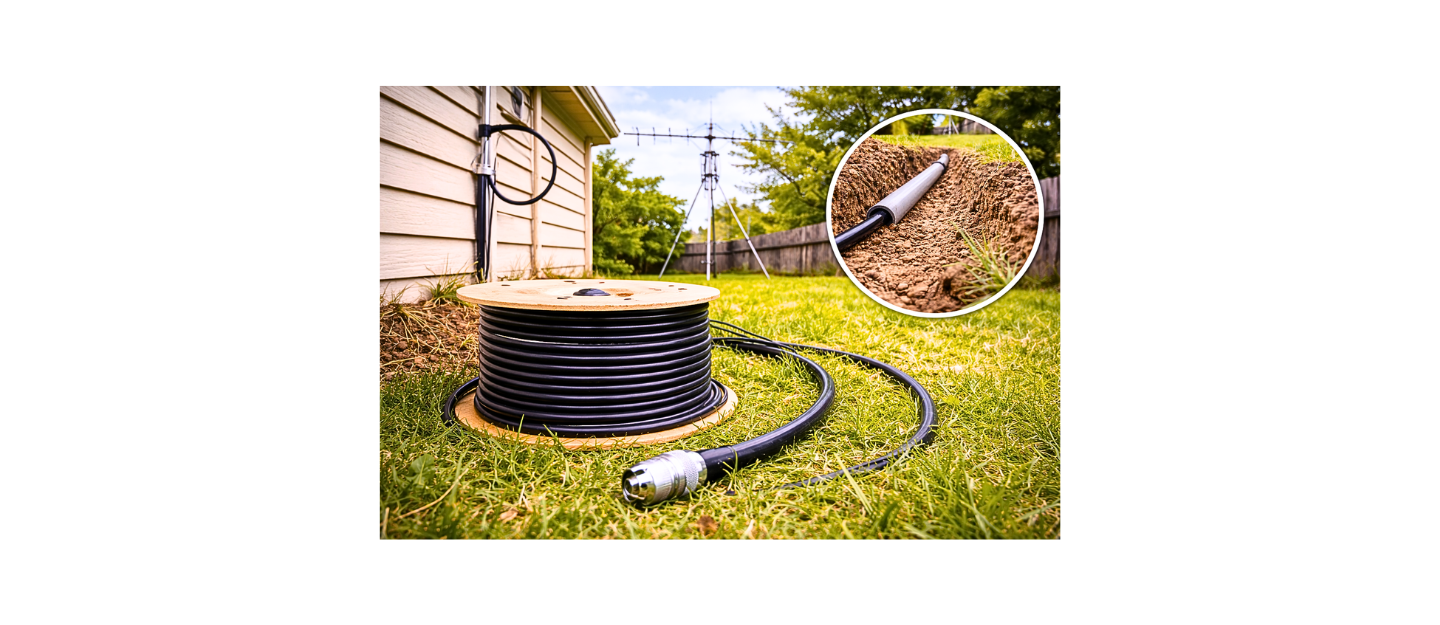
Why Coax Routing Matters More Than Most Hams Realize
Coax Cable Routing is one of the most overlooked factors in ham radio performance, yet it directly impacts signal strength, noise levels, and long-term station reliability. Even the best antenna system can underperform if the feedline is poorly routed, exposed to damage, or installed without considering RF efficiency.
In many cases, issues like high SWR, intermittent signal loss, or unexplained noise are not caused by the radio or antenna at all, but by how the coax is run between them. Therefore, understanding the best routing methods is essential for building a station that performs consistently and avoids costly troubleshooting later.
Proper coax cable routing matters because it protects overall signal quality while also preventing long-term damage to the feedline that can quietly degrade performance over time. Moreover, smart routing choices help reduce noise pickup from nearby electrical sources. This minimize impedance disruptions, and avoid unnecessary signal loss caused by sharp bends, abrasion, or moisture intrusion.
When coax is routed thoughtfully, it remains mechanically stable, electrically efficient, and easier to maintain, which leads to more consistent on-air results. Therefore, every station benefits from choosing the best coax path early. Good planning upfront saves troubleshooting time, replacement costs, and performance headaches later.
What Happens When Coax Is Routed Incorrectly
Improper coax routing can introduce a range of performance issues that are often misdiagnosed. Sharp bends, moisture intrusion, and proximity to electrical noise sources can all degrade signal quality over time.
Additionally, poorly supported coax can develop internal damage that is not visible from the outside, leading to gradual signal loss. In more severe cases, water ingress can permanently ruin the feedline, requiring full replacement. Because of this, routing should always be planned with both electrical performance and physical protection in mind.
The Three Main Ways to Run Coax Cable
Ham radio operators typically use one of three methods for coax c able routing, depending on station type and installation goals. Each method offers different advantages in terms of durability, ease of installation, and RF performance.
Above-ground routing provides easy access and flexibility, making it ideal for temporary or adjustable setups. Ground-level routing allows for quick deployment with minimal effort, but sacrifices long-term protection. Underground routing offers the highest level of protection and a clean installation, though it requires more planning and effort.
Choosing the right method depends on whether the station is temporary, portable, or permanent, as well as environmental factors such as weather exposure and terrain.
Common Ways to Run Coax
Hams typically route coaxial cable above ground, at ground level or underground. This depends on how their station is built and how permanent the installation needs to be. Additionally, each routing method aligns with different property layouts, antenna locations, and operating goals, ranging from quick portable setups to long-term home stations.
Above-ground runs favor easy access and maintenance, ground-level routing supports fast and flexible deployment. Underground installations offer RFI loss, protection and a clean appearance. However, no single method fits every station equally well, which is why operators must weigh convenience, durability, and performance.
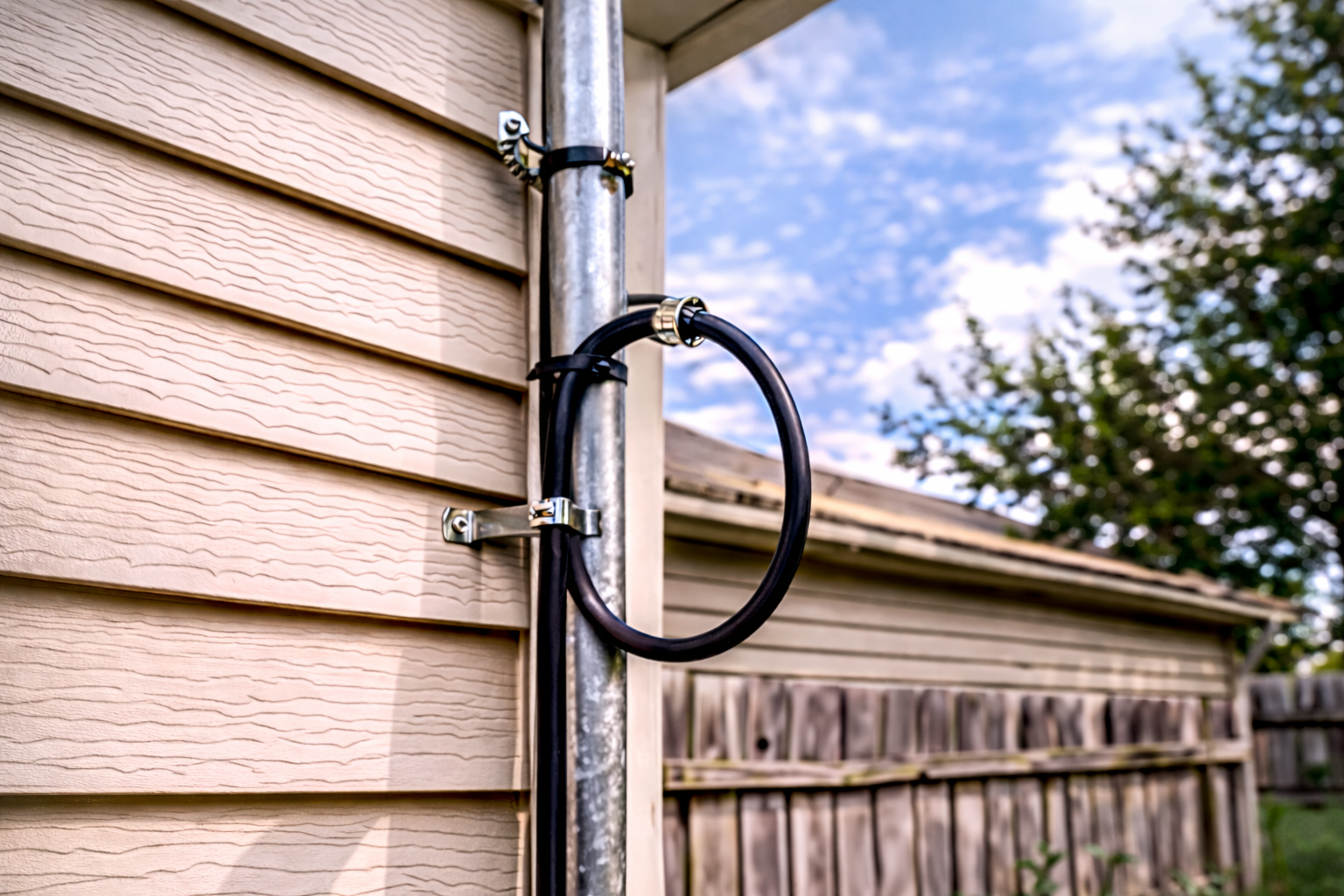
Running Coax Above Ground
Above-ground routing keeps coaxial cable elevated along poles, walls, or other supporting structures, which makes the entire run easy to see and access. As a result, operators can quickly inspect the feedline for wear, weather damage, or loose connections and replace sections without digging or disruption. Because of this convenience and flexibility, many portable and temporary stations favor above-ground routing as a practical, low-commitment solution.
Pros of Above Ground Coax
- First, above ground coax stays dry and cool when properly supported.
- Additionally, you can quickly spot damage from animals or weather.
- Consequently, troubleshooting becomes faster and less expensive.
Cons of Above Ground Coax
- Sunlight can degrade the jacket over time.
- Wind movement may stress connectors and mounting points.
- Therefore, a proper strain relief and UV resistant coax remain essential.
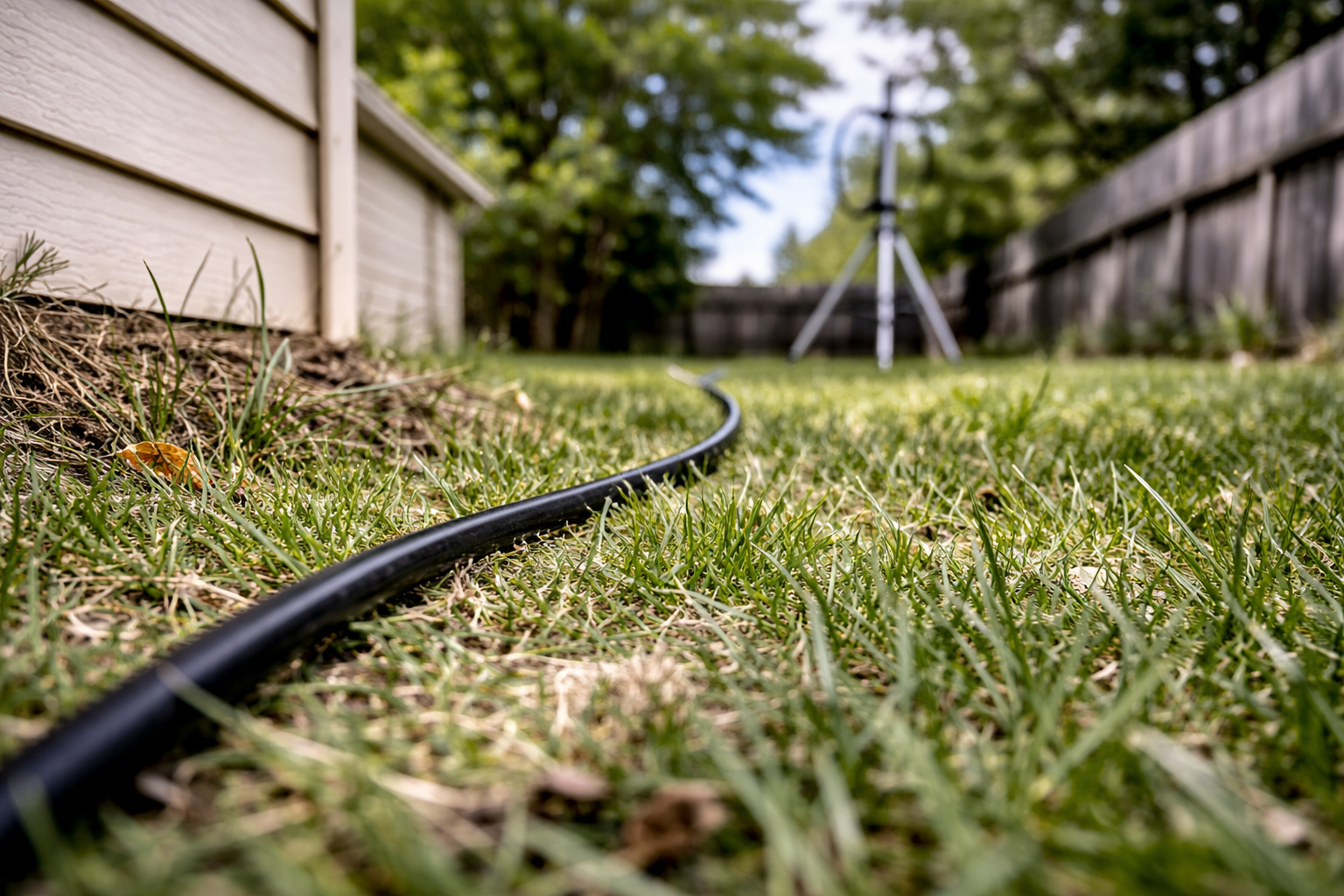
Running Coax On the Ground
Ground-level routing places coaxial cable directly on soil, grass, or gravel. This allows operators to deploy a feedline quickly without the need for supports, mounts, or specialized hardware. As a result, this approach works well for rapid setups, field operations, and temporary stations.
However, constant contact with the ground exposes the coax to moisture, abrasion, pests, and accidental damage from foot traffic or lawn equipment, which can shorten its lifespan. Therefore, while ground-level routing offers unmatched convenience, operators should weigh the tradeoff between fast deployment and long-term durability.
Pros of On the Ground Coax
- First, installation requires little planning or labor.
- Moreover, this method works well for temporary or field operations.
- Consequently, operators save time during quick antenna experiments.
Cons of On the Ground Coax
- However, foot traffic and lawn equipment easily damage the cable.
- Moreover, moisture can wick into connectors and increase loss.
- Therefore, long term use often leads to early failure.
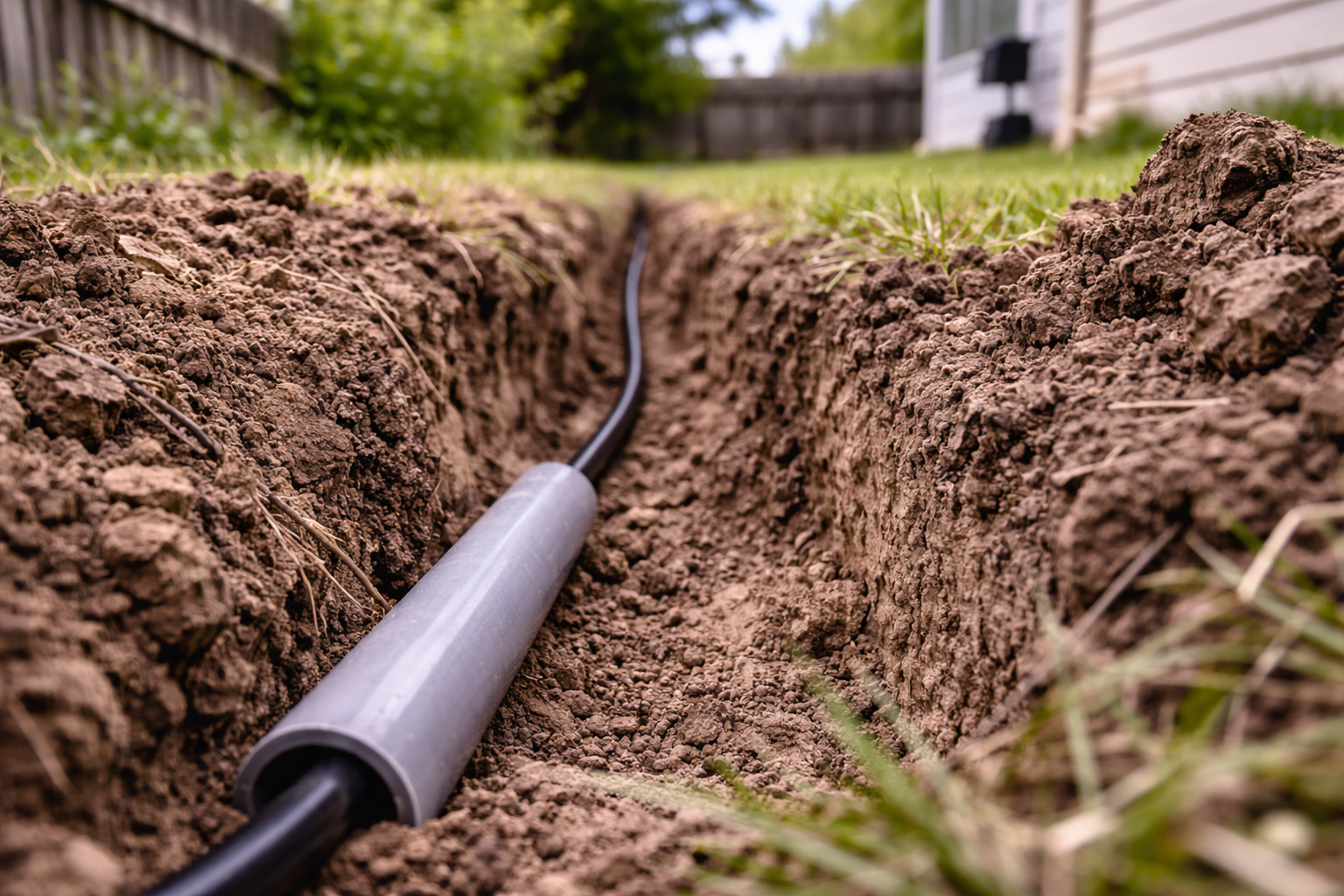
Running Coax Underground
Underground coax routing protects feedlines from weather, foot traffic, and lawn equipment. Additionally, it improves station reliability by reducing accidental damage over time. Hams often choose burial when aesthetics matter or when long runs cross open yards. However, careful planning matters because soil conditions, moisture, and future digging all affect longevity.
Therefore, selecting direct-burial rated coax or conduit becomes a critical first step. Moreover, mapping the route before digging prevents sharp bends and unnecessary length. As a result, a well-planned trench saves effort and preserves signal quality.
Installation and Performance Considerations
Underground runs demand attention to drainage, depth, and strain relief at entry points. Additionally, gentle bends prevent impedance changes and long-term stress on the cable. Many operators bury coax below the frost line to avoid seasonal movement. However, shallow installations work when conduit provides protection and flexibility.
Consequently, sealing both ends keeps moisture from migrating inside the jacket. Moreover, labeling the route helps avoid future damage during landscaping. As a result, underground coax routing delivers a clean installation with dependable RF performance for years.
Pros of Underground Coax
- First, buried coax avoids UV exposure and physical impact.
- Additionally, conduit provides extra protection and easier future replacement.
- Consequently, the installation looks clean and professional.
Cons of Underground Coax
- However, installation requires more effort and planning.
- Moreover, water intrusion can occur without proper drainage and sealing.
- Therefore, poor burial practices cause hidden and costly problems.
Which Coax Routing Method Is Best
The best coax cable routing method ultimately depends on how permanent the station is, the surrounding environment, and how easily you need to access the feedline for maintenance or changes. Moreover, underground runs make the most sense for permanent installations where the coax can be properly buried in conduit, protected from moisture, and left undisturbed for years.
This approach requires careful planning, added materials, and more labor during installation, which makes repairs more difficult later. Above ground routing, by contrast, works best when flexibility matters, since it allows operators to inspect the coax visually, troubleshoot problems quickly, and reroute or replace sections with minimal effort. Therefore, ground level routing generally fits short-term or experimental setups only, as it offers fast deployment but sacrifices long-term durability and protection.
Related Ham Radio Setup Guides
To get the best performance from your station, coax routing should be considered alongside other critical setup factors.
You should also review antenna placement, grounding techniques, and feedline selection to ensure your entire system works efficiently. Each of these elements directly impacts signal quality and overall station performance.
Coax Cable Routing Matters
Coax cable routing matters because it balances physical protection, ease of access, and long-term signal integrity, all of which directly affect station performance. Moreover, taking time to plan the routing path in advance helps prevent common problems such as crushed cable, moisture intrusion, sharp bends, and unnecessary exposure to electrical noise sources.
Plan your coax cable routing with both current needs and future changes in mind to simplify maintenance and make troubleshooting far less frustrating. Ultimately, choosing the right routing method from the start keeps your station reliable, efficient, and ready to deliver consistent results as your operating needs evolve.
Coax Routing FAQs
Can you run coax underground without conduit?
Yes, but only if you use direct-burial rated coax. Even then, conduit is strongly recommended to protect against moisture and make future replacement easier.
How deep should coax be buried?
Most installations bury coax between 6 to 18 inches deep. In colder climates, burying below the frost line helps prevent movement and damage.
Does coax lose signal when buried?
No, burial itself does not cause signal loss. However, moisture intrusion or poor installation can increase loss over time.
Is it better to run coax above ground or underground?
Underground routing is best for permanent installations due to protection and stability. Above ground is better for flexibility and easy maintenance.
Can coax pick up electrical noise?
Yes, especially when routed near power lines, appliances, or electronic devices. Proper routing helps minimize interference.
Author Experience Note
This guide is based on real-world ham radio installation practices and common feedline issues experienced by operators in both portable and permanent station setups. Proper coax routing is one of the most impactful upgrades you can make to improve reliability and on-air performance.
Please consider Donating to help support this channel