
Quieting Power Line Noise can take a few months but the results are well worth the wait. Power line noise creates buzzing, crackling, or harsh signals that spread across multiple bands. Moreover, this interference often rises during wind, rain, or temperature changes.
Utilities usually cause the noise through loose hardware, cracked insulators, or corroded connections. Therefore, recognizing these patterns helps hams separate utility noise from station-related problems.
Verifying the Noise Origin
Before contacting the utility, hams must confirm the noise comes from outside the station. Additionally, operators should shut off breakers to rule out household electronics. A battery-powered portable receiver makes this process much easier. Consequently, steady signal strength near power lines strongly suggests a utility source.
Tracking the Interference
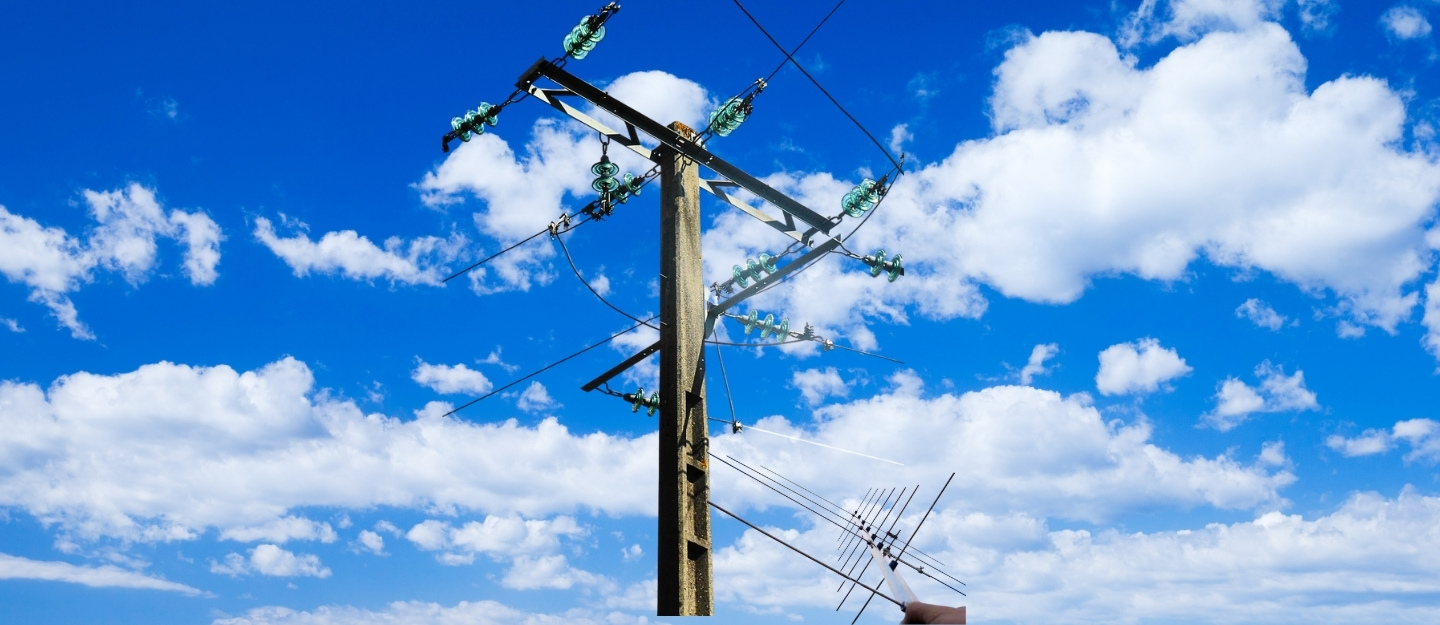
Tracking power line noise with a small Yagi and a handheld receiver gives hams a precise way to locate interference sources. Moreover, a compact Yagi provides strong directivity, which allows operators to identify the direction of the strongest noise. By slowly rotating the antenna, you can observe sharp peaks and nulls that reveal the noise path. Therefore, consistent bearings taken from multiple locations help narrow the problem area quickly.
Additionally, a handheld receiver makes this process portable and efficient. Walking along streets or property lines while monitoring the signal strength helps confirm when the noise follows power infrastructure. As you approach the source, the noise usually increases in intensity and becomes more erratic. Consequently, poles, transformers, or insulators near the strongest signal often indicate the failure point.
Using an attenuator or reducing receiver gain improves accuracy when you get close. Moreover, this prevents receiver overload, which can mask the true source direction. Switching bands can also help, since power line noise often appears stronger on lower frequencies. Therefore, cross-checking results across bands strengthens your conclusions
Logging Interference
Accurate logs provide valuable proof when reporting power line noise. Moreover, written records should include dates, times, frequencies, and signal characteristics. Weather conditions also help utilities link noise to failing hardware. Therefore, detailed documentation speeds up troubleshooting and repair decisions.
Preparing to Contact the Utility
Preparation improves the outcome of your first conversation with the utility company. Additionally, hams should clearly explain that the interference affects licensed radio communications. Calm and respectful language sets a cooperative tone. Consequently, utilities respond more positively to organized and professional reports.
Communicating in Technical Terms
Using familiar terminology helps utility staff understand the issue quickly. Moreover, describing arcing, intermittent discharge, or hardware noise aligns with utility training. Avoid emotional complaints and focus on measurable observations. Take images of your findings and include them in report to power company. Therefore, technicians can associate the problem with known infrastructure failures.
Working With Utility Crews
Field technicians often locate noise faster with operator assistance. Additionally, offering to demonstrate the interference saves time during inspections. Portable radios help crews pinpoint noisy components in real time. Consequently, teamwork often leads to faster and more accurate repairs.
Staying Engaged During Repairs
Some noise problems require multiple visits to fully resolve. Moreover, polite follow-ups keep your report active in the system. Document each call and technician visit carefully. Therefore, consistent engagement prevents delays and forgotten service requests.
Understanding Regulations and Rights
Federal rules protect licensed operators from harmful interference. However, cooperation usually resolves issues without formal complaints. Escalation should remain a last option, not the first step. Consequently, professionalism protects both your rights and long-term relationships.
Quieting Power Line Noise
After repairs, continue monitoring affected bands for returning noise. Additionally, early reporting prevents small defects from worsening. Good grounding and bonding reduce susceptibility to external interference. Finally, proactive monitoring keeps your station quieter and more enjoyable long term..
Please consider Donating to help support this channel