
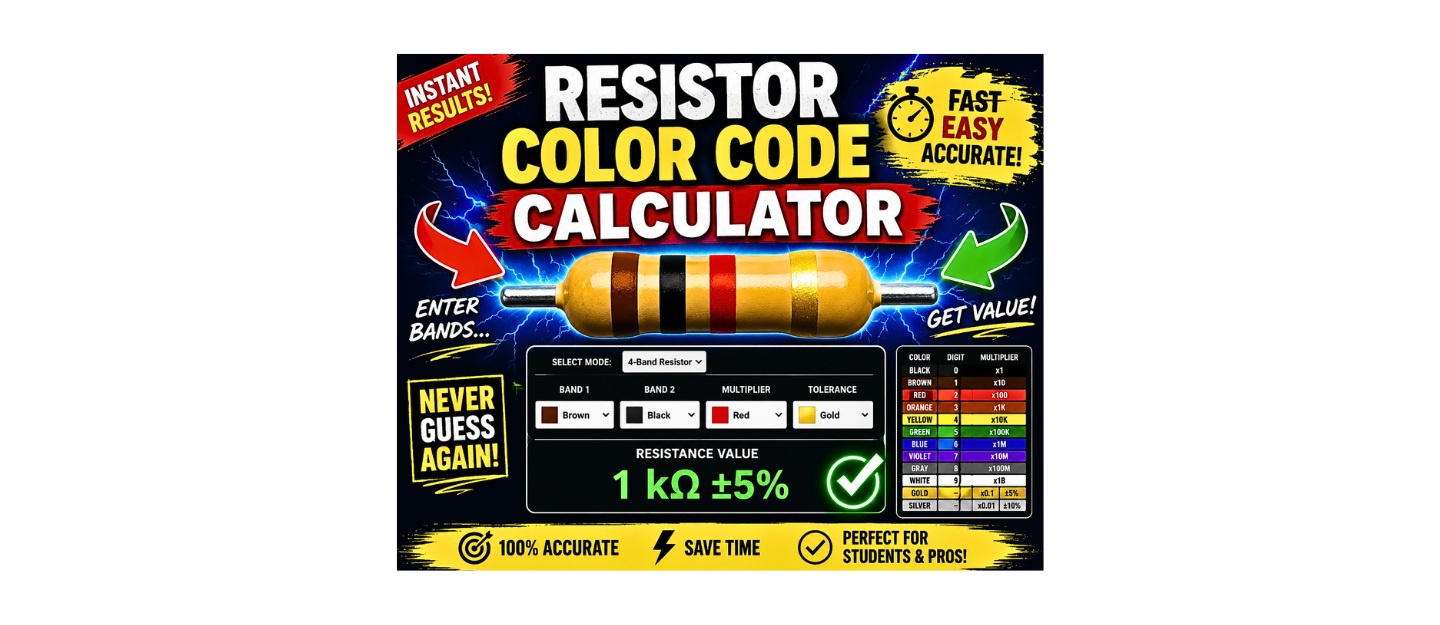
A resistor color code calculator is a simple tool that helps you translate resistor band colors into an exact resistance value. It is useful for electronics work because it removes guesswork and makes it easier to identify parts quickly.
Interactive Resistor Color Code Calculator
>Resistance Value
How The Resistor Color Code Calculator Works
Most through-hole resistors use colored bands to show their value, and each band has a specific meaning. In a standard 4-band resistor, the first two bands represent digits, the third band is the multiplier, and the fourth band shows the tolerance.
In a 5-band resistor, the first three bands represent digits, the fourth band is the multiplier, and the fifth band gives the tolerance. A resistor color code calculator reads these band colors and converts them into a resistance value such as 220 Ω, 1 kΩ, 4.7 kΩ, or 10 kΩ.
The calculator works by matching each color to a number. For example, black usually represents 0, brown represents 1, red represents 2, and so on. Once the digits are identified, the multiplier band tells the calculator how many zeros to add or whether to divide the value.
The tolerance band then shows how accurate the resistor is. A gold tolerance band means the resistor can vary by 5 percent, while silver means 10 percent. This makes the calculator a fast and reliable way to decode resistor markings without needing to memorize every color combination.
Why It Is Useful
This tool saves time when building, testing, or repairing circuits. Instead of stopping to remember the resistor color code chart, you can simply select the band colors and instantly see the value and tolerance. That is especially helpful when working with many resistors at once, sorting parts, or checking components that have faded or hard-to-read markings.
A resistor color code calculator also helps prevent mistakes. Choosing the wrong resistor value can affect current flow, brightness, signal levels, or even damage sensitive parts in a circuit. By confirming the value before installation, users can avoid errors and work more confidently. It is useful for beginners who are still learning the color code system, but it is also valuable for experienced hobbyists, technicians, and students who want a quick reference.
Common Features
A good resistor calculator usually supports both 4-band and 5-band resistors. This versions also displays a visual resistor graphic so users can see the bands in the correct order. It lets you click drop-down menus for each band color, while updating the results automatically as you make a selection.
More advanced calculators may include tolerance explanations, value formatting in ohms, kilohms, and megohms, and support for additional resistor types. Some also work well on mobile devices, making them easy to use in a workshop, classroom, or repair bench. A well-designed calculator should be simple, clear, and fast to read.
Example Use
If a resistor has brown, black, red, and gold bands, the calculator shows 1 kΩ with 5 percent tolerance. That means the resistor’s actual value may vary slightly from the labeled value, but it is still within an acceptable range for many circuits. If the same tool is used on a 5-band resistor with more digits, it can provide even greater precision for sensitive applications.
Conclusion
A resistor color code calculator is a practical and user-friendly electronics tool. It helps users read resistor values accurately, work faster, and avoid mistakes when selecting components.
Ifr you are learning electronics, repairing equipment, or building a new project, this tool makes resistor identification much easier.
Please consider Donating to help support this channel