
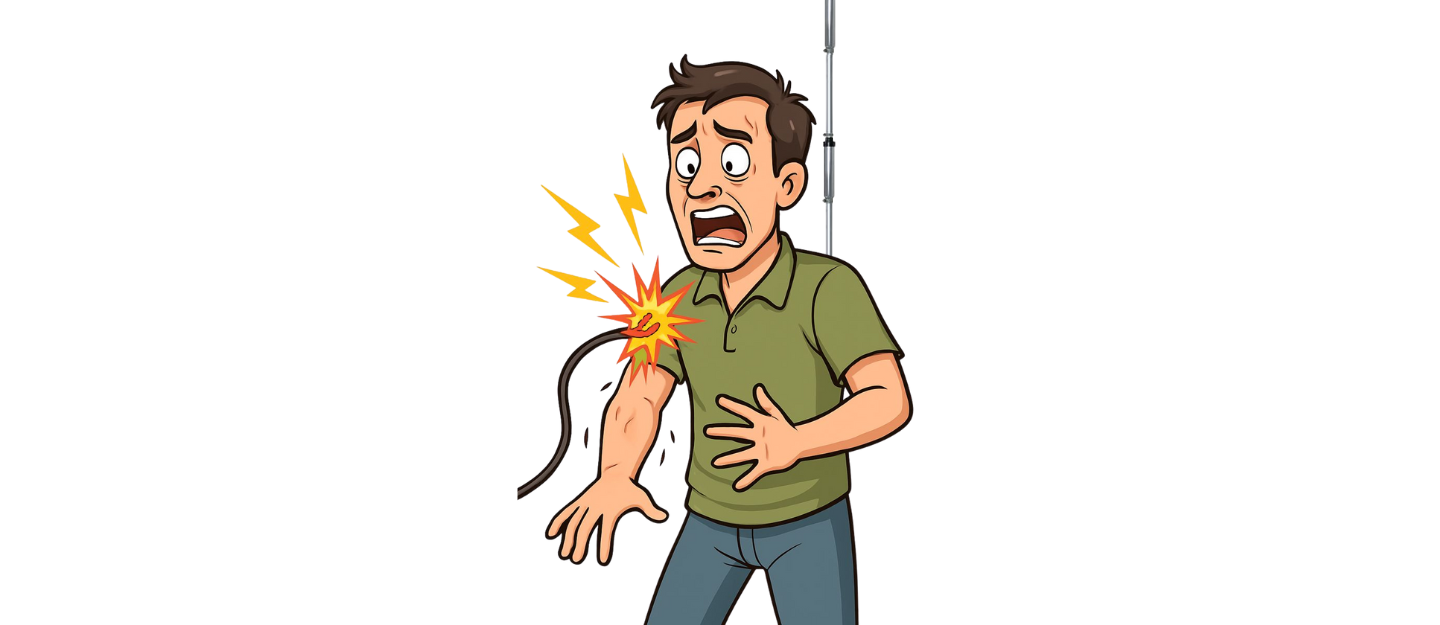
RF exposure refers to the interaction between radio frequency energy and the human body. This exposure occurs when you transmit or receive signals using any radio device, including amateur radios, cell phones, and Wi-Fi equipment. Regulatory bodies establish specific limits to protect individuals from potential health risks. Consequently, understanding these rules ensures safe operation and compliance with the law.
What Is RF Exposure in Amateur Radio?
RF exposure refers to the interaction between radio frequency energy and the human body. In amateur radio, this occurs when transmitting signals from antennas, especially at higher power levels or close distances.
Proper station setup, antenna placement, and operating practices ensure exposure levels remain within safe limits.
New to antenna systems? See our Complete Guide to Ham Radio Antennas.
What Are RF Exposure Limits for Amateur Radio?
The FCC requires amateur radio operators to evaluate RF exposure when operating above specific power thresholds. Most stations must ensure that human exposure remains below the Maximum Permissible Exposure (MPE) limits defined in FCC OET Bulletin 65.
For typical ham radio setups:
- Stations above 50 watts PEP generally require evaluation
- Exposure limits depend on frequency and environment
- Controlled (occupational) limits are higher than public limits
- Distance from the antenna is the most important safety factor
Failing to perform an RF exposure evaluation can result in non-compliance, even if your station operates legally in all other respects.
Regulatory Guidelines
Regulatory agencies, such as the FCC in the United States, set RF exposure limits. These limits vary depending on frequency, power output, and distance from the source. Moreover, the rules differentiate between occupational exposure and general public exposure.
Occupational exposure applies to trained personnel working near transmitters, while public exposure covers everyone else. Therefore, knowing which category applies to you helps determine safe operating conditions.
Why RF Exposure Safety Matters
RF exposure limits are designed to protect operators and the general public from potential health risks. While most amateur radio stations operate safely, improper antenna placement or excessive power levels can increase exposure beyond recommended limits.
Understanding and applying these guidelines ensures both safe operation and regulatory compliance.
FCC RF Exposure Rules You Must Follow (Part 97 Compliance)
The FCC updated RF exposure rules in 2021, requiring all amateur radio operators to perform station evaluations, regardless of license class.
Key compliance points:
- Governed under 47 CFR §97.13(c)
- Requires evaluation against OET Bulletin 65
- Applies to fixed, mobile, and portable stations
- No longer exempt for low-power stations in many cases
The FCC provides a calculator and worksheets to simplify compliance. However, the operator is still legally responsible for accuracy.
Power Density and Distance
One critical factor in RF exposure is power density, measured in milliwatts per square centimeter (mW/cm²). Power density decreases rapidly as distance from the transmitter increases.
For example, doubling the distance from an antenna reduces exposure to a quarter of its original intensity. Additionally, using directional antennas focuses energy away from people, further lowering risk. Consequently, proper placement of antennas is essential for safety.
How Distance Reduces RF Exposure Risk
Distance is one of the most effective ways to reduce RF exposure. As the distance from an antenna increases, exposure levels drop rapidly due to the inverse-square relationship between power density and distance.
Doubling the distance from the source reduces exposure to roughly one-quarter of its original level, making proper antenna placement critical for safety.
RF Exposure Formula (Real Calculation You Should Use)
To estimate safe exposure levels, use the standard power density formula:S=4πR2P×G
Where:
- S = power density (mW/cm²)
- P = transmitter power (watts)
- G = antenna gain (numeric, not dB)
- R = distance from antenna (meters)
Example:
A 100W transmitter with a 3 dBi antenna (~2x gain) at 2 meters distance:
- Exposure drops rapidly with distance
- Moving from 2m to 4m reduces exposure by 75%
Typical Safe Distance Estimates for Common Ham Setups
| Power Output | Antenna Type | Minimum Safe Distance |
|---|---|---|
| 5W (HT) | Rubber Duck | 0.2 – 0.5 meters |
| 50W | Mobile Whip | 1 – 2 meters |
| 100W | Dipole | 2 – 4 meters |
| 500W | Yagi Beam | 5 – 10+ meters |
Note: These are general estimates. Always calculate for your specific setup.
Time-Averaging and Duty Cycle
RF exposure rules consider not only intensity but also duration. Time-averaging calculates exposure over a specific period, often six minutes, to account for intermittent transmissions. Likewise, the percentage of time a device transmits affects total exposure.
Devices transmitting continuously will have stricter limitations than those transmitting occasionally. Hence, operators must evaluate both power and time to remain compliant.
Real-World Example: Safe Operating Distance
A typical amateur radio station transmitting at 100 watts with an outdoor antenna mounted above roof level will generally remain within safe exposure limits when operators maintain proper distance from the antenna.
Indoor antennas or installations close to operating positions require more careful evaluation to ensure compliance.
How Duty Cycle Changes RF Exposure Risk
Not all modes expose you equally. Duty cycle dramatically affects compliance:
- SSB (voice): ~20% duty cycle
- CW: ~40% duty cycle
- FT8 / digital modes: ~100% duty cycle
This means a 100W FT8 signal can create 5× more exposure risk than SSB at the same power.
Measurement and Assessment
Measuring RF exposure involves specialized instruments like field strength meters. These tools quantify electric and magnetic fields in the surrounding area. In many cases, operators perform calculations based on antenna gain, transmitter power, and distance to predict exposure levels.
Furthermore, some manufacturers provide RF exposure charts to simplify compliance. By regularly assessing exposure, you maintain both safety and legal adherence.
Common RF Exposure Mistakes to Avoid
- Placing antennas too close to operating positions
- Ignoring duty cycle during digital transmissions
- Assuming low power eliminates risk
- Failing to evaluate exposure after station changes
- Relying only on manufacturer assumptions without verification
Avoiding these mistakes helps maintain both safety and compliance.
Tools for RF Exposure Evaluation
Serious operators use:
- FCC RF Exposure Calculator
- Field strength meters
- Online ham radio calculators (ARRL, manufacturer tools)
You should also document your evaluation results for compliance records.
Proven Ways to Reduce RF Exposure (Without Losing Performance)
- Increase antenna height above occupied areas
- Relocate antennas away from living spaces
- Use lower power when full power is unnecessary
- Prefer directional antennas to control radiation pattern
- Avoid operating high-duty-cycle modes near people
- Install physical barriers or restricted zones if needed
Even small adjustments in antenna placement can reduce exposure significantly.
What Happens If You Ignore RF Exposure Rules?
Failure to comply can result in:
- FCC warnings or enforcement action
- Fines or license issues
- Liability if exposure affects others
While enforcement is rare, compliance is still required and increasingly emphasized.
Operator Responsibility
Ultimately, the responsibility for RF safety rests with the operator. Even when equipment meets regulatory standards, improper installation or positioning can result in excessive exposure.
Therefore, amateur radio operators and professionals must stay informed about limits, perform assessments, and apply mitigation methods consistently. By doing so, they ensure a safe environment for themselves and those around them.
Real-World Example: Backyard Dipole Setup
A typical 100W HF station with a dipole antenna installed 25 feet above ground:
- Safe for general public exposure at ground level
- Potential risk directly beneath antenna at close range
- Increasing height to 35 feet significantly improves safety margin
Continuous Learning
RF exposure rules are updated as research evolves. Staying informed allows operators to adapt practices to the latest safety recommendations. Attending workshops, reviewing regulatory updates, and consulting exposure guidelines helps maintain compliance. Consequently, ongoing education strengthens both safety and confidence in operating radio equipment.
Final Verdict: How Important Is RF Exposure Awareness?
RF exposure awareness is essential for safe and responsible amateur radio operation. By understanding how power, distance, and time affect exposure levels, operators can confidently design stations that meet both safety standards and performance goals.
Proper knowledge and consistent evaluation ensure long-term compliance and safe operation.
RF Exposure
Understanding RF exposure rules combines knowledge of regulations, measurement techniques, and mitigation strategies. By actively managing power, distance, and time, operators minimize risk while enjoying effective communication. Ultimately, following these guidelines protects health, ensures compliance, and promotes responsible use of radio technology.
What Is RF Exposure in Amateur Radio?
RF exposure refers to the interaction between radio frequency energy and the human body. In amateur radio, this occurs when transmitting signals from antennas, especially at higher power levels or close distances.
Proper station setup, antenna placement, and operating practices ensure exposure levels remain within safe limits.
RF Exposure FAQ
Do all ham radio operators need RF exposure evaluation?
Yes. Since 2021, the FCC requires nearly all stations to evaluate exposure.
Is handheld radio RF exposure dangerous?
At typical power levels, handheld radios are generally safe when used properly.
What is the safest distance from a ham radio antenna?
It depends on power and antenna type, but distance is the most effective way to reduce exposure.
Do digital modes increase RF exposure risk?
Yes. High duty cycle modes like FT8 significantly increase exposure compared to voice.
About the Author
Vince, W2KU, is a licensed Extra class amateur radio operator and the founder of Ham Shack Reviews. The committee named him Amateur of the Year in 2026 for his contributions to amateur radio education and equipment evaluation.
Please consider Donating to help support this channel