
Understanding CTCSS/DCS, and tone squelch will improve your amateur radio operating skills.Continuous Tone-Coded Squelch System (CTCSS) and Digital-Coded Squelch (DCS) are two technologies commonly used to achieve this goal. They allow operators to selectively mute their receivers based on specific tones or digital codes.
CTCSS, also known as “PL tone” (Private Line), works by superimposing a low-frequency audio tone onto the transmitted signal. This tone will open the squelch when present. This effectively filters out all other signals that do not carry the specified tone. Additionally reducing the likelihood of unwanted interference from other users sharing the same frequency.
DCS takes this concept a step further by encoding digital data directly onto the transmitted signal. Instead of using audible tones, DCS encodes a unique digital code for each channel or group of channels. Receivers equipped with DCS decoding capability can be programmed to open their squelch when the correct digital code is received. This provides a higher level of selectivity and security compared to CTCSS.
New to the hobby? Start with our Complete Guide to Ham Radio Fundamentals.
Understanding CTCSS/DCS: What They Actually Do
CTCSS and DCS are selective squelch systems that control when your radio speaker opens. Instead of hearing every transmission on a frequency, your radio only unmutes when it detects the correct tone or digital code. This allows multiple groups to share the same frequency without constantly hearing each other.
These systems do not create new channels or provide real privacy — they simply filter what your radio plays through the speaker.
Important:
Understanding CTCSS/DCS Do NOT Provide Privacy
CTCSS and DCS are often called privacy tones or privacy codes, but they do not make your transmissions private.
These systems only control when a radio’s speaker opens. Any radio monitoring the frequency without tone filtering will still hear the full transmission normally.
Tone squelch reduces unwanted audio, it does not encrypt, hide, or secure communication.
Advantages of CTCSS and DCS
Both CTCSS and DCS offer several advantages in amateur radio communication. By selectively filtering out unwanted signals, they help improve communication reliability. This is especially helpful in crowded or noisy operating environments. They also enhance security by ensuring only the signals with the correct tone or digital code are received.
In addition to their benefits, CTCSS and DCS have some limitations that operators should know. While effective at filtering out unwanted signals, they do not provide complete immunity to interference. In particularly congested frequency bands, it’s still possible for signals to bleed through or for adjacent-channel interference to occur. Additionally, CTCSS and DCS require coordination and standardization among users to ensure compatibility and avoid conflicts.
Understanding CTCSS/DCS Value with Repeaters
Despite these limitations, CTCSS and DCS remain valuable tools in the amateur radio operator’s toolkit. Whether used to enhance communication reliability, improve privacy and security, or simply reduce unwanted interference. These technologies play a vital role in ensuring clear and effective communication on the airwaves. As technology continues to evolve, CTCSS and DCS are likely to remain essential components of amateur radio communication.
Why Repeaters Use Access Tones
| Purpose | Result |
|---|---|
| Prevent false activation | Blocks noise and interference |
| Allow shared frequencies | Multiple repeaters use same channel |
| Control system access | Organized repeater operation |
| Reduce unwanted audio | Cleaner listening |
Why Repeaters Require Access Tones
Most repeaters require a specific CTCSS tone or DCS code before they will retransmit a signal. This tone acts as an electronic key that tells the repeater the transmission is intentional and authorized.
Without tone control, repeaters would respond to random noise, distant stations, or interference on the same frequency. This could cause constant unwanted transmissions and make shared repeater systems unusable.
When the correct tone is received, the repeater activates and retransmits the signal. If the tone is missing or incorrect, the repeater remains silent. This selective activation keeps repeater operation organized and prevents accidental triggering.
Access tones do not provide privacy. They only control whether the repeater responds.
Tone and Tone Squelch
Along with understanding CTCSS/DCS technology, Tone/Tone Squelch also play an important role in amateur radio. Also known as tone-coded squelch or a sub-audible tone. Also found in modern transceivers, tone squelch helps filter out unwanted signals and interference. It allows operators to focus on the transmissions they want to hear.
At its core, tone squelch works by adding a low-frequency audio tone to the transmitted signal. Also known as a Continuous Tone-Coded Squelch System (CTCSS) tone or PL tone (Private Line). Amateur radio transceivers can decode this tone, even if it is inaudible to the human ear. Each tone corresponds to a specific frequency. Receivers equipped with tone squelch capability can be set to only open their squelch when the correct tone is received.
The benefits of tone squelch are manifold. By selectively filtering out signals without the specified tone, tone squelch helps reduce the likelihood of interference from other users sharing the same frequency. This is particularly useful in crowded or busy operating environments, such as repeater systems or contesting events, where multiple users may be transmitting simultaneously.
How Tone Squelch Works Step-by-Step
- Your radio transmits voice plus a tone or digital code
- The receiving radio listens for that specific tone/code
- If it matches → speaker opens
- If it does not match → audio stays muted
The tone is transmitted continuously while you talk and is usually sub-audible.
CTCSS vs DCS Comparison
| Feature | CTCSS | DCS |
|---|---|---|
| Signal Type | Continuous analog tone | Digital coded signal |
| How It Works | Low-frequency tone transmitted with audio | Digital code embedded in signal |
| Number of Options | Limited tone set | Larger number of codes |
| Selectivity | Good | Higher selectivity |
| Equipment Support | Widely supported | Common on modern radios |
| Primary Purpose | Repeater access and squelch control | Repeater access and squelch control |
Tone Direction Settings Explained
| Setting | Function | Typical Use |
|---|
| Transmit Tone (Encode) | Sends tone when transmitting | Access repeater |
| Receive Tone (Decode) | Opens speaker only for matching tone | Block unwanted signals |
| Tone Squelch | Encode and decode together | Shared repeater systems |
Transmit Tone vs Receive Tone vs Tone Squelch
Modern radios allow tone control in different directions, and understanding this is essential for proper repeater operation.
Transmit tone (encode) means your radio sends a tone when you transmit. This is required to access most repeaters.
Receive tone (decode) means your radio only opens the speaker when a matching tone is received. This prevents hearing other repeaters or users on the same frequency.
Tone squelch uses both encode and decode together. Your radio transmits the correct tone and only receives signals that match the programmed tone.
Many repeaters require transmit tone only. Some systems require both transmit and receive tones to reduce interference from distant repeaters sharing the same frequency.
Incorrect tone direction is one of the most common causes of repeater access problems.
Tone Encode vs Tone Decode vs Tone Squelch
Modern radios allow separate control of transmit and receive tone functions.
Tone Encode means the radio transmits a tone to access a repeater.
Tone Decode means the radio only opens squelch when receiving a matching tone.
Tone Squelch uses both encode and decode together.
Many repeaters require transmit tone only. Some systems require both transmit and receive tones to reduce interference from distant repeaters using the same frequency.
Understanding which tone direction a repeater requires is essential when programming your radio.
Key Advantage of Tone Squelch
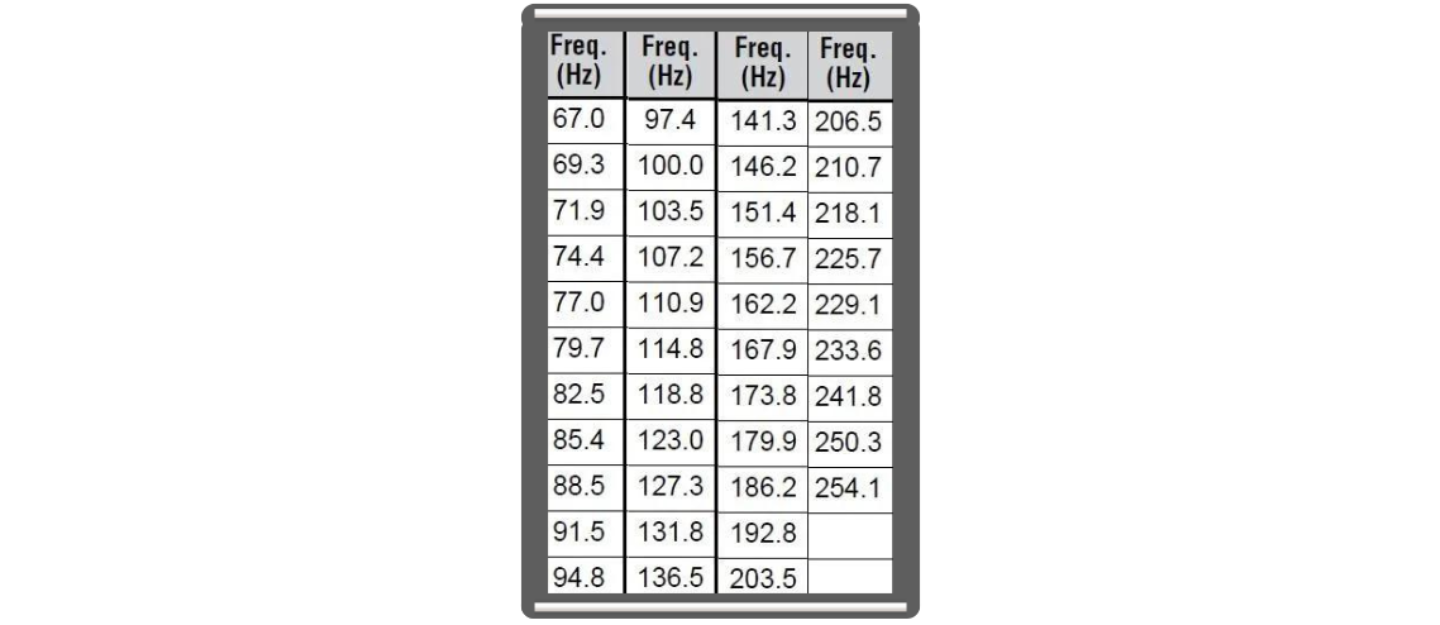
One of the key advantages of tone squelch is its flexibility and versatility. Operators can choose from a wide range of CTCSS tones, typically ranging from 67 Hz to 254 Hz, allowing for precise tuning and customization based on specific operating requirements. This versatility extends to both transmit and receive settings, enabling operators to configure their radios to transmit with a specific tone while receiving on a different tone or without tone squelch altogether.
Despite its many benefits, tone squelch is not without its limitations. In particularly congested frequency bands, it’s still possible for signals to bleed through or for adjacent-channel interference to occur. Additionally, tone squelch requires coordination and standardization among users to ensure compatibility and avoid conflicts. However, when used properly and in conjunction with other best practices in amateur radio operation, tone squelch remains an invaluable tool for improving communication reliability and reducing interference on the airwaves.
Do CTCSS and DCS Provide Privacy?
No. CTCSS and DCS do not encrypt transmissions.
Anyone monitoring the frequency without tone filtering will still hear every transmission. Tone squelch only controls whether your radio opens its speaker when receiving a signal.
Why CTCSS and DCS Do Not Provide Privacy
Understanding CTCSS/DCS are sometimes misunderstood as privacy features, but they do not encrypt or hide communications.
Any receiver without tone decode enabled will hear all transmissions normally. The tone only controls whether a specific receiver unmutes its speaker. The transmitted audio remains unchanged and fully accessible to anyone monitoring the frequency.
Tone systems are designed for channel management, not security. Their purpose is to reduce unwanted audio and allow multiple systems to share frequencies without constant interference.
Understanding CTCSS/DCS— What’s the Difference?
CTCSS uses continuous analog sub-audible tones transmitted along with the audio signal. Each tone is a specific low-frequency audio signal.
DCS uses a digital code instead of a continuous tone. The code is transmitted as data embedded in the signal and decoded by compatible receivers.
CTCSS is simple and widely supported.
DCS provides greater selectivity and more available codes.
Both perform the same function, controlling when a receiver or repeater responds but use different signaling methods.
How to Program CTCSS or DCS in Your Radio
To use a repeater, you must program the correct transmit frequency, offset, and tone settings.
- Set repeater frequency
- Set offset direction and amount
- Enable tone encode (CTCSS or DCS)
- Enter correct tone or code
- Enable tone decode if required
Always confirm repeater tone settings from reliable sources such as repeater directories or local operators.
Incorrect tone programming is one of the most common reasons a repeater does not respond.
Example of Real-World Repeater Tone Use
Consider two repeaters operating on the same frequency but located in different regions. Each repeater uses a different CTCSS tone.
When an operator transmits with the correct tone, only the intended repeater activates. The other repeater ignores the transmission because it does not detect its assigned tone.
On the receive side, operators may enable tone squelch so they only hear their local repeater and not distant systems using the same frequency.
This allows multiple repeaters to share limited spectrum efficiently without constant interference between systems.
Tying Them Together
The PL tone can be positive on negative, and has multiple frequency choices. The Tone is telling the repeater to resend the transmission. While the Tone Squelch tells the receiver to open the radio squelch.
Tone can be used without using a tone squelch. When programming your radio for a repeater, you need to know these settings. The PL, direction, and Tone/Tone Squelch, plus knowing how to set them in your radio. To get this you can talk to someone that uses the repeater, or use a site called Repeaterbook.
Common Names for CTCSS and DCS
CTCSS may be called:
- PL tone
- Channel Guard
- Quiet Channel
DCS may be called:
- DPL
- Digital Private Line
- Digital Code Squelch
These are the same systems with different manufacturer names.
Basic Repeater Programming Sequence
| Step | Action |
|---|---|
| 1 | Set repeater frequency |
| 2 | Set transmit offset |
| 3 | Enable tone encode |
| 4 | Enter tone or DCS code |
| 5 | Enable tone decode if required |
| 6 | Test repeater |
Common Tone and Squelch Problems
If you cannot access a repeater or hear transmissions, tone settings are often the cause.
Common issues include:
- Incorrect tone frequency
- Wrong encode/decode direction
- Tone squelch enabled when not required
- Repeater using DCS instead of CTCSS
- Tone polarity mismatch
- Radio menu programming errors
Always verify settings carefully when troubleshooting repeater access problems.
How to Program CTCSS or DCS in a Typical Radio
Programming tone access is required for most repeater operation.
- Set the repeater receive frequency
- Set the transmit offset and direction
- Enable tone encode (CTCSS or DCS)
- Enter the correct tone or digital code
- Enable tone decode if the repeater requires it
Always confirm tone settings from a repeater directory or local operator. Even a small error in tone frequency or code will prevent repeater access.
Frequently Asked Questions About CTCSS and DCS
CTCSS and DCS control when a receiver opens squelch or when a repeater activates. They do not create private channels.
Most repeaters require a transmit tone, but not all require a receive tone.
If you hear a repeater but cannot access it, the transmit tone is likely incorrect.
If you can access a repeater but cannot hear it, receive tone decode may be enabled incorrectly.
DCS uses digital signaling, while CTCSS uses continuous analog tones, but both perform the same control function.
Tone squelch helps reduce unwanted audio but does not block signals from being monitored by other receivers.
Tone Troubleshooting Quick Reference
| Problem | Likely Cause | Solution |
|---|---|---|
| Repeater not responding | Wrong transmit tone | Verify tone setting |
| Can transmit but hear nothing | Wrong receive tone | Adjust decode setting |
| Hearing unwanted repeaters | No tone squelch | Enable tone decode |
| Intermittent response | Weak signal or wrong code | Recheck programming |
How to Program CTCSS or DCS on a Radio
- Select frequency
- Choose transmit tone or code
- Set receive tone if required
- Store channel
- Test communication
Both radios must use the same frequency and matching tone settings.
Understanding CTCSS/DCS Tone Squelch
Understanding CTCSS/DCS allows multiple users to share the same frequency while reducing unwanted audio. By controlling when a receiver opens, tone squelch improves communication clarity and enables repeater access. While these systems do not provide true privacy, they are essential tools for efficient two-way radio operation.
About the Author
Extra Amateur Radio Operator • Repeater Systems • Radio Programming • Digital Modes
Vince is a licensed amateur radio operator and the founder of Ham Shack Reviews. With years of hands-on experience operating repeaters, programming radios, and working VHF/UHF communication systems, he focuses on explaining technical radio concepts in clear, practical terms. His goal is to help both new and experienced operators improve their on-air performance through real-world knowledge and tested operating practices.
Please consider Donating to help support this channel