
Quick Answer: What Is Sporadic E Propagation?
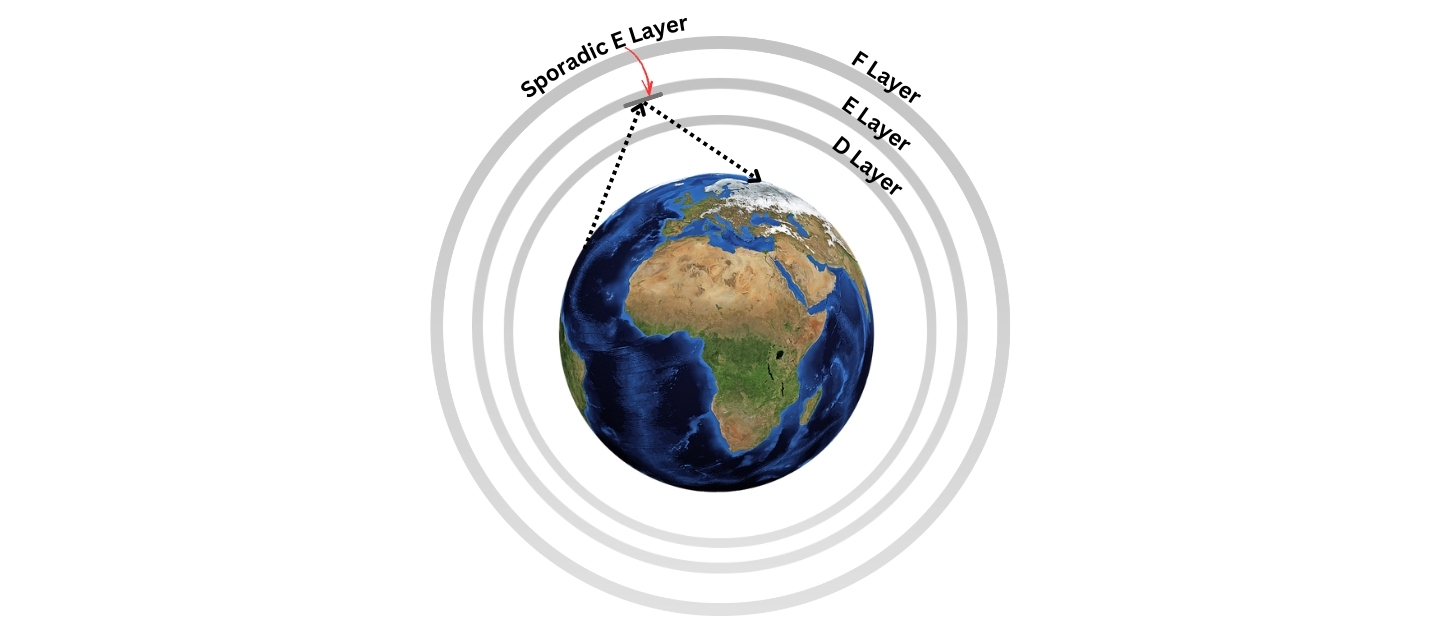
Sporadic E propagation is a form of ionospheric reflection where dense patches of ionization in the E layer allow VHF signals to travel hundreds or thousands of miles. It most commonly affects the 6-meter band and occurs during seasonal peaks, especially in late spring and summer.
Understanding the Sporadic E Layer, often called “Es,” is one of the most fascinating and unpredictable features of the ionosphere. It forms thin, dense patches of ionization in the E region, roughly 90 to 130 kilometers above Earth.
When Does Sporadic E Occur?
Sporadic E occurs most frequently:
- Late May through early August (strongest season)
- Secondary peak in December and January
- Midday through early evening hours
- During periods of increased atmospheric wind shear
Although it can occur at any time, these patterns significantly increase the likelihood of an opening.
Because these patches appear suddenly, they allow radio signals to travel far beyond their normal range. Although the Es layer seems chaotic, it follows certain seasonal and atmospheric patterns that skilled radio operators can use to their advantage.
What the Sporadic E Layer Is
Sporadic E is a temporary ionized layer composed of highly concentrated metallic ions often created by meteoric dust, wind shears, and atmospheric turbulence. These ions create strong reflective surfaces capable of bending VHF signals back toward Earth.
As a result, frequencies that normally travel only short distances can suddenly reach hundreds or even thousands of miles. Although the patches vary in size and density, they often last from minutes to several hours.
How Sporadic E Works
The Es layer forms when vertical and horizontal wind shears compress metallic ions into dense clouds. Once the concentration reaches a critical level, the cloud becomes reflective enough to support long-distance VHF communication. Because these patches drift and evolve, signal paths may shift rapidly.
Additionally, multiple layers can form simultaneously, producing multi-hop propagation that carries signals even farther. Although this behavior seems unstable, it creates exciting opportunities for operators who know how to track changing conditions.
How to Tell When a Sporadic E Opening Is Happening
Operators can identify an active Sporadic E opening by:
- Sudden appearance of strong distant signals on quiet bands
- Rapid signal fading and shifting signal strength
- Multiple stations appearing from the same general direction
- Increased activity on 6-meter calling frequencies
Because Es develops quickly, recognizing these signs allows operators to take advantage of openings before they fade.
ADD after “How to Tell When Opening Is Happening”
Understanding Signal Direction and Skip Zones
Sporadic E signals typically arrive from a specific direction corresponding to the ionized patch location. This creates skip zones where nearby stations may not be heard while distant stations come in strong.
As a result, rotating directional antennas or changing orientation can significantly improve reception and transmission.
The Benefits of Sporadic E Propagation
When Es activity peaks, VHF bands open dramatically. Suddenly, 6 meters and 10 meters come alive with strong, long-distance signals. Even 2 meters occasionally benefits, which creates rare propagation events that many operators chase eagerly.
Sporadic Es offers strong, stable reflections compared to other forms of ionospheric propagation. Because signals often return with impressive strength, even modest stations can make DX contacts.
Best Bands for Sporadic E Operation
Sporadic E primarily affects higher HF and lower VHF frequencies:
- 6 meters (50 MHz) – most active and reliable
- 10 meters (28 MHz) – frequent openings during strong events
- 2 meters (144 MHz) – rare but possible during intense activity
The 6-meter band is often called the “magic band” because of how dramatically it responds to Sporadic E conditions.
How Amateur Radio Operators Use Sporadic E
Hams use Sporadic E to extend communication range on frequencies that rarely support long-distance contacts. Many operators monitor 6 meters during Es season because this band often opens first and stays open longest.
As activity increases, operators move up to 10 meters, 12 meters, and occasionally 2 meters. Because Es openings can occur suddenly, experienced hams watch for band activity, check beacons, and monitor clusters. Once an opening begins, they quickly tune across the band to pick up stations that normally remain out of range.
Operating Strategies During Sporadic E Openings
To maximize contacts during an opening:
- Start on the 6-meter calling frequency (50.125 MHz SSB)
- Scan the band quickly to locate active stations
- Use directional antennas when possible
- Log contacts quickly before conditions shift
- Monitor beacon frequencies to track propagation paths
- Monitor 50.125 MHz (SSB calling frequency) for activity
Because openings can last only minutes, speed and awareness are essential.
Technical Details and Behavior
The Sporadic E layer reflects signals primarily in the 25 MHz to 150 MHz range, although its effectiveness depends on ion density. Strong Es events easily support the entire 6-meter band and often reach into the lower portion of 2 meters.
The layer forms in thin sheets, the reflection angle depends on the height and orientation of the ion cloud. Additionally, Es tends to form more frequently from late May through early August in the Northern Hemisphere, although winter events occur during December and January.
As atmospheric winds shift, the ion patches drift as well, which explains why stations fade in and out so quickly.
Typical Sporadic E Distances and Multi-Hop Behavior
Single-hop Sporadic E typically covers:
- 600 to 1,200 miles
Multi-hop propagation can extend this range to:
- 2,000+ miles or more
As multiple ionized patches align, signals can bounce across several layers, dramatically increasing distance.
Seasonal Patterns and Monitoring
Although Sporadic E seems random, several factors increase the likelihood of an opening. Summer months produce stronger wind shears, which intensify ion compression. Meteor showers, which introduce metallic particles into the upper atmosphere, also enhance Es formation.
Operators monitor real-time activity by watching beacon frequencies, spotting networks, and observing sudden increases in VHF noise levels. As conditions shift, operators adjust their antennas and modes to match the direction and strength of the opening.
Tools for Tracking Sporadic E in Real Time
Operators commonly use:
- DX cluster networks
- Online propagation maps
- Beacon monitoring systems
- Reverse Beacon Network (RBN)
These tools help identify active regions and predict where openings may occur.
Common Mistakes When Chasing Sporadic E
- Waiting too long to respond to openings
- Not monitoring the 6-meter band regularly
- Using inefficient or poorly tuned antennas
- Ignoring beacon signals
- Staying on one frequency instead of scanning
Avoiding these mistakes improves success during short-lived openings.
Why Sporadic E Matters
Sporadic E offers unique opportunities that no other propagation mode can match. It opens VHF bands to operators who rely on modest equipment, and it creates high-speed, high-quality DX paths that allow short QSOs or extended ragchews.
Because reflections are strong and direct, Es propagation supports voice, CW, and digital modes with exceptional clarity. Operators who learn the patterns of Sporadic E gain a competitive edge in contests, awards, and general operating.
Real-World Example of a Sporadic E Contact
During a summer opening, a 6-meter station operating with 100 watts and a simple dipole antenna made multiple contacts over 900 miles within a 30-minute period. Signals were strong and stable, demonstrating how even modest setups can achieve long-distance communication during favorable conditions.
Understanding the Sporadic E Layer
Key Takeaways for Sporadic E Operation
- Sporadic E enables long-distance VHF communication
- The 6-meter band is the most active and reliable
- Openings can occur suddenly and last minutes to hours
- Monitoring conditions is critical for success
- Even simple stations can achieve significant DX results
Understanding these principles allows operators to take full advantage of one of the most exciting propagation modes in amateur radio.
Practical Experience and Observations
This guide is based on real-world amateur radio operation, including monitoring 6-meter band openings, tracking beacon activity, and making contacts during active Sporadic E conditions. Observations reflect actual operating behavior rather than theoretical models alone.
Frequently Asked Questions
What is Sporadic E propagation?
Sporadic E is a form of ionospheric propagation where dense patches in the E layer reflect VHF signals over long distances.
When does Sporadic E occur most often?
It occurs most frequently from late May through early August, with a smaller peak in winter months.
What bands are affected by Sporadic E?
Sporadic E mainly affects the 6-meter and 10-meter bands, and occasionally reaches into 2 meters during strong events.
How far can Sporadic E signals travel?
Single-hop distances typically range from 600 to 1,200 miles, with multi-hop paths exceeding 2,000 miles.
Why is 6 meters called the magic band?
Because it can shift from quiet local conditions to strong long-distance propagation suddenly during Sporadic E events.
Please consider Donating to help support this channel