
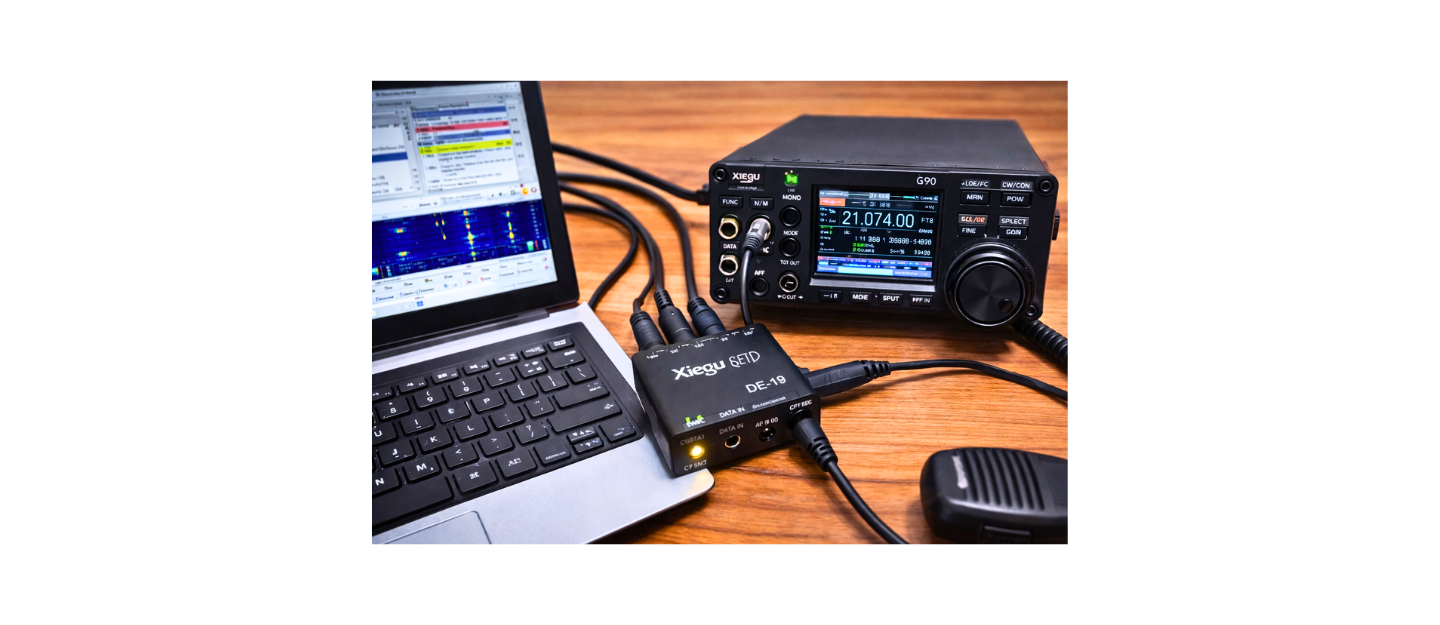
The Xiegu DE-19 interface is a dedicated digital communication interface designed to connect Xiegu transceivers to computers for digital mode operation. As amateur radio increasingly relies on computer-based communication modes, reliable interfaces like the DE-19 have become essential components of many modern stations.
Digital communication methods such as FT8, PSK31, Olivia, and RTTY depend on precise audio exchange between the radio and computer. Without proper isolation and control circuitry, transmitting and decoding these signals can become difficult due to ground loops, RF interference, or poor signal levels.
The DE-19 solves these problems by providing a fully integrated interface that manages audio routing, push-to-talk control, and USB sound card functionality. By simplifying the connection process, the interface allows operators to focus on operating rather than troubleshooting wiring issues.
For operators using Xiegu radios like the G90, X5105, or X6100, the DE-19 serves as a clean and efficient bridge between traditional radio hardware and modern digital software.
New to digital operation? Read our Complete Guide to Digital Modes.
Role of Xiegu DE-19 Interface in Amateur Radio
Before dedicated interfaces like the DE-19 became widely available, amateur radio operators often built their own audio interface cables. These homebrew solutions frequently required careful soldering and detailed knowledge of radio audio circuits.
Typical homemade digital interfaces often included:
- Audio transformers for isolation
- Manual PTT switching circuits
- External sound cards
- Custom wiring between radio and computer
While these setups worked, they were often prone to RF interference and inconsistent performance.
Modern digital interfaces such as the DE-19 integrate all of these functions into a single device. By standardizing the connection between radio and computer, they eliminate many common problems that previously plagued digital mode operators.
This shift has allowed digital communication to become far more accessible, even for operators who are new to computer-assisted amateur radio operation.
Core Hardware Features of the DE-19
The DE-19 interface includes several technical components that make it suitable for digital communication.
One of its most important design features is audio isolation. The interface contains internal transformers that separate the radio’s audio circuits from the computer’s sound card circuitry. This isolation prevents electrical noise and ground loop hum from entering the audio path.
Another key feature is the integrated USB sound card. When connected to a computer, the DE-19 appears as an external audio device. This allows digital mode software to send and receive signals directly through the interface.
Additional features include:
- Integrated push-to-talk control
- USB audio interface functionality
- Compact lightweight housing
- Standard 3.5 mm audio connections
- Compatibility with multiple operating systems
Because these functions are integrated into the interface, setup becomes significantly easier compared with manual wiring solutions.
Signal Flow Through the DE-19 Interface
Understanding how signals travel through the DE-19 helps operators configure their station correctly.
Digital communication uses audio tones to represent encoded information. These tones are generated by software running on a computer.
When transmitting digital signals, the following sequence occurs:
- Digital software generates encoded audio tones.
- The audio signal travels through the USB connection.
- The DE-19 converts the signal through its internal sound card.
- Isolation circuitry cleans the signal.
- The audio is routed into the radio’s data or microphone input.
- The interface activates the PTT line and keys the transmitter.
During reception, the process works in reverse:
- The radio receives RF signals and converts them to audio.
- The audio is sent from the radio to the DE-19.
- The interface isolates the signal.
- The signal enters the USB sound card.
- Digital software decodes the data into readable information.
This continuous audio exchange allows real-time digital communication.
Supported Digital Communication Modes
Because the DE-19 functions as a sound card interface, it works with nearly all amateur radio digital modes that rely on audio encoding.
Common digital modes supported by the interface include:
Each of these modes uses different audio tone patterns to encode information. The DE-19 simply passes these tones between the computer and the radio.
Weak signal modes such as FT8 rely on precise timing and clean audio signals. The isolation and stable audio routing provided by the DE-19 help ensure reliable decoding.
Step-by-Step Setup of the DE-19 Interface
Setting up the DE-19 is generally straightforward and requires only a few connections.
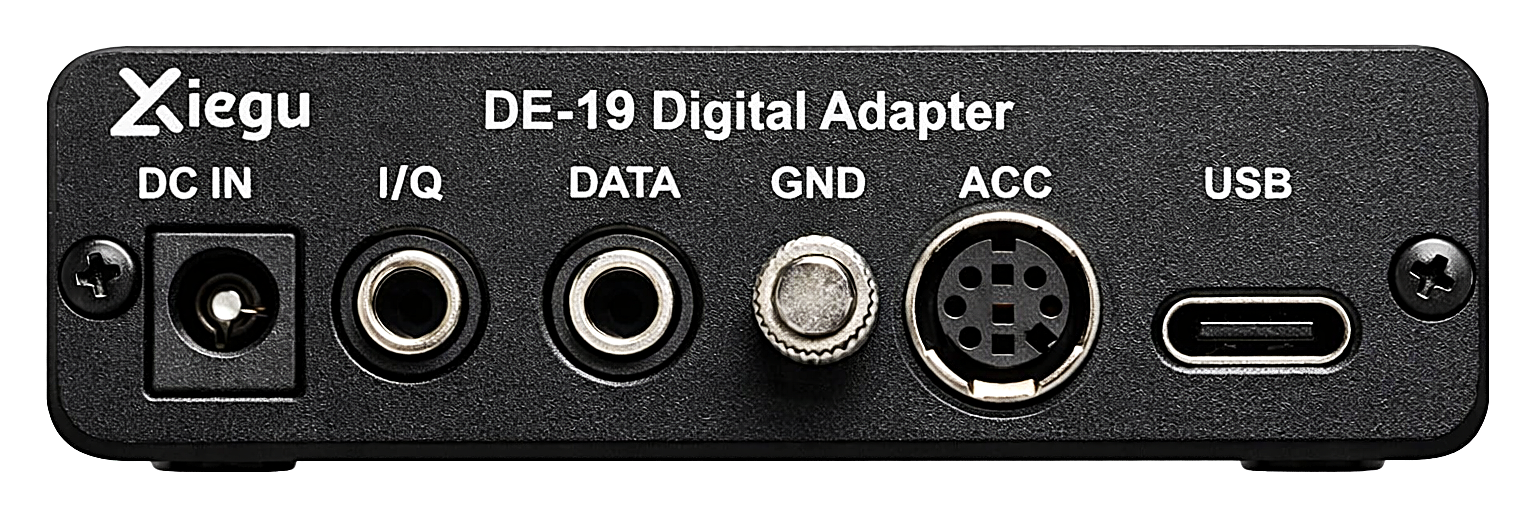
First, connect the interface to the radio using the appropriate data cable. Xiegu radios typically provide an accessory or data port specifically designed for digital interfaces.
Next, connect the DE-19 to the computer using the USB cable supplied with the interface.
After connecting the hardware, configure the digital mode software.
Typical setup steps include:
- Selecting the DE-19 as the audio input device
- Selecting the DE-19 as the audio output device
- Enabling PTT control through the interface
- Configuring CAT control if desired
Most modern operating systems automatically recognize the interface as a USB audio device, eliminating the need for manual driver installation.
Optimizing Audio Levels for Digital Operation
Proper audio level adjustment is critical for clean digital transmissions.
If transmit audio levels are too high, distortion occurs. This distortion produces wide signals that can interfere with nearby stations.
If audio levels are too low, the signal may be difficult for other stations to decode.
To optimize audio levels:
- Set computer output volume to approximately 40–50%.
- Adjust radio transmit audio gain.
- Monitor the radio’s ALC meter.
- Ensure ALC activity remains minimal.
During reception, adjust recording levels so the digital software waterfall shows clear signals without clipping.
Monitoring audio levels throughout operation ensures reliable decoding and efficient transmission.
Using the DE-19 with Popular Digital Software
Several widely used amateur radio software programs work well with the DE-19 interface.
Common programs include:
WSJT-X
This program supports FT8, FT4, and other weak signal digital modes.
FLDigi
FLDigi supports many traditional digital modes including PSK31, Olivia, and RTTY.
JS8Call
JS8Call expands FT8 technology into conversational digital communication.
JTDX
JTDX is an optimized version of WSJT-X designed for improved weak signal performance.
These programs rely on the computer’s sound card for audio input and output, making them fully compatible with the DE-19 interface.
Portable Operation with the Xiegu DE-19
One of the advantages of the DE-19 is its compact design. The interface is small enough to easily integrate into portable operating stations.
Portable digital operations have become increasingly popular through activities such as:
- Parks on the Air (POTA)
- Summits on the Air (SOTA)
- Field Day
- emergency communication exercises
A typical portable digital station may include:
- Xiegu G90 or X6100 transceiver
- laptop or tablet computer
- DE-19 interface
- Lightweight antenna
- Portable power supply
Because the interface simplifies audio and PTT connections, portable setups can be deployed quickly with minimal troubleshooting.
Troubleshooting Common Setup Problems
Although the DE-19 simplifies digital operation, some issues may occur during configuration.
Common problems include:
Radio does not transmit
The PTT control may not be configured correctly within the software.
No signals decode
Incorrect sound card selection may prevent the software from receiving audio.
Distorted transmitted signals
Transmit audio levels may be too high.
Intermittent RF interference
Strong RF fields may enter USB or audio cables.
Solutions often involve verifying software settings, adjusting audio levels, or adding ferrite chokes to cables.
Improving Digital Station Performance
Several station improvements can enhance digital mode performance when using the DE-19. Key factors include antenna efficiency, RF grounding, and cable management.
Operators can improve station performance by:
- Using a properly tuned antenna system
- Grounding equipment to reduce RF feedback
- Installing ferrite chokes on USB cables
- Minimizing computer electrical noise
Combining these improvements with the DE-19 interface creates a stable digital operating environment.
Advantages of the Xiegu DE-19 Interface
Compared with manual wiring solutions, the DE-19 provides several important benefits.
Major advantages include:
- Simplified radio-to-computer connection
- Built-in audio isolation
- Automatic transmitter keying
- USB sound card functionality
- Compatibility with many digital modes
- Compact portable design
These features reduce setup complexity while improving digital signal quality.
Xiegu DE-19 Interface
The Xiegu DE-19 interface is an effective solution for integrating Xiegu radios with modern digital mode software. By combining audio isolation, USB sound card functionality, and automated PTT control, the interface simplifies digital station setup while maintaining high signal quality.
Whether operating from a home station, participating in contests, or deploying a portable field station, the DE-19 provides reliable performance and flexible digital communication capability.
As digital modes continue to grow in popularity within amateur radio, interfaces like the DE-19 play an essential role in connecting traditional radio equipment with modern software tools.
Frequently Asked Questions
What is the Xiegu DE-19 interface used for
The DE-19 is a digital interface that connects Xiegu radios to computers for operating digital modes such as FT8, PSK31, Olivia, and RTTY.
Does the DE-19 require special drivers
Most computers automatically recognize the DE-19 as a USB sound card, so additional drivers are usually not required.
Which radios are compatible with the DE-19
The interface works with Xiegu radios including the G90, X5105, and X6100.
What digital modes can be used with the DE-19
The interface supports modes such as FT8, FT4, PSK31, Olivia, RTTY, JT65, JS8Call, and WSPR.
Can the DE-19 be used for portable digital stations
Yes. Its compact design and simple connections make it ideal for portable digital operation during activities like Parks on the Air or Summits on the Air.
How do you prevent signal distortion when using the DE-19
Keep transmit audio levels low enough to prevent excessive ALC activity and monitor signal quality using the digital software waterfall display.
About the Author
Vince, W2KU, is a licensed Extra class amateur radio operator and the founder of Ham Shack Reviews. He was named Amateur of the Year in 2026 for contributions to practical amateur radio education and equipment evaluation.
He knows propagation very well, operates mobile and handhelds daily. Vince exchanges QSL cards for DXCC, contest confirmation, and award tracking and is the club QSL manager. His guidance focuses on practical operating procedures, accurate logging, and real-world amateur radio practices.
Please consider Donating to help support this channel