

Contesting demands speed, clarity, and intelligibility above everything else. Picking one of the Best Microphones For Contesting directly affects your signal readability and your QSO rate. While transmit power helps you reach distant stations, your microphone determines how clearly your voice cuts through noise and pileups.
Because contest exchanges are short and repetitive, microphones must emphasize articulation rather than musical warmth. However, they must also reject background noise, room reflections, and shack equipment sounds.
As a result, the best microphones for contesting are optimized for speech intelligibility in crowded RF environments. They shape frequency response, control directionality, and minimize unwanted pickup.
Want to improve your Audio, Check out our Complete Guide to Ham Radio Microphones
The Ideal Frequency Range for Contest Audio
Human speech carries most intelligibility between 300 Hz and 3000 Hz. Therefore, contest microphones typically emphasize the midrange instead of full-range audio.
However, different microphones shape this range differently. Some boost upper presence for punch, while others smooth lower mids for clarity.
Typical speech energy distribution:
Low voice body: 100–300 Hz
Primary intelligibility: 300–3000 Hz
Articulation clarity: 2–5 kHz
Sibilance region: 5–8 kHz
Because DX and pileups demand fast recognition, microphones that emphasize 2–4 kHz perform best.
Understanding Polar Patterns for Contesting
Microphone pickup pattern determines what sound the mic hears. Therefore, pattern selection is just as important as frequency response.
Cardioid
Front-focused, moderate room rejection
Supercardioid
Tighter front focus, better noise rejection
Hypercardioid
Extreme directionality, excellent isolation
Omnidirectional
Not recommended for contesting
Because contest shacks often contain fans, computers, and amplifiers, directional microphones dominate contest stations.
Broadcast-Grade Contest Microphones
These microphones dominate serious contest stations because they combine intelligibility shaping with exceptional noise rejection.
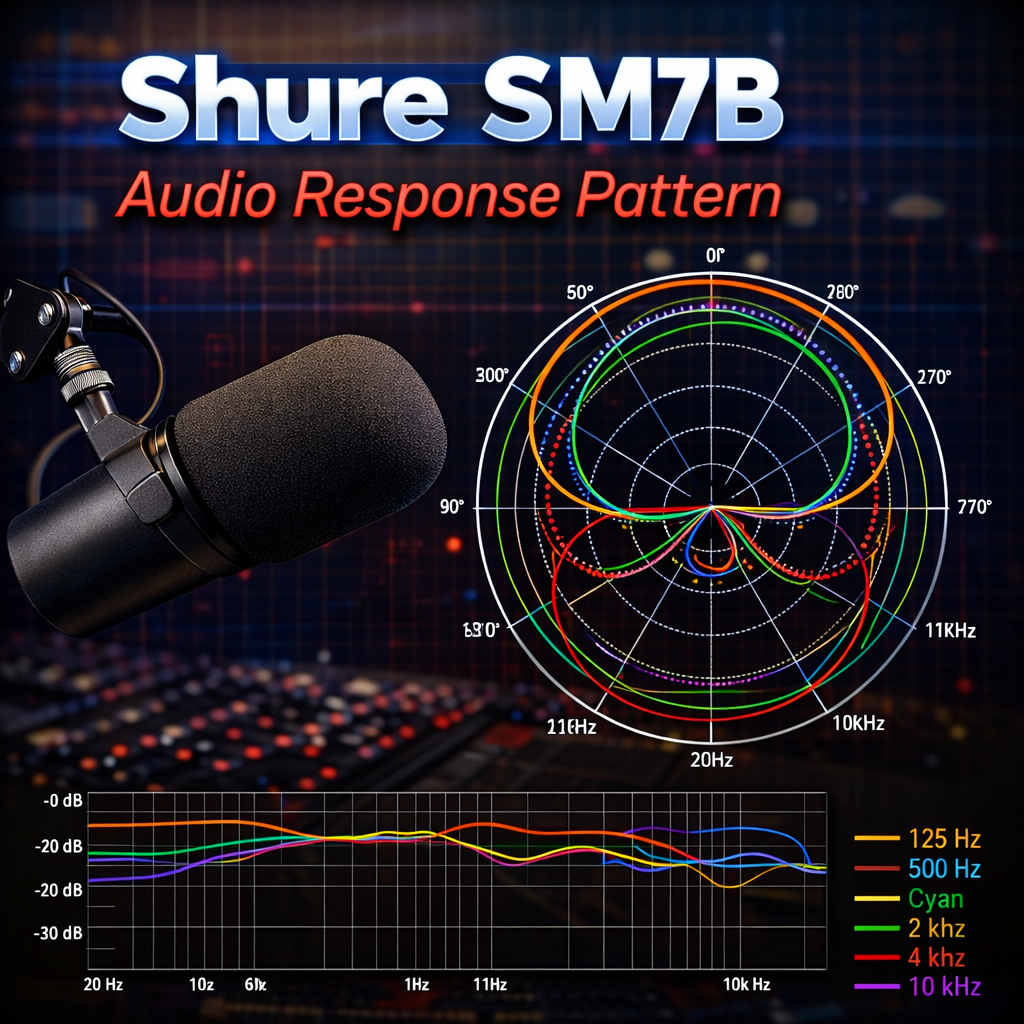
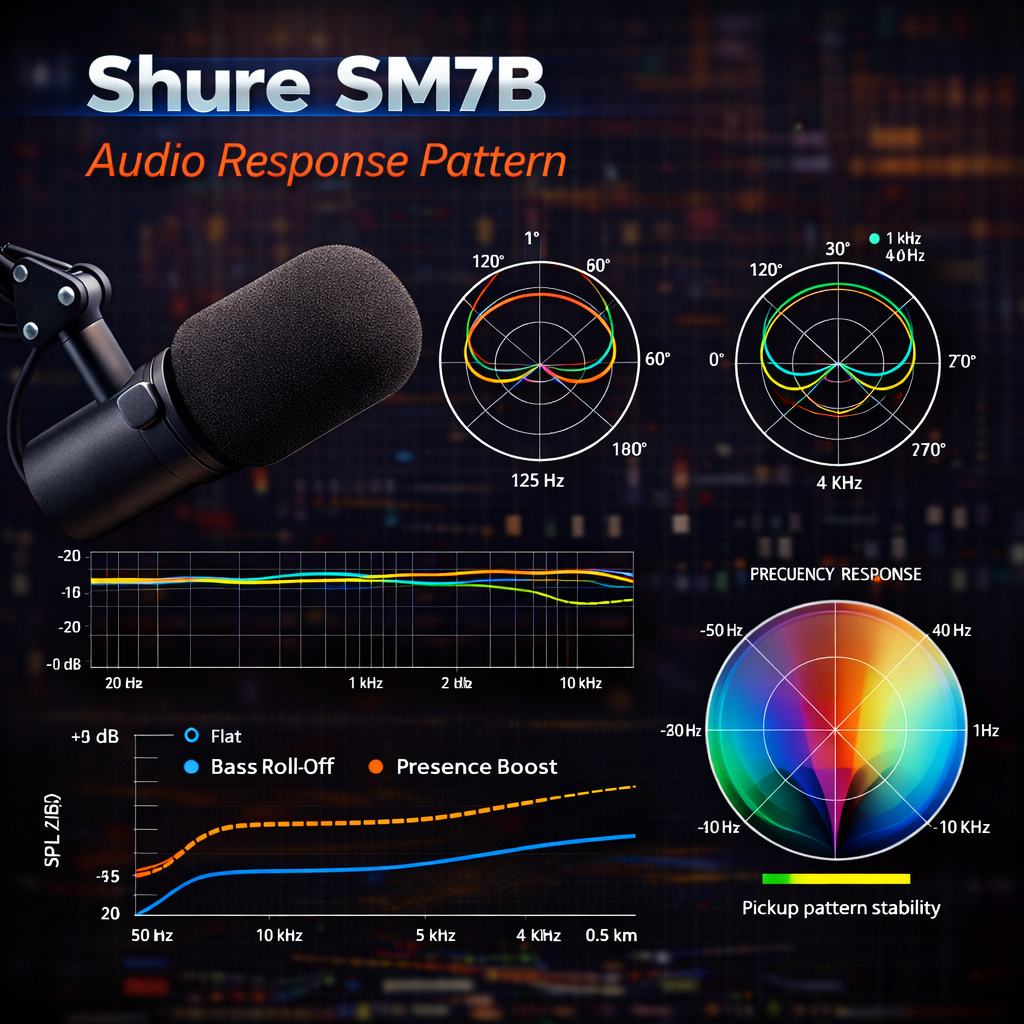
Shure SM7B

The Shure SM7B is widely regarded as one of the best spoken-voice microphones ever made, and therefore it performs exceptionally well in contesting environments. It delivers a smooth, controlled sound while emphasizing the critical upper-mid frequencies that carry speech intelligibility. Because the microphone includes switchable bass roll-off and presence boost controls, you can tailor your transmit audio to punch through crowded bands.
Additionally, the SM7B handles close-talking extremely well, so operators can maintain consistent audio during long run sessions. Its internal air suspension and shielding also reduce mechanical noise and RF interference. As a result, your signal stays clean even in a busy shack filled with computers and amplifiers.
Frequency response range
50 Hz → 20 kHz
Speech emphasis zone
1 kHz → 5 kHz presence rise
Polar pattern
Cardioid
Speech contour behavior
Low-frequency roll-off option
Presence boost switch
Illustrated range chart
20 Hz |
50 Hz | usable start
100 Hz | voice body
300 Hz | speech core
1 kHz | articulation
3 kHz | clarity peak
5 kHz | presence lift
10 kHz | air
20 kHz | upper limit
Why it dominates contesting?
Because it controls proximity effect, operators can work close without boominess. Meanwhile, internal shielding rejects RF interference. Furthermore, switchable tone shaping allows you to tailor punch for pileups.
Electro Voice RE20 Dynamic Microphone

The Electro-Voice RE20 is famous for its variable-D design, which minimizes proximity effect and keeps tonal balance stable as you move. The microphone delivers a very natural midrange response, and because it avoids exaggerated bass, callsigns remain crisp and readable.
Furthermore, the RE20 rejects off-axis sound extremely well, so background fans and equipment noise stay out of your transmit audio.
Frequency response range
45 Hz → 18 kHz
Polar pattern
Cardioid with variable-D technology
Speech shaping
Flat low end
Smooth midrange
Controlled proximity
Illustrated range chart
20 Hz |
45 Hz | usable start
100 Hz | voice warmth
300 Hz | speech body
1–4 kHz | clarity plateau
10 kHz | gentle presence
18 kHz | upper limit
Why contesters love it
Because variable-D design prevents bass buildup when you move closer. Therefore, your audio stays consistent even during fast exchanges. Additionally, the mic rejects room coloration extremely well.

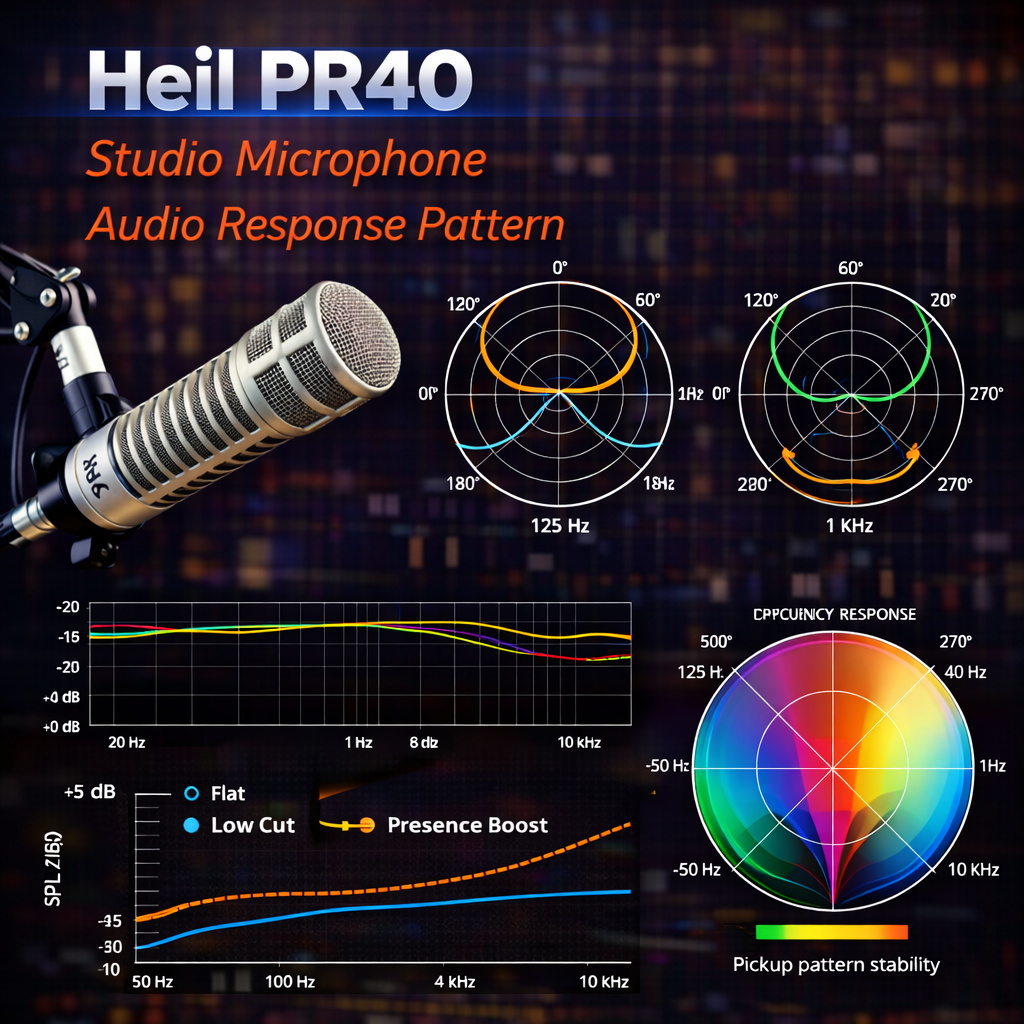
The Heil PR40 combines broadcast-level clarity with strong articulation, which makes it ideal for fast exchanges and pileups. It produces very clean midrange detail, and therefore consonants and syllables remain sharply defined even in heavy band congestion. The microphone also handles high sound pressure levels without distortion, so it maintains clarity during energetic operating.
Because the PR40 offers excellent internal shielding, it performs reliably in high-RF environments. Many serious operators prefer it when they want maximum vocal presence and crisp speech transients that cut through noise.
Frequency response range
28 Hz → 18 kHz
Polar pattern
Cardioid
Speech shaping
Strong mid clarity
Controlled bass extension
Clean upper articulation
Illustrated range chart
20 Hz |
28 Hz | deep extension
100 Hz | vocal fullness
300 Hz | speech power
2–4 kHz | intelligibility boost
10 kHz | articulation edge
18 kHz | upper limit
Why it excels
Because it captures extremely detailed speech transients, callsigns remain sharp even in noise. Furthermore, its internal hum rejection suits RF-dense contest environments.
These are widely considered elite spoken-voice microphones with strong articulation and controlled proximity effect.
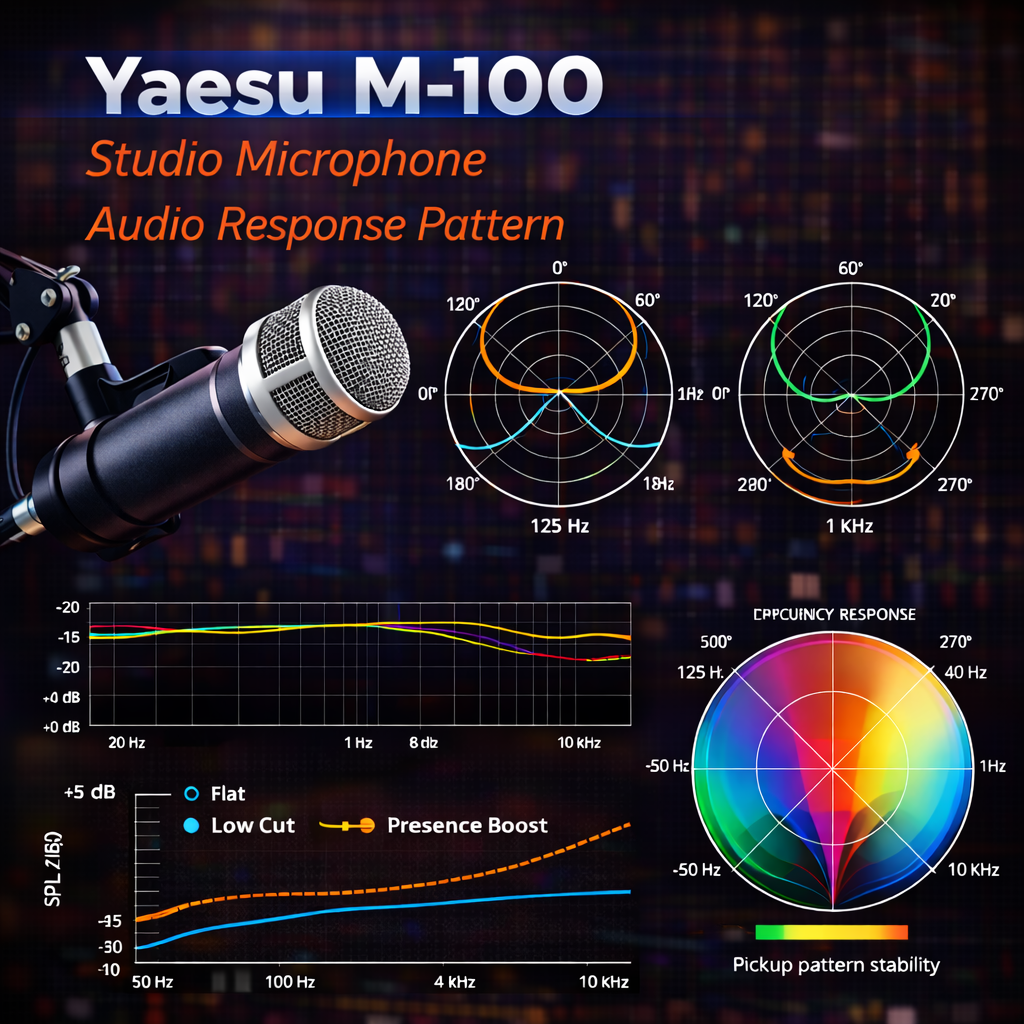
Yaesu M-100 Desktop Dynamic Microphone
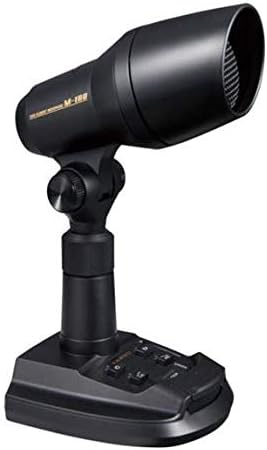
The Yaesu M-100 is designed specifically for amateur radio, so its frequency shaping matches typical transceiver transmit bandwidth. Therefore, it concentrates energy directly inside the useful speech range rather than wasting audio outside the channel. This design produces strong, focused voice projection with minimal equalization required.
Additionally, the desktop form factor keeps positioning consistent during long operating sessions. The microphone includes tailored low-frequency control and a directional element that reduces room noise. As a result, operators get clean communication-grade audio optimized for radio rather than studio sound.
Frequency tuning
Low-mid emphasis
Designed speech range
150 Hz → 5 kHz
Directional pattern
Cardioid element
Speech shaping
Reduced bass rumble
Forward midrange projection
Range illustration
100 Hz | voice base
300 Hz | speech body
1 kHz | articulation
3 kHz | peak intelligibility
5 kHz | upper speech edge
Why contesters choose it
Because the frequency shaping matches transceiver bandwidth perfectly. Therefore, very little equalization is needed.
Heil Sound HM-PRO Microphone

The Heil HM-PRO headset microphone focuses on efficiency and control, which makes it extremely popular with high-rate contesters. Because it mounts directly on the operator’s head, microphone distance remains constant at all times. This consistency produces stable audio levels and predictable tone throughout long runs.
Furthermore, the HM-PRO uses a tightly focused response designed for communications bandwidth. It emphasizes articulation while suppressing unnecessary bass and background noise. Hands-free operation also improves logging speed and multitasking, which directly supports competitive performance.
Rode PodMic Dynamic Microphone

The Rode PodMic offers impressive performance at an affordable price, and therefore it has become a favorite among budget-conscious contesters. It delivers solid midrange clarity with controlled low-frequency response, which helps speech remain clear in crowded conditions. Because the microphone uses internal pop filtering and heavy construction, it also resists handling noise and vibration.
Furthermore, the PodMic responds well to close-talk technique, allowing operators to maintain strong signal presence. With proper gain and positioning, it can rival more expensive microphones for practical contest communication.
Frequency range
20 Hz → 20 kHz
Speech shaping
Midrange clarity
Low handling noise
Pattern
Cardioid
Range chart
100 Hz | warmth
300 Hz | speech body
2–5 kHz | strong clarity band
Why it works
Because internal pop filtering and heavy shielding stabilize transmit audio.
Dynamic vs Condenser for Contesting
Dynamic microphones dominate contesting because they reject background noise. However, condensers capture more detail.
Dynamic advantages
Better noise rejection
Rugged construction
RF resistance
Condenser advantages
Higher sensitivity
Greater detail
Studio-like sound
However, most contest stations choose dynamic microphones because clarity beats fidelity in competition.
How Frequency Shaping Wins Pileups
When dozens of signals overlap, clarity depends on spectral separation. Therefore, microphones with strong mid presence cut through crowded audio channels.
If bass dominates, callsigns blur.
When highs dominate, speech becomes harsh.
If mids dominate, intelligibility improves.
Therefore, contest microphones intentionally shape midrange energy.
Transmit Bandwidth Matching
Most transceivers restrict audio bandwidth to 2.4–3 kHz. Therefore, full-range microphones waste energy outside usable spectrum.
Contest microphones shape energy into transmit bandwidth. As a result, speech density increases inside the channel.
Signal-to-Noise Optimization
In radio contesting, intelligibility beats fidelity every time. The goal is not studio-quality audio — it’s maximum readability under crowded, noisy band conditions. That means your microphone system must deliver the strongest possible voice signal while rejecting everything else.
Signal-to-noise ratio (SNR) is the difference between your voice level and the background noise level entering the transmitter. The higher that difference, the easier it is for other operators to copy you quickly and accurately.
Why SNR Matters More in Contests
Contest environments create extreme operating conditions:
- High RF density across the band
- Pileups and adjacent channel interference
- Operator fatigue and fast exchanges
- Often noisy shack environments
- Compressed, narrow transmit bandwidth
Even small improvements in SNR can dramatically increase copy accuracy, reduce repeats, and speed QSO rates.
Weak but clean audio often outperforms loud but noisy audio.
Dynamic microphones (contest standard)
Dynamic mics are preferred because they naturally reject room noise and have lower sensitivity to distant sounds.
Advantages:
- Strong proximity effect boosts voice presence
- Reduced pickup of fans, keyboards, and room reflections
- Handles high speech levels without distortion
- Less sensitive to RF feedback
This improves the voice-to-background ratio before audio processing even begins.
Directional Pickup Patterns
A tight pickup pattern is critical.
Best choices:
- Cardioid
- Supercardioid
- Hypercardioid
These patterns focus on the operator’s mouth and attenuate off-axis noise sources like:
- Amplifier fans
- Computer cooling systems
- Contest logging keyboard noise
- Other operators in multi-op stations
Position the microphone so the null of the pattern faces the main noise source.
Close-talking technique (huge SNR gain)
Distance is the most powerful SNR control you have.
Best practice:
- 1–2 inches from mouth
- Speak directly into the mic axis
- Use a pop filter or windscreen
Close talking increases voice level dramatically while background noise stays nearly constant. This alone can produce a 10–20 dB effective SNR improvement.
Shack noise reduction strategies
Improving SNR is not just about the microphone and it’s about the acoustic environment.
Reduce noise at the source:
- Use quiet fans or temperature-controlled cooling
- Isolate vibrating equipment
- Use soft surfaces to reduce reflections
- Position mic away from computer exhaust airflow
- Use foot switch to eliminate desk contact noise
Every decibel of reduced ambient noise directly improves transmit clarity.
Audio Processing for SNR Improvement
Compression
Moderate compression increases average voice level without raising background noise proportionally.
Benefits:
- More consistent transmit power
- Better intelligibility in fading conditions
- Stronger perceived signal
But excessive compression raises noise floor and creates fatigue-inducing audio.
Equalization (speech shaping)
Contest audio should emphasize intelligibility frequencies:
- Reduce low frequencies below ~150 Hz
- Emphasize 1.5 kHz to 3 kHz region
- Control harsh peaks above 4 kHz
This concentrates transmitter power into the most information-dense part of speech.
Noise Gates and Downward Expanders
These automatically reduce audio gain when you are not speaking.
Purpose:
- Eliminate background noise between syllables
- Prevent constant fan noise transmission
- Improve perceived signal cleanliness
Set carefully, aggressive gating can clip speech onset.
RF and electrical noise control
Some “noise” is not acoustic, it’s electrical.
Common problems:
- RF feedback into mic lines
- Ground loops
- Switching power supply hash
- Computer USB noise
Solutions:
- Ferrite chokes on mic and audio cables
- Proper station grounding
- Balanced audio lines when possible
- RF-resistant microphone designs
Electrical noise directly reduces effective SNR even if the shack is quiet.
Speech frequency spectrum chart
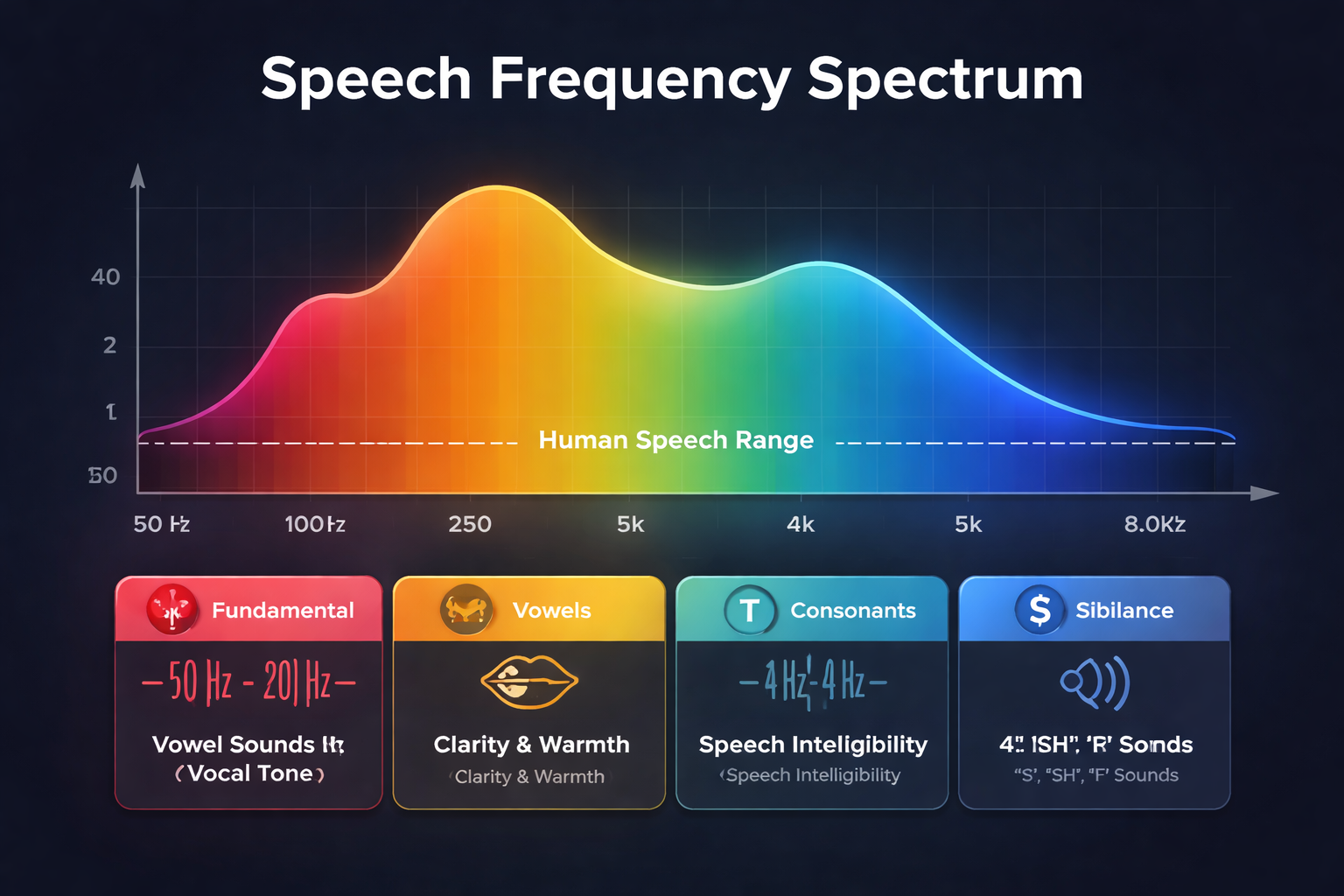
The speech frequency spectrum refers to the range of audio frequencies that carry the information needed to understand human speech. While the human ear can hear roughly 20 Hz to 20,000 Hz, most of the important components of speech fall within a much narrower band.
The majority of speech intelligibility is concentrated between about 300 Hz and 3,000 Hz, which is why traditional telephone systems are designed to transmit mainly within this range. Lower frequencies carry the power and fullness of the voice, while higher frequencies provide clarity and help distinguish consonant sounds.
Different parts of speech occupy different areas of the spectrum. Vowel sounds tend to contain stronger energy in the lower and mid frequencies, giving speech its volume and tone. Consonants, especially sounds like “s,” “f,” and “t,” contain higher frequency components that provide sharpness and definition.
Intelligibility depends heavily on these higher-frequency details, audio systems that limit or distort this range can make speech harder to understand, even if it still sounds loud. Understanding the speech frequency spectrum is important in communications, broadcasting, hearing aids, and radio systems where clear voice transmission is essential.
The Microphone Hierarchy for Contesting
Elite contest stations
Broadcast dynamic microphones
Serious operators
Ham-optimized desktop microphones
Portable or budget stations
Directional stage microphones
Each level improves clarity, control, and operator efficiency.
Best Microphones For Contesting
The best contest microphone is not the one with the widest frequency response. Instead, it is the one that delivers the clearest speech in the narrowest bandwidth. Because intelligibility wins contacts, articulation always beats fidelity. Furthermore, directional control beats room ambience.
When frequency shaping, pattern control, and operator technique work together, your signal becomes unmistakable in any pileup. That is why the right microphone does not just improve sound. It increases your score.
Please consider Donating to help support this channel