
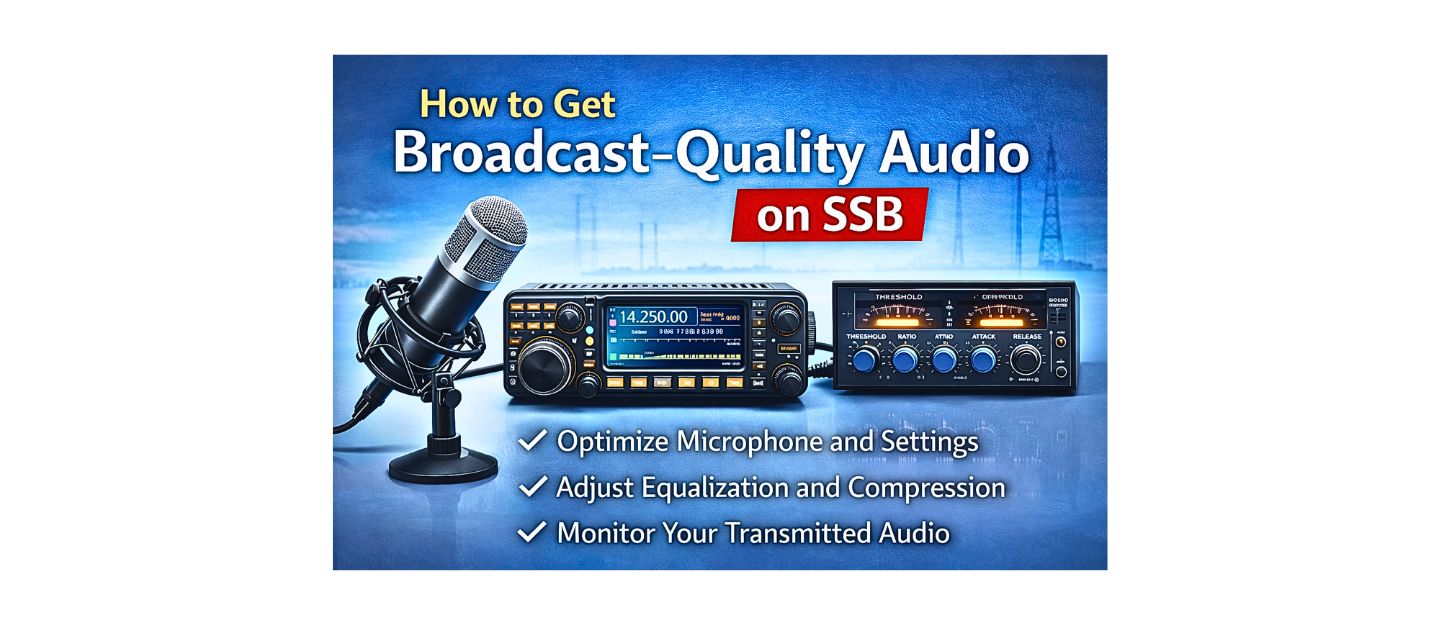
Many operators chase stronger signals, bigger antennas, and higher power levels. However, the stations that truly stand out on sideband often succeed because of audio quality rather than raw wattage. When your signal sounds clean, full, and intelligible, other operators notice immediately. Therefore, learning how to achieve broadcast-quality audio on SSB can dramatically improve your on-air presence, pileup success, and overall operating reputation.
Although “broadcast quality” does not mean violating amateur bandwidth limits, it does mean delivering articulate, well-balanced, and distortion-free audio within legal constraints. Because SSB transmits voice using amplitude variations without a carrier, audio clarity directly determines how your transmitted signal sounds at the receiving end. Consequently, every element in your audio chain matters.
Want to improve your Audio, Check out our Complete Guide to Ham Radio Microphones
Understanding What Broadcast-Quality Means on Amateur SSB
Broadcast-quality audio in amateur radio does not mean FM broadcast fidelity or studio-wide bandwidth. Instead, it means your transmitted audio is clear, balanced, properly equalized, and free of distortion. When your signal has strong presence, controlled bass, and crisp articulation, listeners perceive it as professional and polished.
However, amateur SSB has bandwidth limits. Most HF SSB signals occupy roughly 2.4 to 3 kHz depending on radio settings. Therefore, you must shape audio intelligently within that space. Rather than boosting everything, you must emphasize intelligibility frequencies while controlling excessive lows and harsh highs.
Because SSB emphasizes midrange frequencies, proper equalization and microphone choice become critical. As a result, you should design your audio chain specifically for SSB transmission rather than copying broadcast studio settings.
Start with a Quality Microphone
Your microphone defines the character of your transmitted audio. Although stock hand microphones work, they rarely deliver broadcast-style clarity. Therefore, upgrading to a quality dynamic or condenser microphone significantly improves results.
Dynamic microphones often perform well in ham shacks because they reject background noise and handle high sound pressure levels without distortion. Additionally, many dynamic mics provide smooth midrange presence that complements SSB bandwidth.
Condenser microphones, on the other hand, capture more detail and brightness. However, they require careful gain staging and acoustic control. Because condenser mics are more sensitive, untreated rooms may introduce echo or ambient noise.
Regardless of type, choose a microphone with strong midrange articulation between roughly 300 Hz and 3 kHz. That frequency region carries the intelligibility of human speech. Therefore, microphone selection directly affects clarity.
Using Studio-Quality Microphones for Broadcast-Quality Audio on SSB
When operators pursue truly polished SSB audio, many eventually explore studio-grade dynamic microphones. While stock microphones are functional, broadcast microphones such as the Heil PR40 and Heil PR 781 are engineered specifically for articulate voice reproduction. Because these microphones emphasize presence and clarity rather than excessive bass, they integrate exceptionally well with SSB transmit bandwidth.
Studio microphones designed for broadcast speech focus on midrange articulation between roughly 300 Hz and 3 kHz. That frequency range carries consonant definition, vocal presence, and intelligibility. Therefore, microphones like the PR40 and PR 781 naturally complement SSB transmission characteristics. Instead of fighting the limitations of amateur bandwidth, they work within it efficiently.
The Heil PR40 is a large-diaphragm dynamic microphone with extended frequency response and excellent off-axis rejection. Because it controls proximity effect effectively, it allows operators to achieve rich tone without excessive low-frequency buildup. Additionally, its internal design reduces handling noise and ambient room reflections. As a result, your transmitted audio sounds controlled and focused rather than boomy.
The Heil PR 781, meanwhile, is specifically tailored for amateur radio and broadcast speech applications. It delivers strong midrange presence while smoothing harsh high frequencies. Consequently, operators often report improved articulation without sounding shrill or thin. Because SSB emphasizes midrange clarity, that voicing translates well on crowded bands.
However, simply purchasing a studio microphone does not guarantee superior audio. Gain staging becomes critical. Studio microphones often produce lower output than hand microphones, so you may need a quality microphone preamp to provide clean gain. Without sufficient gain, you may increase radio mic gain excessively, which introduces distortion. Therefore, pairing a studio mic with a clean, low-noise preamp ensures optimal performance.
Additionally, impedance matching matters. Most studio microphones use XLR connectors and balanced outputs. Amateur transceivers often expect unbalanced microphone inputs. Consequently, you may need an interface or proper adapter to maintain signal integrity and prevent noise pickup.
Room acoustics also become more noticeable when using high-quality microphones. Because studio mics capture greater detail, untreated rooms can introduce echo or reverb. Therefore, reducing reflective surfaces or adding basic acoustic treatment improves transmitted audio dramatically.
Control Microphone Technique and Voice Placement
Even the best microphone cannot compensate for poor technique. Therefore, proper mic positioning and consistent vocal delivery remain essential. Speak across the microphone slightly off-axis to reduce plosive sounds such as “P” and “B.” Additionally, maintain consistent distance to avoid volume fluctuations.
Because SSB does not include automatic loudness leveling like broadcast compression chains, your voice dynamics affect signal consistency. Consequently, controlled speaking technique improves perceived quality as much as hardware upgrades.
Furthermore, reduce room reflections and background noise. Soft furnishings, acoustic foam, or even thick curtains can reduce echo. As a result, transmitted audio sounds more direct and professional.
Optimize Radio Mic Gain and ALC Settings
Many operators mistakenly increase microphone gain excessively to sound louder. However, overdriving mic gain creates distortion and splatter. Instead, adjust mic gain so that your ALC meter barely moves during normal speech.
Because ALC circuits protect the transmitter from overmodulation, heavy ALC action usually indicates distortion. Therefore, keep ALC activity minimal and controlled. Proper gain staging ensures clean modulation and preserves signal integrity.
Additionally, monitor your own signal using a second receiver or trusted on-air reports. Real-time feedback allows precise adjustments.
Use Built-In Transmit Equalization
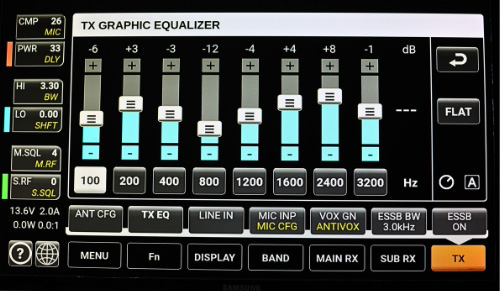
Modern transceivers include transmit EQ settings. These allow you to shape bass, midrange, and treble response. Rather than boosting bass excessively, focus on enhancing presence frequencies that improve articulation.
For example, slightly reducing low frequencies below 200 Hz removes muddiness. Meanwhile, modest enhancement around 1 to 2 kHz improves clarity. However, avoid excessive high-frequency boost, as it can create harshness.
Because each voice differs, tailor EQ to your vocal characteristics. Consequently, the goal is balanced, intelligible audio rather than exaggerated tone.
Add External Audio Processing Carefully
Some operators incorporate external equalizers, compressors, or speech processors. When used correctly, these tools can enhance punch and consistency. However, improper settings cause distortion and listener fatigue.
Compression reduces dynamic range, making softer syllables more audible. Therefore, moderate compression improves perceived loudness without overdriving the transmitter. However, excessive compression produces unnatural sound and increased distortion.
If you use an external processor, ensure proper impedance matching and level control. Additionally, monitor transmitted audio carefully during adjustment.
Manage RF Gain Structure and Power Supply Stability
Audio quality depends on more than microphones. Because transmit current fluctuates during speech peaks, unstable voltage can introduce distortion. Therefore, use a regulated 13.8-volt power supply with adequate current capacity.
Additionally, ensure all connections are secure and properly fused. Voltage drop in undersized cables can reduce transmit stability during voice peaks. As a result, your signal remains clean and consistent.
Adjust Transmit Bandwidth Settings
Some modern radios allow adjustable transmit bandwidth. Narrow bandwidth improves intelligibility in crowded conditions, while slightly wider bandwidth improves natural tone. However, always stay within legal and practical limits.
Because overly wide signals can cause interference, use expanded bandwidth only when appropriate. Clean audio matters more than excessive width.
Monitor Your Audio Objectively
Many operators rely solely on compliments. However, subjective reports vary. Therefore, record your own transmitted signal using a nearby receiver and quality audio capture device. Listening critically reveals issues such as sibilance, distortion, or excessive bass.
Additionally, compare your audio to well-known clean operators on the band. However, aim for clarity rather than imitation.
Maintain Proper Operating Practices
Broadcast-quality audio also depends on operating behavior. Speak clearly, avoid overdriving during excitement, and maintain proper pacing. Furthermore, avoid shouting into the microphone, as this introduces distortion and listener fatigue.
Consistent operating habits reinforce technical improvements.
Common Mistakes That Ruin Good Audio
Over-compression often causes harshness and distortion. Excessive bass boost creates muddy signals that lack articulation. High ALC levels introduce splatter and reduce clarity. Inconsistent mic distance produces uneven volume.
Because each mistake compounds the others, address gain structure first before adjusting tone.
Building a Clean SSB Audio Chain
A strong SSB audio chain typically includes:
A quality microphone suited to your voice
Proper mic placement and room control
Balanced transmit EQ
Moderate compression if needed
Correct mic gain and minimal ALC
Stable regulated power supply
Careful on-air monitoring
When these elements align, your signal sounds professional and consistent.
Why Broadcast-Quality Audio on SSB Improves On-Air Reputation
Operators naturally gravitate toward clear signals and armchair broadcast-quality audio on SSB. During nets or pileups, articulate stations receive quicker responses. Additionally, well-balanced audio reduces listener fatigue, encouraging longer conversations.
Because amateur radio values communication effectiveness, audio clarity directly improves operating success.
Frequently Asked Questions About SSB Audio Quality
What makes SSB audio sound “broadcast quality”?
Balanced equalization, clean gain staging, minimal distortion, and strong articulation create professional sounding SSB audio within legal bandwidth limits.
Does wider bandwidth always improve audio?
No. While slightly wider bandwidth can improve natural tone, clarity matters more than width. Excessive bandwidth can cause interference.
Is compression necessary for good SSB audio?
Moderate compression improves consistency and presence. However, excessive compression introduces distortion and listener fatigue.
Can stock microphones produce good audio?
Yes, but quality microphones generally offer improved clarity and tonal control.
How important is microphone placement?
Proper mic placement dramatically improves clarity and reduces plosive noise.
About the Author
Vince, W2KU, is a licensed Extra class amateur radio operator and the founder of Ham Shack Reviews. He was named Amateur of the Year in 2026 for contributions to practical amateur radio education and equipment evaluation.
He primarily operates HF, knows propagation very well, operates mobile and handhelds daily. Vince exchanges QSL cards for DXCC, contest confirmation, and award tracking and is the club QSL manager. His guidance focuses on practical operating procedures, accurate logging, and real-world amateur radio practices.
Please consider Donating to help support this channel