
Complete Guide to Amateur Radio Transceivers
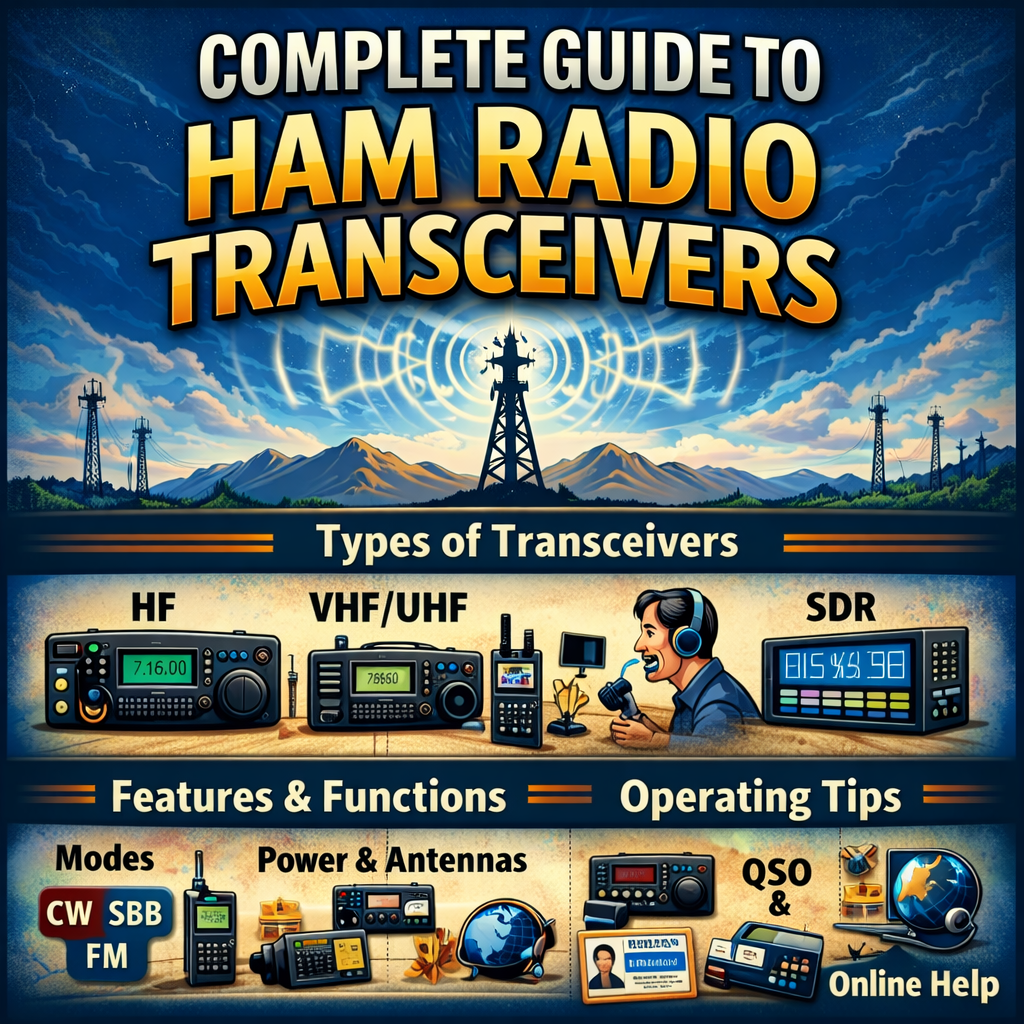
Complete Guide to Amateur Radio Transceivers, they are the central operating component of every radio station. They perform two essential functions: transmitting radio frequency energy and receiving signals from other stations. By combining both functions into one device, a transceiver allows real-time two-way communication across distances ranging from a few hundred feet to thousands of miles.
Every aspect of amateur radio operation depends on the capabilities of the transceiver. Communication range, signal clarity, operating modes, and overall station performance are all influenced by the radio at the center of the system. While antennas, feed lines, and propagation conditions play major roles, the transceiver determines how efficiently signals are generated, processed, filtered, and interpreted.
Modern amateur radio transceivers vary enormously in design and capability. Some are compact handheld units built for portability and local communication. Others are sophisticated base station systems capable of high-power transmission, advanced digital signal processing, and wideband spectrum monitoring. Many contemporary radios incorporate computer integration, software control, and firmware-based feature expansion, allowing performance levels that were impossible in earlier generations of equipment.
Understanding how transceivers function and how different types serve specific operating goals is essential for building an effective station. Whether the objective is global communication, mobile operation, emergency preparedness, technical experimentation, or recreational portable use, selecting the proper transceiver determines both operating efficiency and long-term satisfaction.
This guide explains transceiver technology, compares major categories, explores receiver and transmitter architecture, and provides practical guidance for choosing equipment based on real operating needs. It also serves as the central hub for deeper topics including equipment reviews, setup guides, and specialized operating techniques.
Choose the Right Type of Transceiver
Ham radio transceivers are designed for different operating environments. Some are built for portability, others are installed in vehicles, and some provide maximum performance in a fixed station. Choosing the right type depends on where and how you operate most often.
Transceivers are Typically Grouped by How and Where They are Used
Handheld Transceivers
Handheld transceivers are compact, battery-powered radios designed for portable communication. They are ideal for local contacts, field operation, emergency use, and everyday mobile communication on foot.
• Yaesu ft5dr
• Anytone 878UVII Plus
• Icom ID-52A
Mobile Transceivers
Mobile transceivers are designed for installation in vehicles and provide higher power and improved range compared to handheld radios. They are ideal for travel, commuting, and reliable communication while on the move.
• Yaesu FTM 400 XDE
• Yaesu FTN100DR
• Yaesu FTM 150RASP
Fixed Station (Base Station) Transceivers
Fixed station transceivers are installed in a home radio shack and provide the highest performance and capability. They are best for long-distance communication, advanced operation, contesting, and digital modes.
• Elecraft K4D
• Yaesu FTDX 101
• Icom IC 7300MKII
Major Transceiver Categories
Amateur radio transceivers are generally classified according to frequency coverage, operating environment, and intended communication range. Each category is optimized for specific use cases, power levels, and physical deployment requirements.
HF base station transceivers operate on the high frequency bands and are designed for long-distance communication through ionospheric propagation. VHF and UHF mobile transceivers provide regional coverage and are typically installed in vehicles. Handheld transceivers offer fully portable communication with integrated power and antennas. Software defined radios represent a modern architecture that uses digital signal processing to perform many functions traditionally handled by analog circuitry.
Each category has distinct advantages and limitations, and many experienced operators use multiple radios to support different operating environments.
HF Transceivers and Long-Distance Propagation
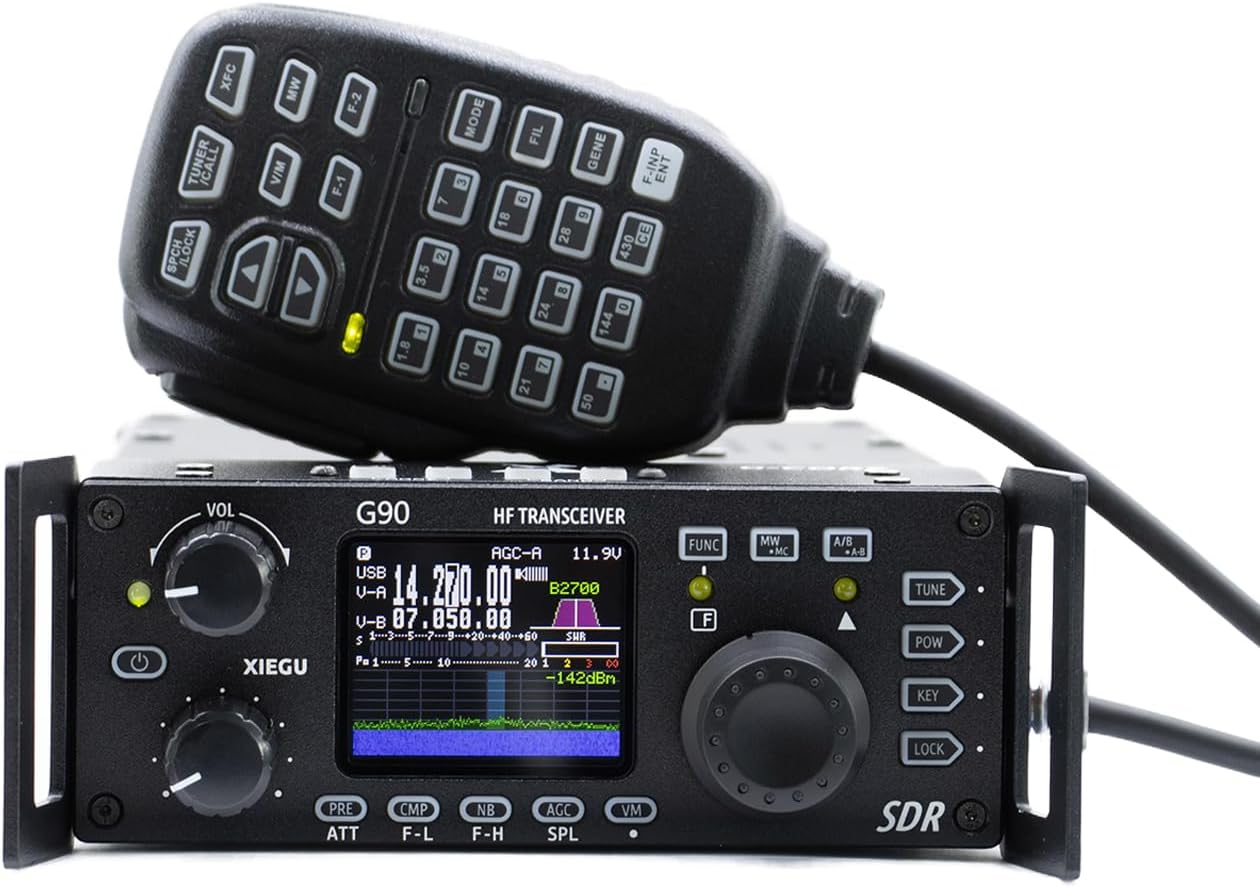
HF transceivers operate across the frequency range of approximately 1.8 to 30 megahertz. These frequencies interact with the Earth’s ionosphere, allowing radio waves to refract and return to the surface at distant locations. This phenomenon enables communication across continents and oceans without intermediate infrastructure.
Because HF signals can travel globally under favorable conditions, HF transceivers form the foundation of long-distance amateur radio communication. Operators use them for DX operation, international contests, digital communication networks, and emergency coordination across wide geographic areas.
HF radios are typically installed as base stations because they require stable power supplies, efficient antenna systems, and careful station grounding. High performance receiver design is particularly important on HF because atmospheric noise, adjacent signal interference, and propagation variability can significantly affect signal quality.
Modern HF transceivers often incorporate digital signal processing to improve selectivity, reduce noise, and provide visual spectrum displays. These capabilities allow operators to identify weak signals, avoid interference, and optimize operating conditions in real time.
Portable HF operation is also common, particularly for field deployment, emergency communication exercises, and low-power QRP experimentation. Advances in compact power supplies, lightweight antennas, and efficient transmitters have made portable HF operation increasingly practical.
VHF and UHF Mobile Transceivers and Regional Communication
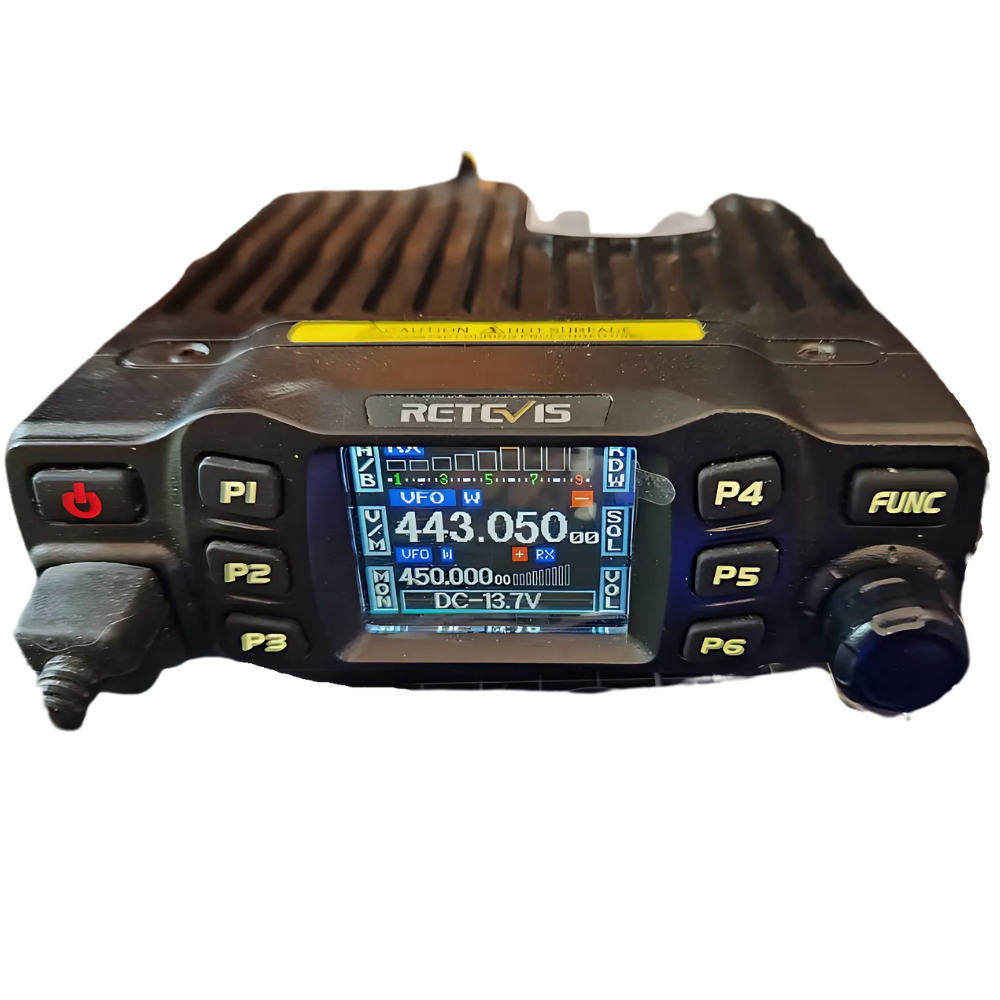
VHF and UHF mobile transceivers operate at higher frequencies where radio waves travel primarily by line-of-sight propagation. Because these frequencies do not typically reflect from the ionosphere under normal conditions, communication range depends heavily on terrain, antenna height, and repeater infrastructure.
Mobile radios are commonly installed in vehicles, where they provide reliable communication during travel, commuting, and public service activity. Output power is significantly higher than handheld radios, which improves signal strength and communication reliability.
Repeater networks play a major role in VHF and UHF communication. A repeater receives signals on one frequency and retransmits them on another, usually from an elevated location. This extends communication range dramatically and enables regional coverage across large geographic areas.
Mobile transceivers are widely used for emergency response coordination, storm spotting networks, travel communication, and daily operator interaction through local nets.
Handheld Transceivers and Portable Operation
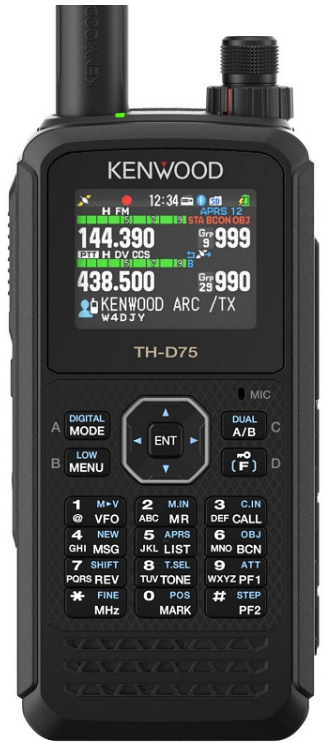
Handheld transceivers provide maximum portability by integrating the transmitter, receiver, antenna connection, and power source into a single compact unit. They operate primarily on VHF and UHF bands and are designed for convenient communication in virtually any environment.
Because they require no external infrastructure beyond an antenna, handheld radios are widely used for outdoor activities, public events, emergency response, and local repeater access. Their compact size and battery operation make them ideal for field deployment where larger equipment would be impractical.
Although transmit power is lower than mobile radios, handheld units are highly effective for short-range communication and repeater operation. Many modern handheld radios include advanced features such as digital voice modes, GPS location reporting, Bluetooth connectivity, and computer programming capability.
Software Defined Radio Architecture
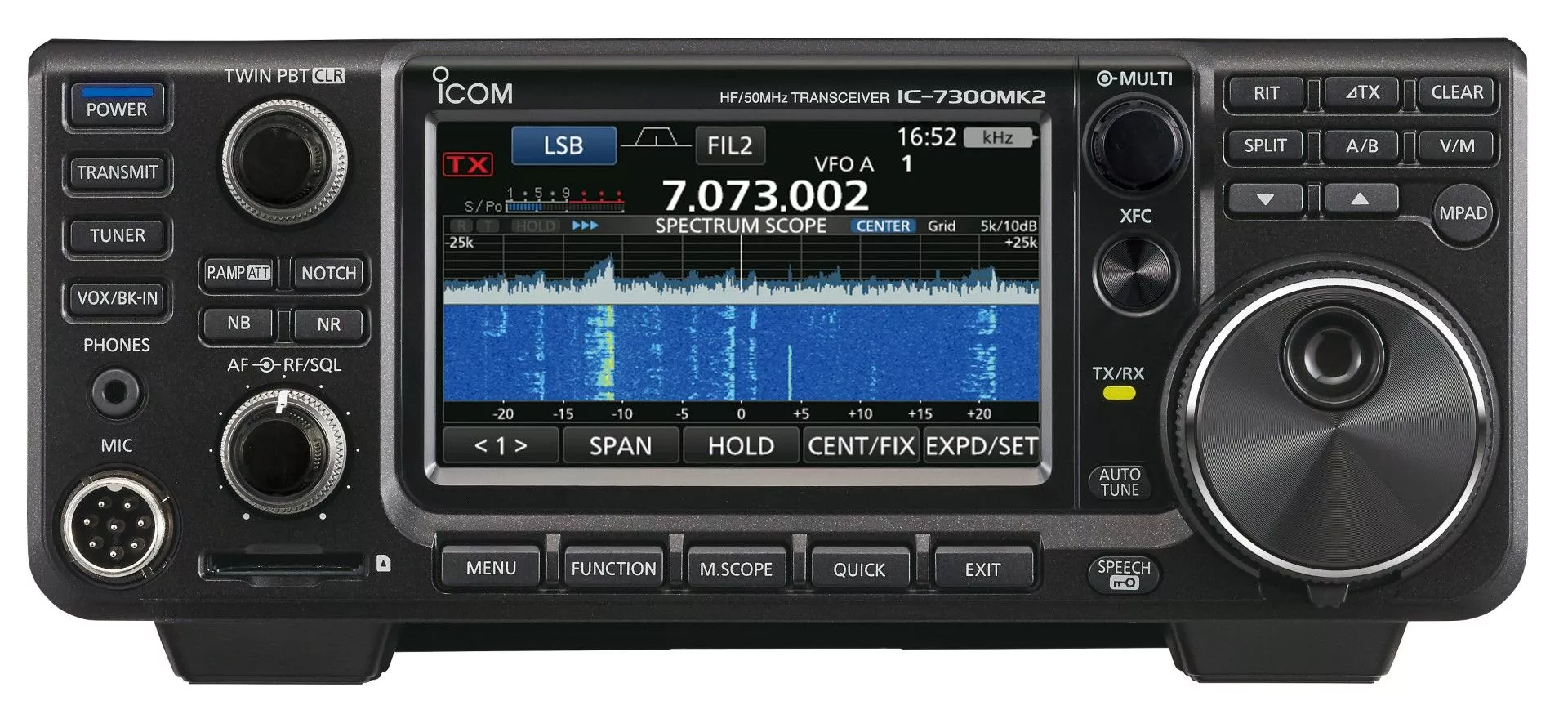
Software defined radio technology represents a major shift in transceiver design. Instead of relying primarily on analog circuitry, SDR systems convert radio signals into digital data and process them using software algorithms.
This architecture allows extremely precise filtering, wideband spectrum visualization, and flexible operating modes. Operators can view large portions of the radio spectrum simultaneously, identify signals visually, and adjust receiver characteristics dynamically.
Because many SDR functions are implemented in software, features can often be expanded through firmware updates rather than hardware modification. This provides long-term flexibility and performance improvement without replacing the radio.
SDR technology is now common in high-performance HF transceivers and is increasingly present in mid-range equipment as processing power becomes more affordable.
Brands of Transceivers
here is a list of all the ham radio brands we have on this site:
Alinco —- Anytone —- Baofeng —- Icom —- Kenwood
Radioddity —- Radtel —- Retevis —- Xeigu —- Yaesu
Digital Radio Technology
Digital radio technology transforms voice and data into encoded digital signals before transmission. Instead of sending continuous analog audio waveforms, digital systems sample the audio, compress it, and transmit structured data packets over RF. This process allows modern transceivers to deliver clearer audio, improved spectrum efficiency, and advanced network connectivity that traditional analog systems cannot match.
At the heart of digital voice operation is a vocoder. A vocoder converts speech into a compressed digital data stream, reducing bandwidth while preserving intelligibility. Because digital transmission includes error correction and data reconstruction, signals often remain clear even when they are weak or noisy. However, once signal strength drops below a usable threshold, audio can suddenly disappear rather than gradually fading as analog signals do.
Several major digital voice systems are widely used in amateur radio. Each uses different protocols, infrastructure, and network features.
DMR (Digital Mobile Radio)
One of the most popular digital systems. It uses time-division multiple access (TDMA), which allows two simultaneous conversations on a single frequency channel. DMR supports talkgroups, wide-area linking, and global network communication through internet-connected repeaters or personal hotspots. It is common in handheld and mobile radios and widely used for both local and worldwide communication.
System Fusion (C4FM)
Developed by Yaesu, C4FM combines digital voice with flexible operating modes. Radios can switch automatically between analog FM and digital operation when supported by repeaters. Fusion networks provide room-based communication similar to talkgroups, making it easy to connect with operators across large geographic regions.
D-Star (Digital Smart Technologies for Amateur Radio)
One of the earliest digital voice systems designed specifically for amateur radio. D-Star supports both voice and low-speed data transmission and uses reflector systems to link repeaters worldwide. Callsign-based routing allows direct station-to-station communication across networks.
Some operators also use P25 (Project 25), primarily designed for public safety communications. While less common in amateur radio, certain equipment can operate in P25 mode for interoperability or experimentation.
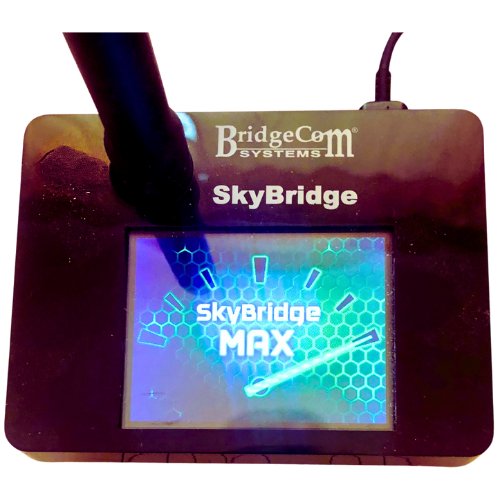
Digital radio systems often connect through repeaters linked to internet-based networks. Many operators use personal hotspots, small low-power devices that connect a handheld radio to worldwide digital networks through a home internet connection. This allows global communication from almost any location with minimal RF power.
Beyond voice communication, digital transceivers support additional capabilities such as text messaging, GPS position reporting, telemetry, and data transfer. These features make digital radio especially useful for coordinated events, emergency response, and structured communication environments.
However, digital operation also introduces complexity. Programming talkgroups, network parameters, and channel profiles can require specialized software and careful configuration. Compatibility between digital systems is limited, meaning radios designed for one digital protocol typically cannot communicate with another without special bridging systems.
Digital radio technology continues to expand the capabilities of amateur transceivers by combining RF communication with data networking. As infrastructure grows and equipment becomes more accessible, digital operation plays an increasingly important role in modern amateur radio activity.
Receiver Performance and Signal Handling
Receiver quality is one of the most important factors in transceiver performance. A high-quality receiver must detect weak signals, reject interference, and maintain clarity in crowded band conditions.
Key receiver characteristics include sensitivity, which determines the minimum detectable signal level, and dynamic range, which measures the receiver’s ability to handle strong and weak signals simultaneously. Selectivity determines how effectively adjacent signals are filtered, while noise floor represents the internal electrical noise generated by the receiver itself.
Advanced radios use digital signal processing, roofing filters, and adaptive noise reduction to improve reception under challenging conditions.
Transmitter Performance and Power Output
The transmitter generates radio frequency energy and modulates information onto the signal. Output power determines signal strength, but efficient antenna systems are equally important for effective radiation.
Transmit quality depends on modulation accuracy, frequency stability, and spectral purity. Poorly designed transmitters can generate unwanted emissions that interfere with other signals.
Many radios include adjustable power levels to accommodate different operating scenarios, including low-power portable operation and high-power base station communication.
Choosing the Right Transceiver
Selecting a transceiver requires matching equipment capability to operating goals. Operators seeking worldwide communication typically require HF equipment with efficient antennas. Those focused on regional networks benefit from VHF or UHF mobile radios. Portable operators prioritize lightweight equipment and battery efficiency. Technical experimenters often prefer SDR systems for signal analysis and digital mode flexibility.
Budget, available space, power requirements, and antenna options also influence equipment selection.
Essential Station Equipment
A functional station requires more than a transceiver alone. Antennas must be matched to operating frequencies and installed for efficient radiation. Power supplies must deliver stable voltage. Feed lines must minimize signal loss. Grounding systems must provide electrical safety and noise reduction.
Station performance depends heavily on system integration rather than individual components alone.
Complete Guide to Amateur Radio Transceivers
Equipment performance should be evaluated under realistic operating conditions rather than relying solely on manufacturer specifications. Important evaluation factors include receiver clarity, signal handling in crowded bands, transmit audio quality, digital mode reliability, user interface design, and long-term operational stability.
Real-world testing reveals characteristics that specification sheets cannot fully describe.
Frequently Asked Questions
What is the difference between HF and VHF communication?
HF supports long-distance communication through ionospheric propagation while VHF primarily supports line-of-sight regional communication.
Are software defined radios superior to traditional radios?
They provide greater flexibility and visualization, but overall performance depends on design quality.
How much transmit power is necessary for effective communication?
Power requirements vary widely, but efficient antennas often matter more than transmitter wattage.
Do experienced operators use multiple transceivers?
Many operators maintain separate radios for base station, mobile, and portable operation.
What component most affects overall performance?
A properly installed and efficient antenna system has the greatest impact on communication effectiveness.
Please consider Donating to help support this channel