
Is the Electro-Voice RE320 Worth It?
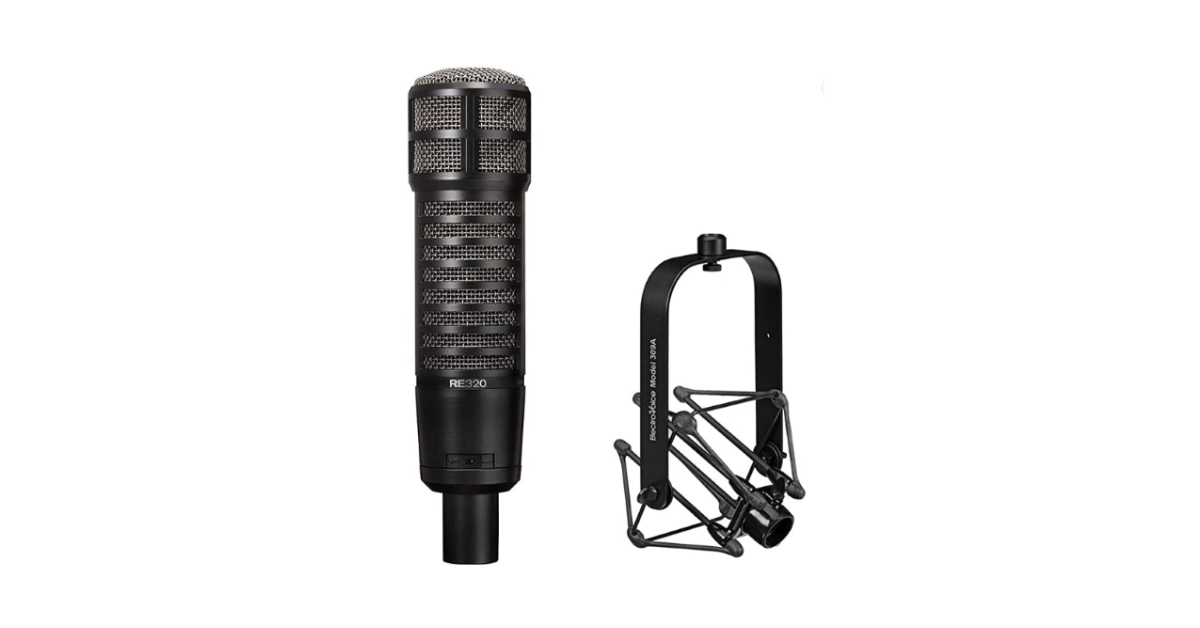
The Electro-Voice RE320 is a professional dynamic microphone designed for both voice and instrument recording. It delivers broadcast-quality clarity, excellent noise rejection, and consistent tonal balance, making it a strong choice for podcasters, radio operators, and studio users.
For most users, the RE320 is worth it if you need a versatile microphone that handles both speech and high-volume sources without distortion.
The Electro-Voice RE320 dynamic microphone delivers professional-grade sound capture for voice, broadcast, and instrument recording. Because it uses a rugged dynamic design, it handles extremely high sound pressure levels while rejecting unwanted background noise with impressive consistency. As a result, it performs reliably in environments where clarity and control matter more than extreme sensitivity.
Moreover, the RE320 builds on Electro-Voice’s long broadcast heritage, so it prioritizes intelligibility, tonal balance, and operational stability. Consequently, it performs equally well in radio studios, home recording setups, and live production environments. While many microphones specialize in either speech or instruments, this model supports both without compromise. Therefore, it serves as a versatile tool for communication, recording, and performance applications.
Want to improve your Audio, Check out our Complete Guide to Ham Radio Microphones
Electro-Voice RE320 Key Specs
- Type: Dynamic microphone
- Polar Pattern: Cardioid
- Frequency Response: 30 Hz – 18 kHz
- Output Level: Higher than typical dynamic mics
- Special Feature: Dual-voice contour switch
RE320 vs RE20 (Quick Decision Guide)
- Choose RE320 if you want versatility and instrument use
- Choose RE20 if you want pure broadcast voice tone
Sound Quality and Voice Performance
The RE320 produces a clean, controlled, and highly intelligible sound profile designed for professional voice capture. Low frequencies remain full yet disciplined, which prevents excessive boominess during close-range operation. Meanwhile, the midrange stays clear and articulate, allowing speech to remain understandable even in acoustically complex environments. Because intelligibility is critical in broadcast and communication work, this midrange precision becomes one of the microphone’s strongest advantages.
High frequencies remain smooth rather than overly bright. Consequently, voices sound natural and fatigue-free during long listening sessions. Instead of exaggerating tonal coloration, the microphone preserves the true character of the source. Therefore, operators can shape tone intentionally during processing rather than compensating for built-in coloration.
Variable-D technology plays a central role in maintaining tonal stability. Because it minimizes proximity effect, the microphone prevents excessive bass buildup when the speaker moves closer. As a result, tonal balance remains consistent across normal working distances. This stability improves communication clarity, recording reliability, and overall listening comfort.
Core Design and Construction Quality
Electro-Voice engineered the RE320 with durability as a primary design objective. The all-metal housing resists vibration and handling noise, while internal shock mounting stabilizes the capsule during use. Consequently, the microphone maintains consistent performance even under continuous operation.
The large-diaphragm dynamic element produces strong low-frequency response while preserving detailed midrange clarity. At the same time, it avoids the harshness sometimes associated with highly sensitive condenser designs. Because of this balance, the microphone delivers both power and control.
Additionally, the Variable-D acoustic system manages low-frequency behavior along the length of the microphone. Therefore, bass response remains controlled even when the speaker changes position. This design helps maintain natural voice reproduction without constant repositioning.
Dual-Voice Personality Through Frequency Contouring
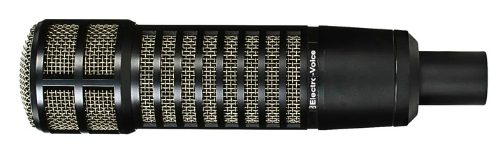
One of the defining features of the RE320 is its dual-voice frequency contour switch. This built-in control allows users to select between two optimized response profiles. Because of this flexibility, the microphone adapts quickly to different recording tasks.
The voice contour enhances clarity in the presence range while maintaining balanced low-frequency control. Consequently, spoken audio sounds articulate and broadcast-ready with minimal processing.
The instrument contour increases low-frequency impact while preserving definition. Therefore, kick drums, bass cabinets, and other powerful sources sound full and controlled without excessive equalization. This dual-response capability significantly expands the microphone’s operational range.
Broadcast and Communication Performance
In real-world communication environments, the RE320 isolates voice with remarkable precision. Off-axis rejection reduces room reflections and environmental noise, which improves clarity even in untreated spaces. Because dynamic capsules tolerate high sound pressure, the microphone handles loud voices and sudden level changes without distortion.
Plosive control remains manageable with proper positioning, and internal filtering helps reduce breath noise. Consequently, transmitted audio remains stable and professional with minimal signal processing.
For broadcast and communication use, intelligibility must remain consistent under changing conditions. Therefore, the RE320 maintains clear articulation across different vocal tones and speaking styles. This stability supports reliable voice transmission during both live and recorded operation.
Voice Distance Control and Placement Behavior
The RE320 maintains stable tonal balance across a wide range of speaking distances. Because Variable-D technology controls proximity effect, low-frequency response remains consistent even when the speaker moves closer to the microphone. This stability prevents sudden tonal shifts and preserves natural voice character.
Proper placement further enhances performance. Positioning slightly off-axis reduces plosives while maintaining vocal presence. Maintaining consistent distance stabilizes output level and tonal balance. Additionally, secure mounting minimizes vibration transfer from surrounding surfaces. Together, these practices ensure predictable and controlled audio capture.
Related Guides for Better Audio Performance
Getting the best performance from the RE320 depends on your overall station setup. Proper grounding helps reduce unwanted noise and interference, while antenna placement plays a major role in overall signal clarity. Managing RF exposure also ensures safe and consistent operation when transmitting.
Instrument Recording Capability
Although many dynamic microphones capture instruments effectively, the RE320 performs with exceptional control and precision. Its high sound pressure tolerance allows it to capture loud sources without distortion. Therefore, it performs especially well on kick drums, bass cabinets, and amplified instruments.
The instrument contour enhances low-frequency punch while maintaining clarity. Meanwhile, the controlled high-frequency response prevents brittle overtones. As a result, recorded sound remains powerful, tight, and mix-ready.
Furthermore, the microphone maintains consistent tonal balance across varying placement distances. Consequently, engineers can experiment with positioning without sacrificing clarity or definition.
Off-Axis Rejection and Environmental Control
Room acoustics often influence recording quality. However, the RE320 controls environmental noise through directional pickup and internal acoustic design. Consequently, reflections and ambient sound entering from the sides and rear remain minimized.
This characteristic benefits home studios and field environments where acoustic treatment may be limited. Meanwhile, consistent off-axis rejection helps maintain focus on the primary sound source.
Handling Noise and Mechanical Stability
Mechanical vibration can degrade signal quality. However, the RE320’s internal shock mounting significantly reduces structure-borne noise. Because the capsule remains isolated from physical movement, handling noise stays minimal.
The microphone’s weight and solid construction further stabilize it on stands and boom arms. Therefore, it maintains consistent positioning during long sessions.
Gain Requirements and Signal Output
Like most professional dynamic microphones, the RE320 benefits from proper gain staging. Although its output level is strong for a dynamic design, a clean preamp improves clarity and headroom. Because the signal remains stable, additional gain devices are rarely required in typical setups.
Nevertheless, optimized gain structure always improves overall performance. Therefore, pairing the microphone with a quality preamp helps maintain maximum signal integrity.
Durability and Long-Term Reliability
Electro-Voice designs equipment for continuous professional use. Accordingly, the RE320 withstands demanding operation without performance degradation. The rugged housing protects internal components from shock and wear.
Dynamic capsules also resist environmental variation more effectively than delicate condenser elements. Consequently, the microphone maintains consistent performance across temperature and humidity changes.
Application Versatility and Use Cases
The RE320 adapts to a wide range of audio applications. Because it balances clarity, control, and durability, it performs reliably in broadcast studios, recording environments, and live production setups.
Voice recording benefits from its articulation and proximity stability. Instrument recording benefits from its high-pressure tolerance and extended low-frequency control. As a result, a single microphone can serve multiple professional roles without compromise.
Who Should Buy the RE320?
The RE320 is ideal for users who need both voice clarity and flexibility across different audio tasks.
It is especially well-suited for podcasters who require consistent vocal presence, amateur radio operators who depend on intelligibility, and musicians recording high-impact sources such as kick drums and bass cabinets. Because it maintains clarity while handling high sound pressure levels, it performs reliably in both communication and recording environments.
Users working in untreated spaces also benefit from its strong off-axis rejection, which helps isolate voice and reduce background noise.
Comparison to Typical Dynamic Microphones
Many dynamic microphones emphasize rugged construction but sacrifice tonal refinement. However, the RE320 combines durability with detailed frequency control. Therefore, it delivers studio-quality sound while maintaining the reliability of a dynamic design.
The dual-voice contour also reduces the need for multiple specialized microphones. Consequently, users gain flexibility without increasing equipment complexity.
Electro-Voice RE320 vs RE20
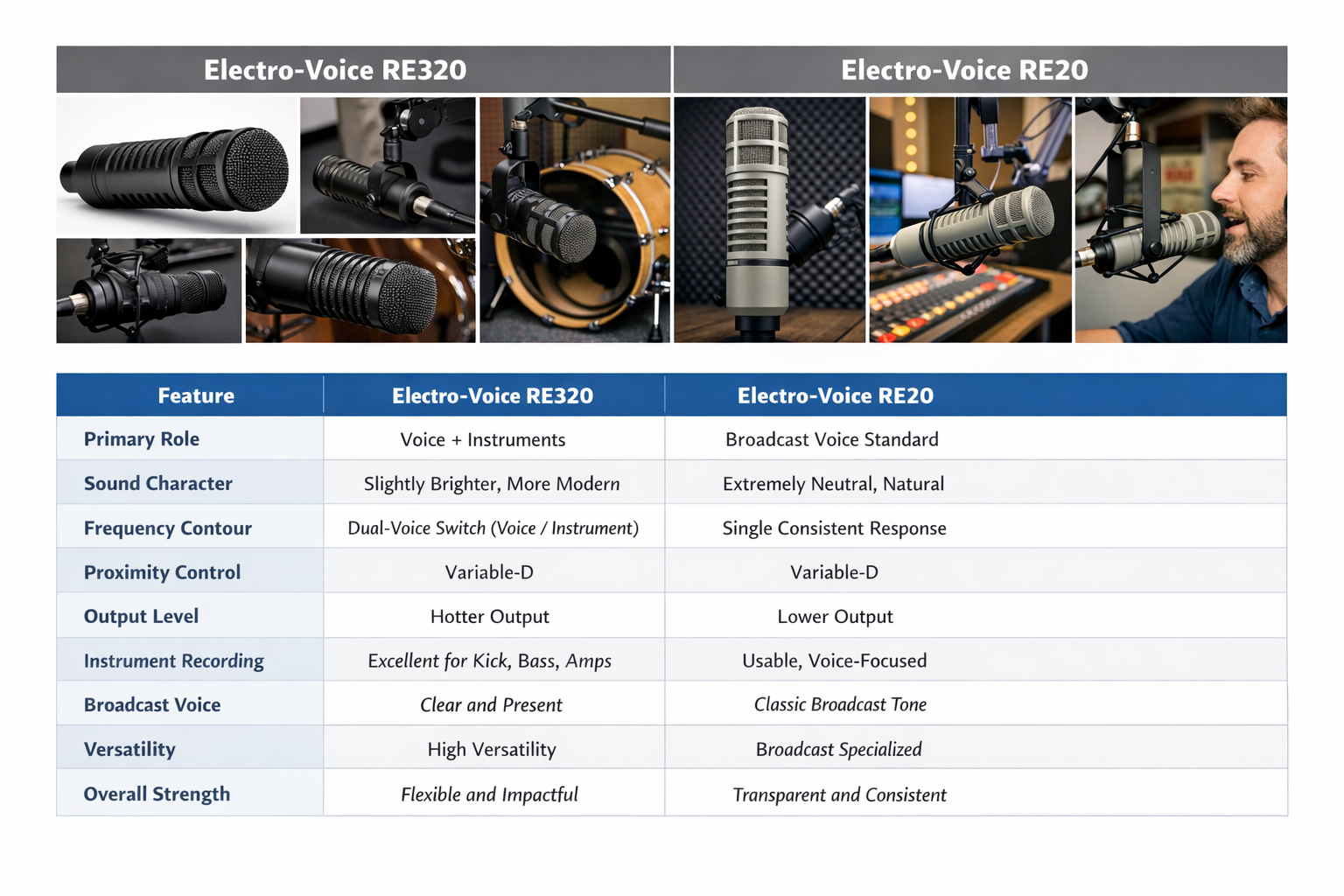
The Electro-Voice RE320 and RE20 share the same design philosophy, but they target slightly different performance priorities. Both microphones use Variable-D technology to control proximity effect, and both deliver consistent tonal balance during close-range operation. However, their sound character, output behavior, and intended applications differ in meaningful ways.
The RE20 is widely considered a broadcast standard because it produces an exceptionally natural and neutral voice response. Its tonal balance remains smooth and controlled, which makes speech sound realistic rather than enhanced. Because of this neutrality, the RE20 is often preferred in traditional broadcast studios and voice-over environments where transparency matters most. In addition, its frequency response remains extremely stable even when the speaker changes position, which helps maintain consistent voice quality during live operation.
By comparison, the RE320 produces a slightly more modern and energetic sound profile. Its response includes more upper-frequency presence and slightly stronger output sensitivity. As a result, the RE320 often sounds brighter and more detailed, particularly on instruments and high-energy vocal sources. This character makes it especially useful for recording kick drums, bass cabinets, and other powerful sound sources where added definition improves clarity.
Another important difference involves versatility. The RE20 focuses primarily on voice reproduction and broadcast reliability, while the RE320 includes a dual-voice contour switch that allows users to select between a speech-optimized response and an instrument-optimized response. Because of this feature, the RE320 adapts more easily to mixed recording environments that require both vocal and instrument capture.
Output level also differs slightly between the two models. The RE320 typically produces a somewhat hotter signal, which can reduce the amount of preamp gain required in certain setups. Meanwhile, the RE20 often prioritizes smoothness and stability over output strength, reinforcing its reputation as a controlled and predictable broadcast microphone.
In practical use, the RE20 excels when absolute tonal neutrality and traditional broadcast sound are the primary goals. Conversely, the RE320 excels when flexibility, modern clarity, and multi-purpose recording capability are more important. Both microphones deliver professional performance, but their strengths reflect different design priorities.
Overall, the RE20 remains the classic choice for pure broadcast voice reproduction, while the RE320 offers greater versatility for users who need a single microphone capable of handling both speech and high-impact instrument recording.
RE320 vs RE20 Comparison Chart
| Feature | Electro-Voice RE320 | Electro-Voice RE20 |
|---|---|---|
| Primary Role | Voice + instruments | Broadcast voice standard |
| Sound Character | Slightly brighter, more modern | Extremely neutral, natural |
| Frequency Contour | Dual-voice switch (voice / instrument) | Single consistent response |
| Proximity Control | Variable-D | Variable-D |
| Output Level | Slightly hotter output | Slightly lower output |
| Instrument Recording | Excellent (kick, bass, amps) | Usable but voice-focused |
| Broadcast Voice | Very clear and present | Classic broadcast tone |
| Versatility | Very high | Specialized |
| Typical Use | Multi-purpose studio work | Dedicated broadcast studios |
| Overall Strength | Flexibility and impact | Transparency and consistency |
Performance Stability Compared to Broadcast Standards
The RE320 maintains consistent tonal balance across diverse operating conditions. Because proximity response remains controlled and frequency contouring adapts to different sources, the microphone performs predictably without constant adjustment. Many broadcast microphones require precise positioning to maintain tonal accuracy, but the RE320 remains stable across typical working distances. This operational consistency improves reliability in professional environments.
Advantages and Limitations
The RE320 offers several practical advantages that support professional use. It maintains stable tonal balance across varying distances, rejects environmental noise effectively, and adapts to multiple recording tasks through dual-voice contouring. Additionally, its dynamic design handles high sound pressure levels while maintaining clarity.
However, like most dynamic broadcast microphones, it benefits from sufficient preamp gain for optimal headroom. Its solid construction also makes it heavier than compact handheld models. Nevertheless, these characteristics reflect its professional design priorities.
Pros and Cons of the RE320
Pros
- Clear and controlled voice reproduction
- Strong background noise rejection
- Handles high sound pressure without distortion
- Dual voice/instrument contour adds flexibility
Cons
- Requires proper gain staging for best performance
- Heavier than compact microphones
- Less neutral than RE20 for pure broadcast tone
Who Should Choose the Electro-Voice RE320
The RE320 is ideal for users who require consistent voice clarity, strong noise rejection, and operational durability. Broadcasters benefit from its intelligibility and tonal stability. Recording engineers benefit from its instrument handling and frequency control. Communication operators benefit from its predictable voice reproduction.
Because it performs reliably across multiple environments, it suits professionals who need a single microphone capable of handling varied tasks without compromise.
Why the Electro-Voice RE320 Remains a Professional Standard
The Electro-Voice RE320 combines controlled proximity response, flexible frequency contouring, and durable construction into a single professional audio solution. Because it maintains tonal stability, rejects unwanted noise, and adapts to multiple recording tasks, it performs reliably across communication, broadcast, and recording environments.
Its design balances technical innovation with practical usability. Variable-D technology controls proximity effect, dual-response contouring expands versatility, and robust construction ensures long-term reliability.
Ultimately, the RE320 delivers clarity, control, and consistency in a single durable design. Therefore, it remains a trusted choice for users who require dependable, high-quality sound capture across a wide range of professional applications.
Final Verdict: Is the RE320 a Good Choice?
The Electro-Voice RE320 delivers a strong balance of clarity, durability, and versatility, making it a reliable choice for both communication and recording environments. Its ability to maintain consistent tonal balance while handling both voice and instruments sets it apart from many traditional dynamic microphones.
For users who need a dependable, multi-purpose microphone without sacrificing audio quality, the RE320 remains one of the most practical options available.
Common Performance Questions
Users often ask how the RE320 behaves in real operating conditions. The microphone maintains clear articulation across different vocal tones and speaking styles. Because Variable-D technology minimizes proximity buildup, tonal balance remains stable during close use. The dynamic capsule also tolerates high sound pressure without distortion, which supports reliable capture of both voice and loud instruments. With proper gain staging and placement, the microphone delivers consistent and controlled audio in nearly any professional environment.
Electro-Voice RE320 FAQ
Is the RE320 good for voice?
Yes, it provides clear, controlled voice reproduction with strong intelligibility.
Does the RE320 need a Cloudlifter?
In most setups, no. Its output is higher than many dynamic microphones.
Is the RE320 better than the RE20?
The RE320 is more versatile, while the RE20 is more neutral for broadcast voice.
Can the RE320 handle instruments?
Yes, it performs very well on kick drums, bass cabinets, and amplified sources.
About the Author
Vince, W2KU, is a licensed Extra class amateur radio operator and the founder of Ham Shack Reviews. The club committee named him Amateur of the Year in 2026 for his contributions to amateur radio education and equipment evaluation.
He primarily operates HF, knows propagation very well, operates mobile and handhelds daily. Vince exchanges QSL cards for DXCC, contest confirmation, and award tracking and is the club QSL manager. His guidance focuses on practical operating procedures, accurate logging, and real-world amateur radio practices.
Please consider Donating to help support this channel