
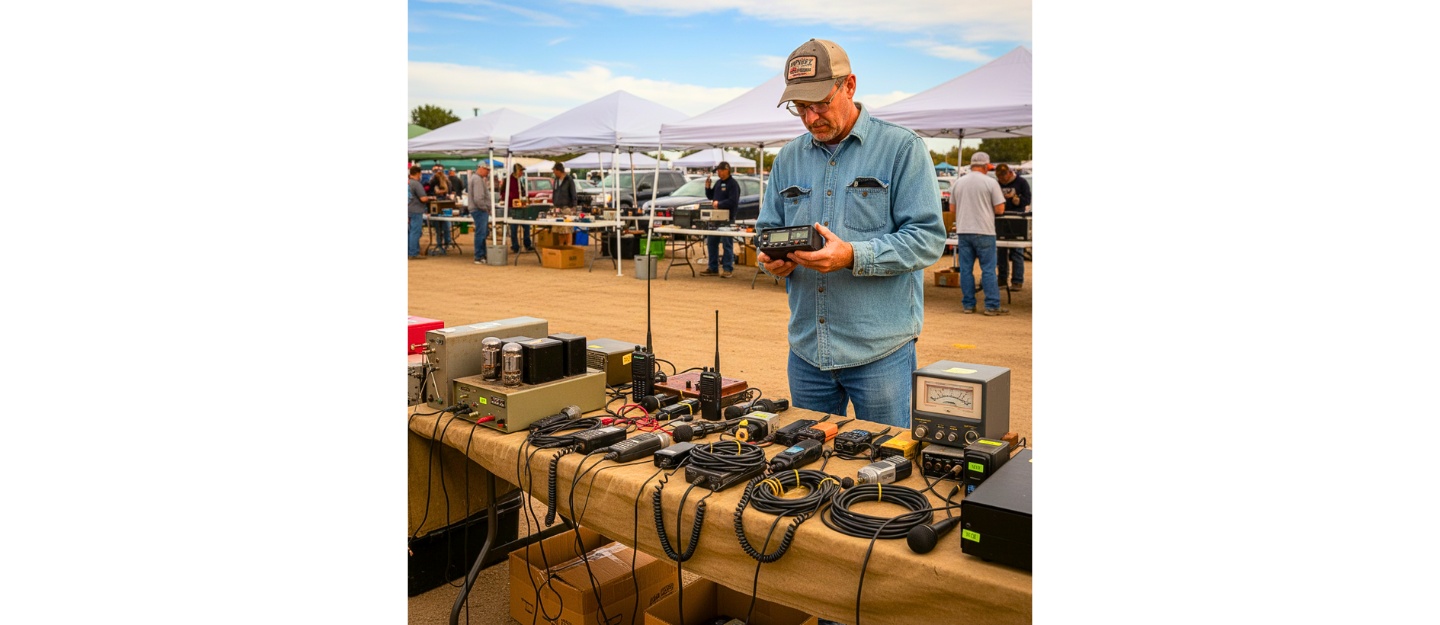
Hamfests give radio amateurs one of the best opportunities to inspect used ham gear before making a purchase. Unlike buying online, you can examine equipment firsthand, operate controls, and speak directly with the seller. That hands-on experience helps you avoid expensive mistakes while increasing confidence in your buying decisions.
Whether you’re searching for your first HF transceiver, a vintage receiver, a handheld radio, or station accessories, careful evaluation makes the difference between finding a bargain and buying someone else’s problem. This guide explains how to inspect, test, negotiate, and purchase used ham gear at hamfests with confidence.
Why Buying Used Ham Gear at Hamfests Is Different
Hamfests give radio amateurs a rare chance to handle and evaluate used ham gear before buying, and this access often prevents costly mistakes. Moreover, buyers can compare multiple rigs side by side, which reveals differences that photos never show. However, excitement can cloud judgment, so preparation matters. Therefore, smart shoppers arrive with a clear goal and a realistic budget in mind.
Expert Tip: Experienced ham radio operators know that the best deal is not always the lowest price. Equipment that has been well maintained, includes original accessories, and can be tested often provides better long-term value than a cheaper radio with an unknown history.
Research Before You Walk In
Preparation starts well before the doors open. First, you should study common models, known issues, and average prices so you recognize a fair deal instantly. Additionally, learning which accessories normally ship with a radio helps you spot missing items. As a result, you avoid overpaying for incomplete gear that looks attractive at first glance.
Bringing a written checklist also keeps emotions from driving your decisions. By listing the models you want, their typical selling prices, and the features that matter most, you can compare several pieces of used ham gear without relying on memory alone.
Create a Hamfest Shopping Checklist
Before entering the hamfest, consider writing down:
- Target radio models
- Maximum budget
- Average selling prices
- Required accessories
- Common problems to inspect
- Power requirements
- Connector types
- Items to avoid
Inspecting the Exterior Condition
Physical condition tells a story about how the gear lived its previous life. For example, scratches, dents, and loose knobs often signal rough handling. Meanwhile, clean connectors and intact labels usually suggest careful ownership. Therefore, you should rotate knobs, press buttons, and gently flex cables to uncover hidden wear.
Although cosmetic wear is common on older equipment, excessive corrosion, missing screws, cracked displays, or evidence of water exposure deserve closer inspection because they may indicate more significant internal problems.
Powering Up and Basic Testing
Whenever possible, you should ask to power up the equipment on the spot. Then, you can check display brightness, audio clarity, and basic functions without guesswork. Furthermore, listening for hums or crackling noises helps identify aging components. Consequently, even a short test can reveal problems that later become expensive repairs.
If power is unavailable, carefully inspect connectors, switches, and displays instead. While visual inspection cannot replace operational testing, it often reveals signs of neglect or poor storage conditions.
Questions Every Buyer Should Ask
Conversation with the seller provides valuable context. For instance, asking where the radio was used often explains wear patterns you see. Additionally, learning why the gear is for sale may uncover recent upgrades or unresolved issues. However, vague answers should raise caution, so trust your instincts when responses feel evasive.
Ask questions such as:
- How long have you owned it?
- Has it ever required repairs?
- Has it been modified?
- Does everything function properly?
- Is the original manual included?
- Are there any known issues?
- Was it used in a smoke-free environment?
Evaluating Accessories and Modifications
Accessories add value only when they function correctly. Therefore, you should inspect microphones, power cords, and mounting brackets closely. Moreover, internal modifications deserve extra scrutiny because poorly executed changes reduce reliability. As a result, stock or lightly modified equipment often offers fewer surprises for new owners.
Factory-original equipment generally retains stronger resale value because future owners know exactly what they are purchasing. Whenever modifications are present, ask who performed the work and whether documentation is available.
Pricing and Negotiation Tactics
Price evaluation separates regret from satisfaction. First, compare the asking price with typical used values you researched earlier. Then, you can politely negotiate by pointing out wear or missing items. However, fair deals close quickly, so balance patience with decisiveness when the numbers make sense.
Respectful negotiation benefits for both parties. Most sellers expect reasonable offers, especially when supported by visible condition or missing accessories rather than arbitrary discounts.
Common Mistakes When Buying Used Ham Gear
Many first-time buyers make similar mistakes at hamfests. Avoiding these errors greatly increases the likelihood of making a successful purchase.
- Buying on impulse.
- Ignoring missing accessories.
- Skipping functional testing.
- Overlooking signs of corrosion.
- Forgetting to compare prices.
- Failing to inspect connectors.
- Assuming modifications improve performance.
- Exceeding your planned budget.
Knowing When to Walk Away
Not every deal deserves your money. If testing feels rushed or the seller resists inspection, you should step back. Likewise, uncertainty about major functions often signals future frustration. I have learned that is it does not feel right, its usually not right.
Therefore, walking away protects your budget and keeps the hobby enjoyable. Remember that another opportunity will almost always come along. Passing on questionable used ham gear today often prevents expensive repairs and buyer’s remorse tomorrow.
Quick Inspection Checklist
Before purchasing used ham gear, verify:
- Overall cosmetic condition
- Display operation
- Knobs and buttons
- Connectors
- Included accessories
- Signs of modification
- Power-up test if possible
- Asking price versus market value
Building Confidence as a Buyer
Experience comes from examining many different radios rather than purchasing the first one you see. Each hamfest provides an opportunity to improve your inspection skills, compare equipment, and learn from experienced operators. Over time, recognizing quality used ham gear becomes much easier because you develop a better understanding of condition, value, and reliability.
Evaluating Used Gear at Hamfests Without Regrets
Evaluating used gear at hamfests rewards patience, knowledge, and confidence. Moreover, careful inspection and honest negotiation turn uncertainty into assurance. Ultimately, when you buy with intention instead of impulse, you leave the hamfest with equipment you trust and no regrets.
Editorial Note
This guide is based exclusively on practical hamfest buying practices and visual inspection techniques commonly used by amateur radio operators. It is intended to help buyers make informed purchasing decisions when evaluating used ham gear in person.
Frequently Asked Questions
How can I tell if used ham gear has been well maintained?
Look for clean connectors, intact labels, smooth control operation, and signs that the equipment has been stored carefully. Cosmetic condition often reflects how the equipment was treated over time.
Should I buy modified used ham gear?
Minor, professionally documented modifications may be acceptable, but undocumented or poorly performed modifications deserve careful evaluation before purchasing.
Is it okay to negotiate prices at hamfests?
Yes. Respectful negotiation is common at hamfests, especially when equipment shows wear or is missing accessories.
What should I inspect first?
Begin with the overall physical condition, then check controls, connectors, included accessories, and basic operation whenever testing is possible.
How often should I walk away from a deal?
If the seller discourages inspection, refuses testing without explanation, or cannot answer basic questions about the equipment, walking away is often the safest decision.t with equipment you trust and no regrets.
Please consider Donating to help support this channel