

VOX (voice operated transmit), is a feature found in many amateur radio transceivers that automatically switches the radio from receive mode to transmit mode when the operator speaks. Instead of manually pressing a push-to-talk (PTT) button or foot switch, the radio detects audio from the microphone and activates the transmitter automatically.
VOX has been used in communication systems for decades because it allows hands-free operation and simplifies station control. In amateur radio, it is especially useful during hands-busy operating situations such as logging contacts, adjusting equipment, or operating mobile stations.
Understanding how VOX works and how to properly adjust its settings can significantly improve operating efficiency. When configured correctly, VOX provides seamless transitions between receive and transmit modes while preventing accidental transmissions caused by background noise.
What Is VOX (Voice Operated Transmit) in Ham Radio
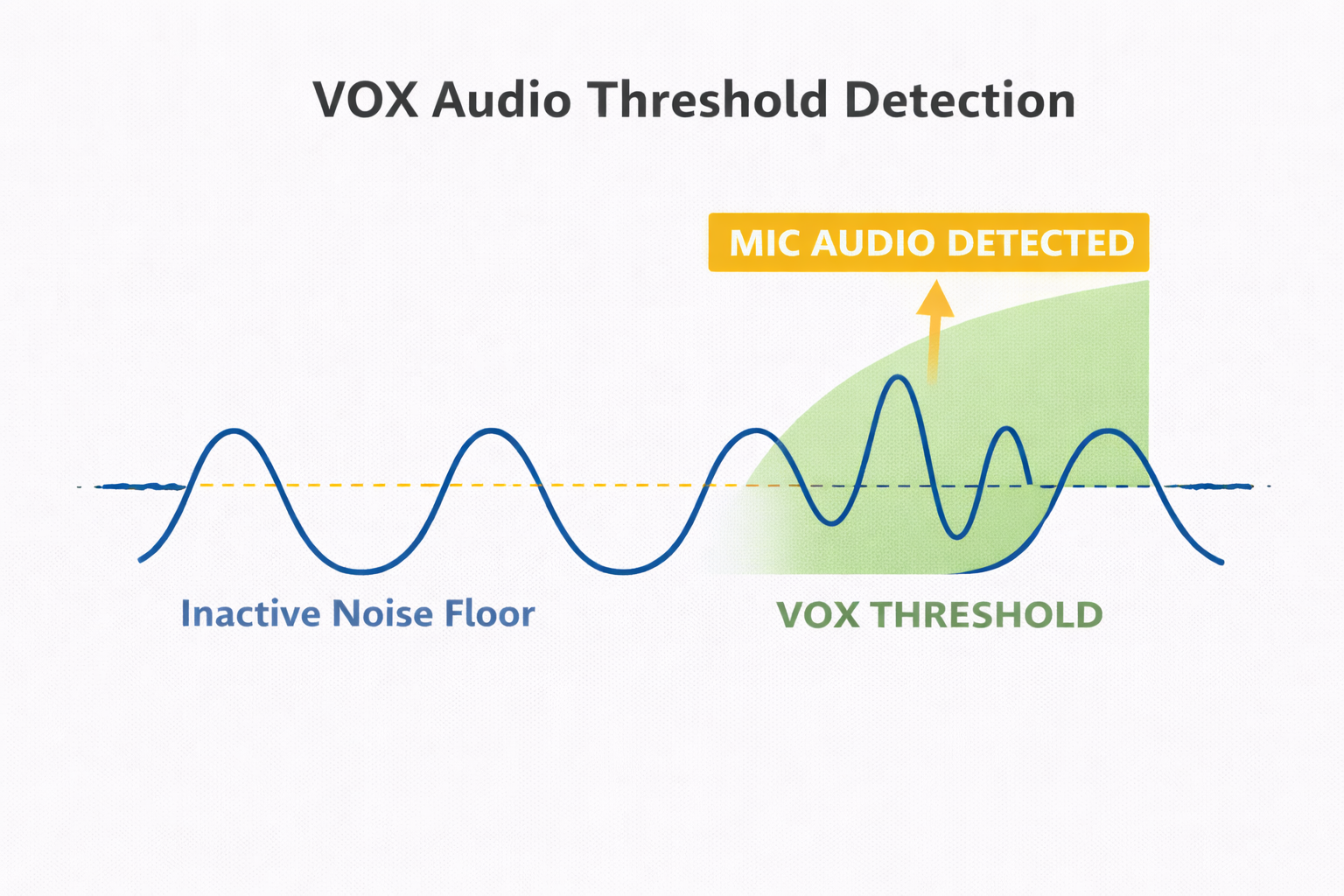
VOX stands for Voice-Operated Transmit. It is an automatic switching system that activates a radio transmitter whenever the microphone detects audio above a preset threshold.
In a traditional push-to-talk system, the operator presses a switch to place the radio in transmit mode. With VOX enabled, the radio continuously monitors microphone audio. When speech is detected, the radio automatically keys the transmitter.
Once the operator stops speaking, the radio waits for a short delay period before returning to receive mode.
VOX is commonly used in:
• Amateur radio transceivers
• Aviation communication systems
• Military communication equipment
• Hands-free headsets
• Intercom systems
In amateur radio specifically, VOX is most often used during SSB voice communication, where operators may want to transmit frequently without manually keying the transmitter.
How VOX Circuits Work
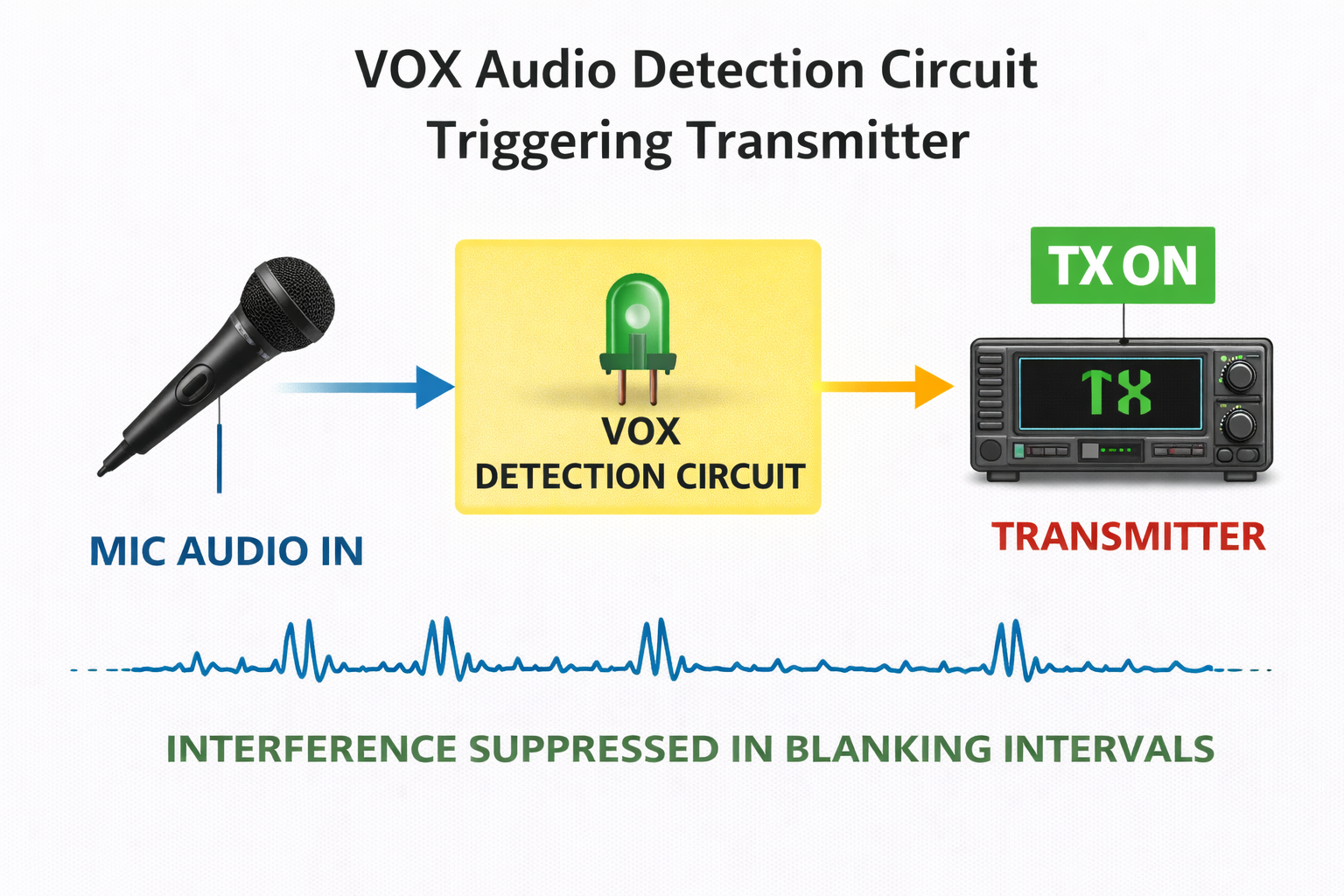
VOX (voice operated transmit) circuits operate by monitoring the microphone audio signal and detecting when speech exceeds a predefined threshold level. The circuit then triggers the transmitter control line, switching the radio from receive mode to transmit mode.
A typical VOX system includes several key components:
Audio Detection Circuit
The microphone signal passes through an audio detection stage that measures signal amplitude. When the detected audio level exceeds a preset threshold, the system recognizes the presence of speech.
Trigger Control Circuit
Once speech is detected, a control circuit activates the transmitter keying line. This effectively performs the same function as pressing the push-to-talk button.
VOX Delay Timer
To prevent the transmitter from switching off during brief pauses in speech, a delay timer keeps the transmitter active for a short period after the audio signal stops.
Anti-VOX Circuit
Many radios also include an anti-VOX system that prevents audio from the speaker from triggering the VOX circuit.
This entire process occurs extremely quickly, allowing seamless transmit activation without noticeable delay.
Key VOX Settings Explained
Most modern amateur radios include several adjustable parameters that allow operators to fine-tune VOX behavior. Proper adjustment is essential to prevent false triggering and ensure reliable operation.
The three most important VOX controls are VOX gain, VOX delay, and anti-VOX.
VOX Gain
VOX gain controls the sensitivity of the voice detection circuit. A higher gain setting makes the radio more sensitive to audio input, allowing even quiet speech to activate the transmitter.
However, setting VOX gain too high can cause the radio to transmit due to background noise or breathing sounds.
Operators should adjust VOX gain so that normal speech activates the transmitter while background noise does not.
VOX Delay
VOX delay determines how long the transmitter remains active after the operator stops speaking.
If the delay is too short, the transmitter may drop out between words. If the delay is too long, the radio may remain in transmit mode unnecessarily.
Typical VOX delay settings range from 0.5 to 2 seconds depending on speaking style.
Anti-VOX
Anti-VOX prevents audio from the radio’s speaker from triggering the VOX circuit. Without anti-VOX, loud received audio could cause the radio to transmit unintentionally.
This feature is especially important when operating with external speakers or in noisy environments.
VOX vs Push-to-Talk Operation
Both VOX and push-to-talk methods control the transmitter, but each has advantages and limitations depending on the operating environment.
| Feature | VOX Operation | Push-to-Talk |
|---|---|---|
| Transmit Activation | Automatic voice detection | Manual switch |
| Hands-Free Operation | Yes | No |
| Control Precision | Moderate | High |
| Risk of False Triggering | Possible | None |
| Ideal For | Hands-busy operation | Precise control |
VOX is convenient when operators need to keep their hands free. However, push-to-talk offers more precise control over transmitter activation.
Many experienced operators prefer PTT during contests or crowded band conditions.
When to Use VOX
VOX works best in environments where background noise is minimal and operators want hands-free control of the transmitter.
Situations where VOX can be useful include:
• Mobile operation while driving
• Logging contacts during conversations
• Adjusting station equipment while talking
• Casual ragchewing sessions
• Hands-free headset operation
In quiet operating environments, VOX can provide a natural conversational experience that feels similar to using a telephone.
However, operators should be cautious when using VOX in noisy environments where unintended transmissions could occur.
When VOX Should Be Avoided
Although VOX can be convenient, there are situations where it may create operational problems.
VOX is generally not recommended in the following conditions:
• Contests with rapid transmissions
• Pileups where precise timing is critical
• Noisy operating environments
• Weak-signal operation where breathing noise may trigger VOX
• Digital mode operation
In these situations, manual push-to-talk control usually provides better reliability.
Performance in Modern Radios
Modern amateur radios use advanced digital signal processing (DSP) techniques to improve VOX performance. These systems analyze audio signals more accurately and reduce the chance of false triggering.
DSP-based VOX systems can distinguish between speech and background noise by analyzing signal characteristics such as frequency content and amplitude patterns. Some radios also allow operators to adjust VOX parameters with greater precision than older analog systems.
Software-defined radios (SDRs) often include configurable VOX algorithms that allow operators to customize voice detection thresholds and response times. These improvements make VOX operation more reliable than earlier generations of radio equipment.
VOX and Headset Operation
VOX (voice operated transmit) is particularly useful when operating with headsets that include boom microphones. Many operators prefer this configuration because it provides clear audio and allows the radio to be controlled entirely through voice.
Headset VOX operation is common in:
• contest stations
• mobile installations
• emergency communication setups
• aviation communication systems
In these environments, VOX allows operators to communicate efficiently without constantly reaching for the push-to-talk switch.
Practical Tips for Using VOX
Operators can improve VOX performance by carefully adjusting settings and optimizing their station environment.
Helpful VOX operating tips include:
• Adjust VOX gain to respond only to normal speech
• Use a headset microphone to improve audio detection
• Set VOX delay long enough to prevent mid-sentence dropouts
• Reduce background noise in the operating area
• Use anti-VOX when speaker audio is present
These adjustments ensure reliable transmitter activation while minimizing unintended transmissions.
Frequently Asked Questions
What does VOX mean in ham radio?
VOX stands for Voice-Operated Transmit. It automatically switches the radio from receive to transmit when the operator speaks into the microphone.
How do you adjust VOX on a ham radio?
Operators adjust VOX gain to control sensitivity and VOX delay to determine how long the transmitter stays active after speech stops.
Does VOX work with all microphones?
Most microphones work with VOX, but headset microphones often provide the most reliable performance because they isolate speech from background noise.
Can background noise trigger VOX?
Yes. If VOX gain is set too high, background noise or breathing sounds may trigger the transmitter.
Is VOX good for contesting?
Most contest operators avoid VOX because manual push-to-talk control allows more precise transmit timing.
Do all radios have VOX?
Many modern amateur transceivers include VOX functionality, although some basic radios may not support it.
About the Author
Vince, W2KU, is a licensed Extra class amateur radio operator and the founder of Ham Shack Reviews. He was named Amateur of the Year in 2026 for contributions to practical amateur radio education and equipment evaluation.
He primarily operates HF, knows propagation very well, operates mobile and handhelds daily. Vince exchanges QSL cards for DXCC, contest confirmation, and award tracking and is the club QSL manager. His guidance focuses on practical operating procedures, accurate logging, and real-world amateur radio practices.
Please consider Donating to help support this channel