
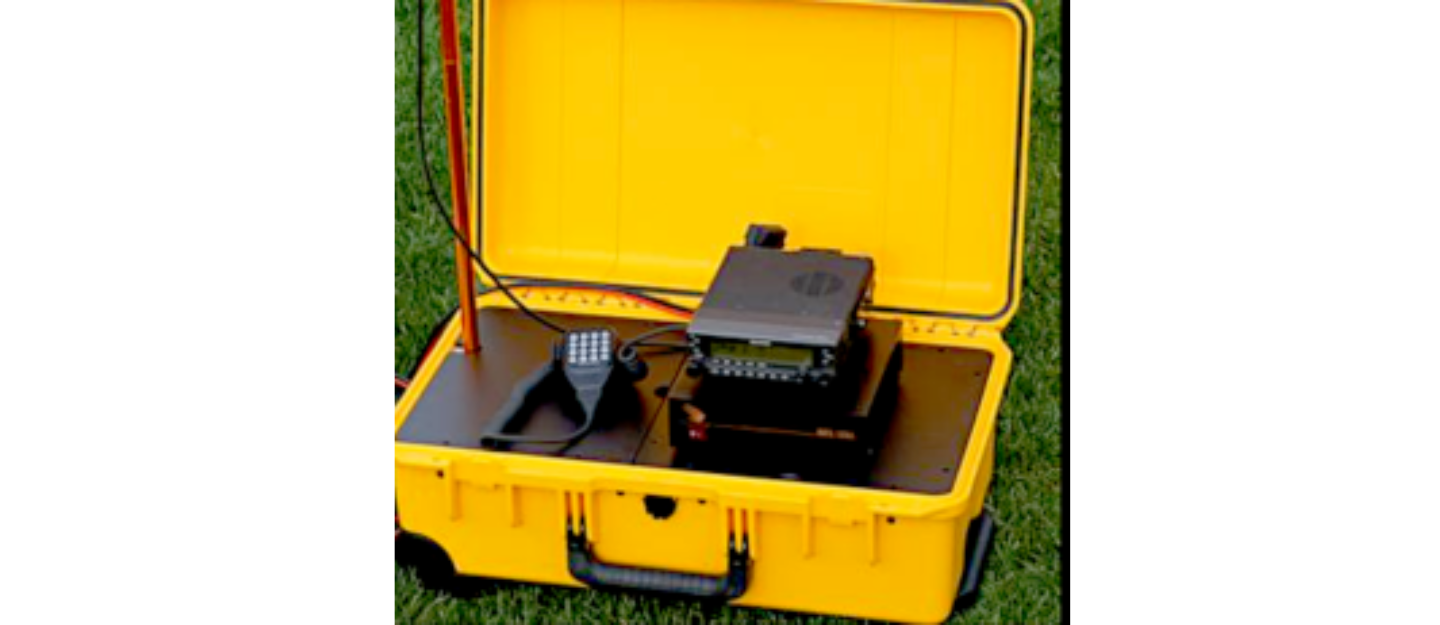
Building a Go Kit ensures you are ready to communicate when normal infrastructure fails. A go kit is a portable, self-contained communication system designed for rapid deployment during emergencies, disasters, or field operations. When power is lost, cellular networks fail, or communication systems become overloaded, a properly prepared go kit allows you to establish reliable radio contact immediately.
A well-designed go kit eliminates setup delays. Everything needed to operate is organized, protected, and ready to deploy at a moment’s notice. Whether responding to an emergency activation, supporting public service events, or operating in remote locations, a portable communication system provides independence from fixed station limitations. Preparedness is the goal. A go kit is not simply a collection of equipment, it is a complete system ready to function under real-world conditions.
New to the hobby? Start with our Complete Guide to Ham Radio Fundamentals.
Building a Go Kit: Real World Emergency Communication Scenario
Imagine a severe storm knocks out power across your region. Cell towers fail, internet access disappears, and local emergency services become overloaded. Communication becomes limited or completely unavailable.
With a properly prepared go kit, you can deploy quickly, set up an antenna, establish power, and check into emergency nets within minutes. You can relay messages, coordinate assistance, and provide communication support when normal systems fail.
This is the real purpose of a go kit is independent communication when infrastructure no longer works.
Understanding The Purpose Of Building a Go Kit
Planning begins with understanding how the go kit will be used. The frequencies and communication modes you expect to operate determine the type of equipment required. Some operators need only local VHF or UHF coverage, while others require HF capability for regional or long-distance communication when infrastructure is unavailable.
Portability is another critical factor. If the kit must be carried, size and weight become major design considerations. If it will remain vehicle-based, more equipment and capacity may be practical. Defining the mission first ensures every component serves a purpose and nothing essential is overlooked.
Choosing The Right Transceiver For Field Operation
The transceiver is the core of the go kit. Selecting a compact and versatile radio provides maximum communication flexibility while minimizing size and weight. Multi-band radios are popular because they provide local and long-distance capability in a single unit.
Field operation places unique demands on equipment. Controls must be simple, displays readable outdoors, and construction durable enough for transport and environmental exposure. Power consumption is equally important because operating time depends entirely on available energy. Efficient radios extend battery life and improve reliability during extended deployments.
Selecting Portable Antennas That Deploy Quickly
Antenna choice has a major impact on communication effectiveness. Portable antennas must balance efficiency, compact storage, and rapid deployment. In emergency scenarios, the ability to install an antenna quickly often matters more than achieving maximum theoretical performance.
Wire antennas pack small and adapt to many environments. Portable vertical antennas provide convenience when supports are limited. The best antenna is one that can be deployed consistently and reliably under real operating conditions.
Feedline efficiency works together with antenna height and take-off angle to determine how far your signal travels. Proper installation often improves performance more than increasing transmitter power.
Planning A Reliable Power System
Power planning is one of the most critical aspects of go kit design. Field communication requires dependable energy sources that sustain operation for the expected duration of deployment. Without reliable power, even the best radio and antenna become useless.
Battery systems designed for stable voltage and portability are commonly used. Some operators include solar charging capability for extended operation, while others maintain backup power options if utility power becomes available. Calculating expected operating time based on transmit power and duty cycle helps prevent unexpected power loss during critical communication.
Redundancy improves reliability. Spare batteries, charging cables, and power distribution components ensure continued operation if primary systems fail.
Estimating Operating Time And Power Requirements
Knowing how long your go kit can operate is critical during emergencies. Power consumption depends on transmit power, duty cycle, and battery capacity.
Higher transmit power dramatically increases energy use. Digital modes and continuous operation also drain batteries faster than occasional voice transmissions.
Operators should calculate expected runtime based on realistic operating conditions. A system that runs for eight hours in light use may only last three hours during heavy communication periods.
Always plan for more operating time than expected. Emergency deployments often last longer than anticipated.
Including Essential Support Equipment
Supporting equipment often determines whether a deployment runs smoothly. Small items can solve major problems in the field and should never be overlooked. Adapters, spare fuses, basic tools, lighting, and logging materials all contribute to reliable operation.
Field environments frequently require adjustments, repairs, and improvisation. Having the proper accessories available prevents minor issues from interrupting communication.
Complete Ham Radio Go Kit Equipment Checklist
A fully functional go kit should include everything required to operate independently for extended periods. Missing small components can prevent communication entirely, so a complete packing list is essential.
Radio equipment should include your primary transceiver, a backup handheld radio, microphone or headset, programming cable, and spare fuses.
Your power system should include a primary battery, backup battery, charging cables, power distribution, and optional solar or generator charging for extended operation.
The antenna system should include a primary antenna, backup antenna or wire kit, coax feedline, adapters, and support rope or mast.
Tools and setup gear should include a multitool, electrical tape, zip ties, spare connectors, and an SWR meter or analyzer.
Operating support should include a logbook, frequency list, repeater directory, and emergency contact information.
Safety and personal gear should include lighting, first aid supplies, and basic survival items appropriate for your environment.
A go kit should function as a completely self-contained communication station.
Organizing The Go Kit For Rapid Deployment
Organization directly affects how quickly communication can begin. Equipment should be protected during transport and immediately accessible during setup. Durable waterproof cases or well-designed backpacks protect gear from impact, moisture, and environmental hazards.
Many operators permanently mount equipment inside cases, creating a ready-to-operate station that requires minimal setup. Clearly arranged cables, labeled connections, and dedicated compartments reduce confusion and speed deployment when time is critical.
Rapid Field Deployment Procedure
A go kit must be deployable quickly under real conditions. A simple setup sequence ensures reliable operation.
Select a safe operating location with minimal electrical noise. Deploy and secure the antenna. Connect feedline and verify connections. Establish power and confirm voltage levels. Check SWR and antenna performance. Monitor local emergency frequencies. Check into the appropriate communication net.
Practicing this sequence regularly reduces setup time and prevents mistakes during real emergencies.
Customizing The Kit For Your Operating Needs
When Building a Go Kit, No two kits will be identical because operating requirements vary widely. Emergency response teams, public service operators, and off-grid communicators each face different conditions and priorities.
Experience gained during drills, field exercises, and real deployments helps refine equipment selection and layout over time. Regular evaluation ensures the system remains practical and reliable.
Testing And Maintaining Go Kit Readiness
A go kit must be tested regularly to remain dependable. Equipment that sits unused can develop problems that only appear during real deployment. Routine testing verifies functionality and familiarizes the operator with setup procedures.
Preparedness depends on reliability, and reliability depends on testing.
Why A Well Built Go Kit Matters In Real Emergencies
During emergencies, communication infrastructure may be damaged, overloaded, or completely unavailable. Portable amateur radio stations often become essential links between communities, responders, and support networks. A well-built go kit allows operators to establish communication quickly and operate independently of external systems.
Final Thoughts On Building A Ham Radio Go Kit
Building a ham radio go kit is one of the most practical preparedness steps an operator can take. It transforms individual components into a fully functional portable communication system capable of operating anywhere.
With careful planning, reliable power, efficient antennas, and organized equipment, a go kit becomes a dependable tool for emergency response, field operations, and communication readiness. When infrastructure fails, preparation ensures communication continues.
A properly designed go kit is not just equipment, it is readiness in action.
Common Go Kit Problems And How To Avoid Them
Many go kits fail not because of missing equipment, but because of overlooked details.
Dead or poorly maintained batteries are one of the most common failures. Connectors and adapters are frequently missing or incompatible. Antenna support systems may fail in poor weather. Operators often forget spare coax or essential cables.
Overpacking can also create problems. Excess gear adds weight and slows deployment without improving capability.
Regular testing and realistic field exercises reveal these issues before an emergency occurs.
The cost of a go kit varies widely depending on equipment capability and operating goals.
Typical Cost Of Building a Go Kit
A basic local communication kit using handheld radios and simple antennas may cost a few hundred dollars. A mid-range kit with multi-band capability, dedicated batteries, and portable antennas typically costs significantly more. Full-featured emergency communication systems with HF capability, solar charging, and rugged transport cases represent a larger investment.
Cost should be evaluated against reliability and independence. In emergency communication, dependable equipment is often more important than minimizing expense.
Frequently Asked Questions About Ham Radio Go Kits
What should be included when Building a Go Kit?
A complete go kit should include a transceiver, power source, antennas, feedline, adapters, tools, and essential operating supplies. The goal is to operate independently without relying on external infrastructure.
How long should a go kit operate without power?
Many operators plan for at least 24 hours of independent operation, with extended kits designed for multiple days. Runtime depends on battery capacity, transmit power, and duty cycle.
Do you need HF capability in a go kit?
HF allows long-distance communication when local infrastructure fails, making it highly valuable for regional emergency coordination. It provides communication beyond line-of-sight when repeaters or local networks are unavailable.
How often should a go kit be tested?
Regular testing is recommended at least monthly, with full deployment exercises performed periodically. Testing ensures batteries, connections, and antennas function properly under real operating conditions.
What is the most important part of a go kit?
Reliable power and a properly deployed antenna are the most critical factors for successful communication. Without those two elements, even the best radio cannot function effectively.