
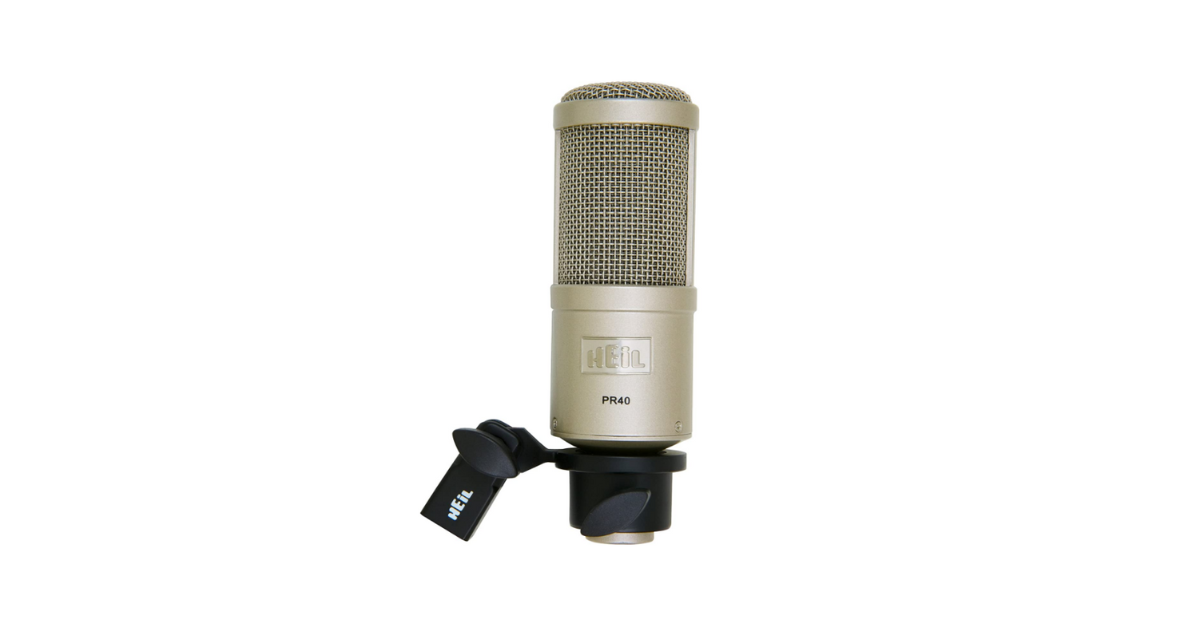
The Heil PR40 is a large diameter dynamic studio microphone built for serious voice applications. Broadcasters, podcasters, recording engineers, and ham radio operators rely on it because it delivers a full, controlled sound with exceptional clarity. At the same time, its rugged construction and intelligent acoustic design make it ideal for demanding radio environments where background noise control matters.
Unlike many dynamic microphones that emphasize only midrange presence, the PR40 delivers true full-range performance. Its wide frequency response produces natural warmth, strong articulation, and excellent low-frequency depth. Because of this balanced response, operators can achieve a broadcast-quality sound without heavy processing. As a result, the PR40 has become a favorite among ham operators who want clean transmit audio and consistent tonal control.
Want to improve your Audio, Check out our Complete Guide to Ham Radio Microphones
Heil PR40 Quick Summary
The Heil PR40 is a full-range dynamic broadcast microphone designed for close-range voice capture. It delivers deep low-frequency response, strong noise rejection, and natural tonal balance. Because of its directional pickup and internal pop filtering, it performs exceptionally well in ham radio shacks and recording environments.
What Makes the Heil PR40 Different From Other Dynamic Microphones
The PR40 differs from many dynamic microphones because it delivers extended low-frequency response without sacrificing clarity. At the same time, its internal pop filtering allows extremely close operation without distortion.
Unlike many broadcast microphones that require heavy processing, the PR40 produces balanced sound directly from the source. Therefore, operators achieve professional results with minimal adjustment.
Dynamic Element and Frequency Response
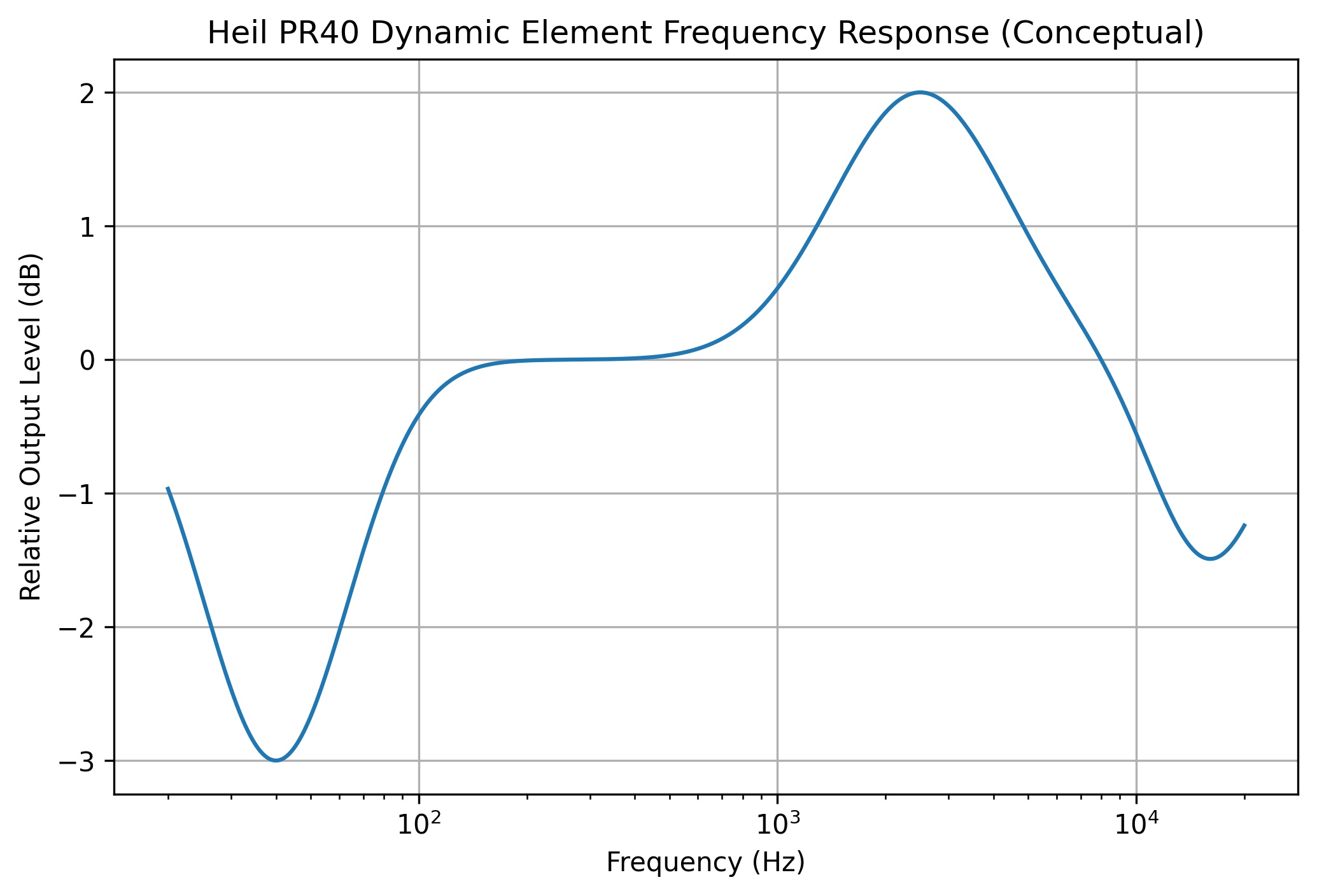
The PR40 uses a large 1-inch dynamic element engineered to capture voice with exceptional accuracy. It extends down to 28 Hz while maintaining smooth midrange clarity and detailed highs up to 18 kHz. Consequently, the microphone reproduces both depth and presence without sounding harsh or overly bright.
Many microphones exaggerate upper frequencies to simulate clarity. However, the PR40 achieves clarity through natural response rather than artificial boost. Therefore, voices sound more realistic and less processed. This design benefits operators with strong low-frequency vocal energy because the microphone captures fullness without becoming muddy.
Additionally, the PR40 includes a midrange rise that remains smooth and controlled. Because of this shaping, speech intelligibility improves while tonal balance stays consistent. Meanwhile, the extended top end preserves articulation, which helps receivers understand transmitted audio more easily.
Internal Pop Filtering and Breath Control
The PR40 features a dual-layer internal pop filtering system designed to manage breath energy before it reaches the diaphragm. Instead of simply blocking air movement, the system breaks up airflow and redirects it. As a result, plosive sounds remain controlled even during close-range operation.
This design eliminates the need for bulky external pop filters in many situations. Furthermore, it allows operators to work close to the microphone while maintaining clean audio. Because ham radio often involves near-field speaking, this internal protection becomes especially valuable during long transmissions.
Close Range Performance and Proximity Effect
The PR40 was designed specifically for close-range use. When positioned approximately two inches from the end-fire grill, the microphone takes advantage of the proximity effect to enhance vocal depth. Consequently, voices gain weight and authority without requiring electronic bass enhancement.
However, operators with naturally deep voices may prefer to reduce low-frequency response slightly. Fortunately, most radios and processors allow simple low-cut adjustment around 100 to 200 Hz. Therefore, users can tailor tonal balance without sacrificing clarity or presence.
Because the microphone responds predictably to distance changes, operators can control tonal coloration through positioning alone. This physical control gives the PR40 an advantage over microphones that rely heavily on processing to shape sound.
Optimal Mic Positioning and Speaking Technique
Proper positioning has a major impact on how the PR40 sounds on the air. Although the microphone performs best about two inches from the grill, angle also matters. Speaking slightly across the front of the microphone rather than directly into it reduces plosive energy even further while maintaining full tonal response.
Consistent mouth-to-mic distance produces consistent transmit audio. When operators move closer or farther away, the proximity effect changes low-frequency response. Therefore, maintaining steady position helps keep audio levels and tone stable.
Voice projection also plays a role. Speaking naturally at a moderate level allows the microphone to capture full vocal detail without overdriving the input stage. As a result, transmitted audio sounds smooth and controlled rather than compressed or strained.
Rear and Side Rejection in the Shack
Noise control remains critical in radio environments. Equipment fans, secondary receivers, computer systems, and room reflections can easily contaminate transmitted audio. The PR40 addresses this challenge through strong directional control and approximately -40 dB rear rejection.
Because of this focused pickup pattern, the microphone rejects unwanted sound entering from the sides and rear. Consequently, background noise remains significantly reduced even in busy operating positions. This characteristic proves especially valuable in shared shacks or multi-radio setups.
Additionally, strong rejection helps maintain consistent audio levels. When the microphone ignores room reflections, transmitted sound remains stable and focused. Therefore, operators can maintain professional audio quality without extensive acoustic treatment.
Mounting and Physical Design
The PR40 includes the SM-3 microphone holder, which mounts to any standard 5/8-27 thread. This compatibility allows easy integration with most boom arms and desk stands. Meanwhile, the optional PRSM shock mount provides additional isolation from mechanical vibration.
The microphone body is solid and well balanced, weighing 13.5 ounces. Because of its robust construction, it withstands heavy daily use in both studio and radio environments. The included padded carrying case protects the microphone during transport or storage.
Recommended Accessories for Best Performance
Although the PR40 performs well with basic mounting hardware, a few accessories improve long-term usability.
A quality boom arm allows precise positioning and keeps the microphone stable during operation. Meanwhile, a shock mount reduces vibration from desk movement or equipment operation. This becomes especially helpful when using mechanical keyboards or operating multiple radios.
Some operators also add an external windscreen for additional plosive protection, although the internal filtering often makes this unnecessary.
Technical Specifications and What They Mean
The PR40 uses a dynamic element with a cardioid polar pattern. This pattern concentrates pickup directly in front of the microphone while reducing off-axis sound. Therefore, it supports controlled, focused voice capture.
Its 600-ohm balanced impedance ensures compatibility with professional audio equipment and modern radio interfaces. Meanwhile, the -53.9 dB output level provides strong signal without excessive gain requirements. Because of this efficient output, most transceivers and mixers drive the microphone easily.
The PR40 handles maximum sound pressure levels up to 148 dB. Consequently, it tolerates loud speech, excited operating conditions, and high-energy broadcast environments without distortion.
How the Heil PR40 Compares to Typical Communications Microphones
Most standard communications microphones emphasize midrange frequencies to improve intelligibility. As a result, they often sound thin or narrow.
The PR40 captures a much wider frequency range. Consequently, transmitted audio sounds fuller and more natural when receiver bandwidth allows it.
Additionally, communications microphones often pick up more room noise because they are less directional. The PR40’s stronger rejection produces cleaner audio in typical shack environments.
Heil PR-40 vs Heil PR-781 — How Do They Compare?
The Heil PR-40 and PR-781 are both professional broadcast-quality dynamic microphones, but they are designed with slightly different voice characteristics and operating preferences in mind.
The PR-40 is widely known for its strong low-frequency response and rich, full broadcast tone. Many operators choose it for its warm presence and powerful voice depth, which can create a commanding on-air sound.
By contrast, the PR-781 emphasizes controlled clarity and articulation. Its response is more balanced and precise, with excellent intelligibility and strong background noise rejection. Operators who prefer clean, highly defined transmit audio often favor this approach.
Both microphones deliver professional performance, but they serve different audio preferences. The PR-40 tends to appeal to those seeking fuller voice presence, while the PR-781 is often preferred for refined clarity and controlled vocal reproduction.
For a complete evaluation of its sound profile, operating characteristics, and ideal use cases, see our full Heil PR-781 microphone review.
Why the Heil PR40 Is Popular With Serious Operators
Many operators choose the PR40 because it combines studio sound with practical radio performance. It delivers strong low-frequency presence without losing articulation, rejects environmental noise effectively, and requires minimal processing to sound professional.
Additionally, its consistent tonal response across different radios makes station integration simple. Because it performs reliably in both broadcast and communication environments, it serves as a long-term microphone solution rather than a temporary upgrade.
Real World Performance With Modern Radios
The PR40 performs consistently across multiple high-end transceivers. When paired with radios such as the Yaesu FT-991A, FTDX-3000, FTDX-10, and Elecraft K4, the microphone produces smooth, controlled transmit audio. In each case, the wide frequency response delivers a studio-like sound that stands out on the air.
Because modern receivers reproduce wider audio bandwidth, listeners can fully appreciate the PR40’s tonal depth. Therefore, operators using contemporary equipment benefit most from its extended response range.
Some voices may produce strong low-frequency energy through this microphone. However, simple low-cut adjustment corrects this easily. After adjustment, the transmitted sound remains clear, balanced, and natural.
Broadcast Sound Quality on the Air
Many microphones designed for radio communications prioritize intelligibility over tonal richness. In contrast, the PR40 delivers both. Its extended low end provides authority, while its smooth mids preserve articulation. Meanwhile, the controlled high end ensures clarity without harshness.
Because of this balance, transmissions sound polished and professional. Operators often describe the result as broadcast-quality audio rather than typical communications audio. Consequently, the microphone enhances both on-air presence and listener experience.
Noise Rejection Advantages for Multi-Purpose Use
The PR40 functions equally well for voice recording, streaming, and content creation. Because it rejects environmental noise effectively, it performs well in untreated rooms and typical home studios. Many operators use it for video production, streaming platforms, and voice recording in addition to ham radio work.
This versatility makes the microphone a practical long-term investment. Instead of maintaining separate microphones for different tasks, users can rely on one consistent, high-quality voice tool.
RF Immunity and Performance in High RF Environments
Radio transmitters create strong RF fields that can interfere with poorly shielded microphones. The PR40’s balanced output and internal design help resist RF pickup, which is especially important in high-power stations.
Proper station grounding further improves performance. Additionally, using quality balanced audio cables reduces the chance of RF feedback entering the audio chain.
Because the microphone remains stable in strong RF environments, operators can transmit at higher power levels without introducing distortion or unwanted noise into their audio.
Color Options and Shack Integration
The PR40 is available in multiple finishes, which allows easy visual integration into different operating spaces. Although cosmetic appearance does not affect performance, many operators appreciate equipment that complements their station layout.
Gain Requirements and Processing Considerations
Dynamic microphones typically require moderate gain. However, the PR40 produces a healthy output level compared to many broadcast dynamics. Therefore, most radio microphone inputs provide sufficient gain without external preamps.
Processing requirements remain minimal. Because the microphone delivers natural tonal balance, operators often need only slight equalization and compression. This simplicity benefits those who prefer straightforward audio chains.
Recommended EQ and Audio Processing for Ham Radio
| Adjustment Type | Frequency Range | Recommended Setting | What It Improves | When to Adjust |
|---|---|---|---|---|
| Low-Cut (High-Pass Filter) | 80–120 Hz | Start at 100 Hz | Removes rumble, mic handling noise, excessive bass | Deep voices, muddy audio, desk vibration |
| Low-End Control | 120–200 Hz | Slight reduction if needed | Tightens proximity effect boominess | Very close mic use or strong bass voice |
| Presence Boost | 2–4 kHz | +1 to +3 dB mild boost | Improves speech clarity and articulation | Narrow transmit bandwidth or dull audio |
| High Frequency Control | 5–8 kHz | Flat or slight boost | Adds crispness and intelligibility | Dark sounding transmit audio |
| Compression | Full voice range | 2:1 to 3:1 ratio, light | Keeps audio level consistent | Uneven speaking volume |
| Compression Threshold | Voice peaks | Moderate engagement | Prevents overdriving transmit audio | Loud or excited speaking |
| Mic Gain Level | System dependent | Moderate, avoid clipping | Maintains clean signal | Distortion or weak audio reports |
| Monitor Adjustment | Off-air receiver | Fine tune by ear | Confirms real transmit sound | Final system setup |
Most operators achieve excellent results with minimal processing. However, small adjustments can optimize clarity for radio transmission.
A gentle low-cut filter between 80 and 120 Hz removes excess rumble while preserving vocal warmth. Meanwhile, a mild presence boost between 2 and 4 kHz can improve speech articulation, especially on narrower transmit bandwidths.
Compression should remain moderate. Light compression helps maintain consistent audio level, but excessive compression can reduce natural dynamics and increase background noise. Therefore, subtle processing usually produces the most intelligible signal.
Because every voice is different, final adjustments should be made while monitoring transmitted audio through another receiver.
Who Benefits Most From the Heil PR40
Operators seeking broadcast-style transmit audio benefit immediately from the PR40. It suits voices that need depth, presence, and smooth articulation. Additionally, it excels in environments where background noise control matters.
Broadcasters and content creators benefit from its full-range clarity. Meanwhile, ham operators appreciate its directional control and consistent tonal response. Therefore, the PR40 serves both professional studio work and serious amateur radio operation equally well.
Practical Limitations to Consider
No microphone fits every voice perfectly. Some naturally deep voices may require low-frequency roll-off to maintain balance. Additionally, because the microphone performs best at close range, consistent positioning remains important.
However, these considerations involve simple adjustments rather than fundamental limitations. With proper setup, the PR40 performs reliably across a wide range of operating conditions.
Troubleshooting Common Audio Issues
If transmitted audio sounds muddy, reduce low-frequency response slightly or increase mic distance. If audio sounds thin, move slightly closer or reduce high-frequency emphasis.
Background noise usually indicates improper mic placement or excessive gain. Lowering input gain and speaking closer to the microphone typically improves signal-to-noise ratio.
If hum or buzz appears, check grounding and cable routing. Keeping audio cables away from power supplies and RF feedlines prevents interference.
Because most issues relate to setup rather than equipment, small adjustments usually solve them quickly.
Long Term Performance and Operator Impressions
Extended use across multiple radios demonstrates consistent results. The microphone produces strong, full transmit audio with excellent noise rejection. Operators often notice improved clarity and presence compared to standard communications microphones.
In daily use, the PR40 delivers dependable performance across 80 through 10 meters and beyond when paired with capable equipment. Because of its tonal consistency, it remains a preferred choice even after testing multiple microphone types.
Long-Term Reliability and Build Quality
The PR40 is built for continuous professional use. Its metal body resists mechanical wear, while the internal element remains stable over years of operation. Because dynamic microphones contain no delicate external electronics, they tolerate temperature changes and handling better than many condenser designs.
Routine maintenance is minimal. Keeping the grill clean and storing the microphone in its case when not in use preserves long-term performance.
Many operators use the PR40 for years without noticeable change in sound quality, which reflects its durable design.
Who Should Buy the Heil PR40 and Who Should Not
The PR40 works best for operators who want full-bodied broadcast audio with strong noise rejection. It is especially well suited for deep or mid-range voices, close-talk operation, and stations with moderate background noise.
However, operators who prefer a very bright or highly compressed sound may need additional processing. Those who cannot maintain consistent mic positioning may also find tonal variation due to proximity response.
Because the PR40 emphasizes natural voice reproduction, it benefits users who want clarity and realism rather than aggressive audio coloration.
Best Uses for the Heil PR40
- Ham radio transmit audio
- Podcast and voice recording
- Streaming and video production
- Home studio broadcasting
- Multi-radio operating positions
Audio Reports From Other Operators
Reports from other operators consistently describe transmitted audio as smooth, full, and highly intelligible. Many listeners notice reduced background noise and improved voice presence compared to standard communications microphones.
Because of this consistent feedback, the PR40 has developed a strong reputation in both broadcast and amateur radio communities.
Is the Heil PR40 Worth It for Ham Radio
For operators who want broadcast-quality transmit audio, the PR40 provides excellent value. Its sound quality, noise rejection, and durability make it a long-term station upgrade rather than a temporary accessory.
Because it performs reliably across different radios and operating environments, many operators consider it a permanent part of their station setup.
Heil PR40
The Heil PR40 combines studio-grade sound with practical radio performance. Its wide frequency response captures natural voice characteristics, while its directional control reduces environmental noise. Additionally, its close-range design allows precise tonal shaping through positioning alone.
Because it delivers clarity, warmth, and control in a single package, the PR40 remains one of the most respected dynamic microphones for serious voice applications. Whether used for broadcasting, recording, or amateur radio transmission, it consistently produces strong, professional audio that stands out on the air.