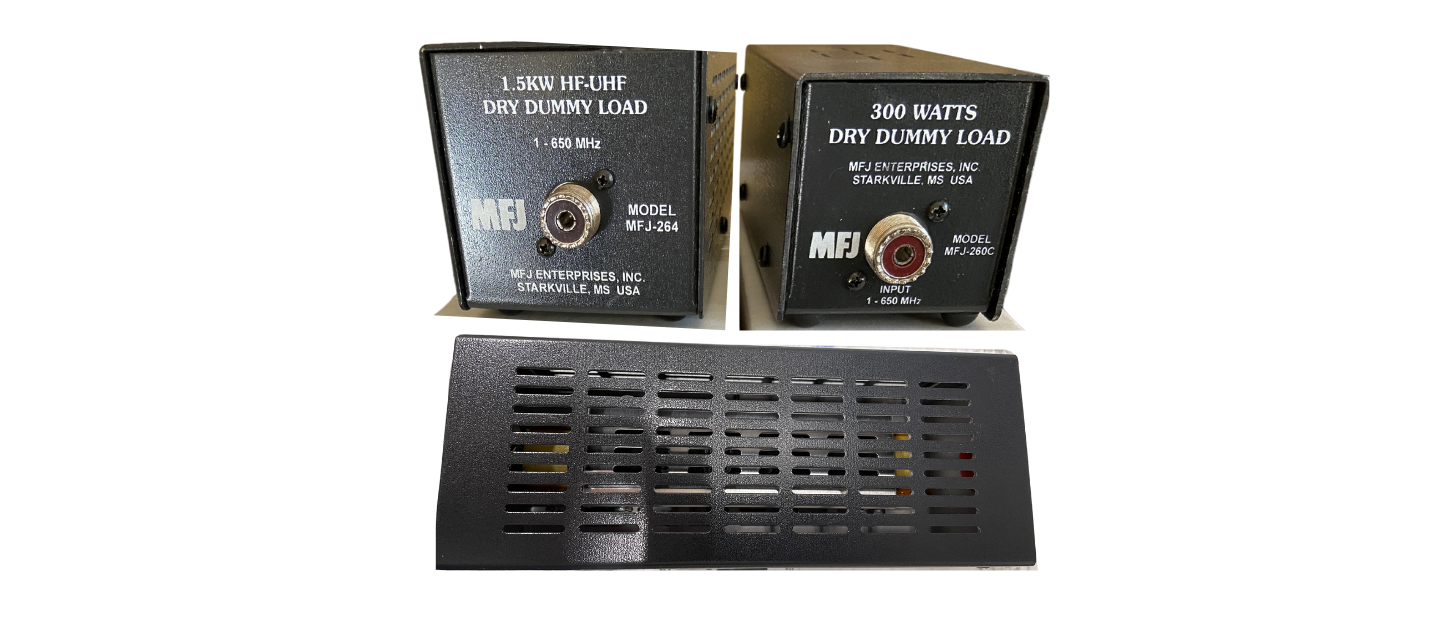
MFJ-264 Dummy Load Real-World Testing and Performance
This Mfj-264 Dry Dummy Load review is intended for amateur radio operators, technicians, and station builders who need a reliable way to safely tune transmitters, test amplifiers, and verify station performance without radiating a signal on the air.
The MFJ-264 Dry Dummy Load is a vital tool for amateur radio operators and professionals alike. It provides a reliable means of tuning or testing transmitters without the need for an actual antenna. Here’s a comprehensive review highlighting its features, performance, and overall value.
Real-World Use and Testing Conditions
This evaluation is based on hands-on use in an active amateur radio station, including transmitter tuning, amplifier testing, and power verification across HF and 6 meters.
Testing includes operation at varying power levels, repeated tuning cycles, and comparison with on-air antenna measurements to confirm accuracy and consistency.
Design and Build Quality:
The MFJ-264 boasts a rugged and durable design, with high-quality materials ensuring longevity and reliability. Its construction features a robust metal enclosure that effectively dissipates heat generated during operation. The dummy load is compact and lightweight, making it easy to transport and use in various settings.
Features:
High Power Handling: The MFJ-264 is capable of handling high power levels. This makes it suitable for testing transmitters and amplifiers across a wide range of frequencies.
Impedance Match: The dummy load provides a stable 50-ohm impedance match, ensuring accurate testing and measurement of transmitter output power.
Cooling Ventilation: The metal enclosure features built-in ventilation slots, allowing for effective heat dissipation during prolonged operation.
SO-239 Connector: The dummy load is equipped with a standard SO-239 connector. This provides compatibility with a wide range of transmitters and test equipment.
Real-World Performance and Accuracy
The MFJ-264 delivers consistent and reliable performance when used for transmitter tuning and testing. In practical operation, it provides a stable 50-ohm load that allows accurate power measurements and safe off-air adjustments.
SWR remains close to 1:1 across HF frequencies, with minimal variation under normal operating conditions. This stability ensures that transmitters and amplifiers can be tuned without introducing measurement errors caused by impedance mismatch.
During repeated tuning cycles and moderate power operation, the unit maintains consistent readings without noticeable drift. Heat dissipation is effective for typical amateur radio use, particularly in intermittent duty modes such as SSB and CW.
Real SWR and Measurement Consistency
A properly functioning dummy load should present a near-perfect impedance match.
In real-world use:
SWR remains very close to 1:1
Readings stay stable across repeated tests
Power measurements remain consistent
No unexpected fluctuations during tuning
This level of consistency is critical when verifying transmitter output and ensuring accurate station calibration.
Why a Dummy Load Is Critical for Station Safety
A dummy load is not just a convenience tool—it is essential for protecting both equipment and spectrum integrity.
Without a dummy load:
Transmitters can radiate unintended signals
Amplifiers may operate into mismatched loads
Nearby electronics can experience interference
Regulatory compliance can be violated
Using a properly rated dummy load ensures safe, controlled testing under all operating conditions.
The MFJ-264 delivers excellent performance, providing a reliable and consistent load for testing transmitters. Its high power handling capability ensures accurate measurement of transmitter and amplifier combinations. Its stable impedance match minimizes reflections and signal distortion.
Benefits:
Convenience: The MFJ-264 eliminates the need for an actual on air transmitting. While providing a convenient and reliable means of load testing.
Versatility: The dummy load is suitable for use with a wide range of transmitters, including HF, VHF, and UHF models.
Accuracy: The stable impedance match and high power handling capability ensure accurate measurement of transmitter output power.
Value:
The MFJ-264 Dry Dummy Load offers excellent value for its affordability, reliability, and performance. It serves as an essential tool for amateur radio operators, technicians, and professionals involved in transmitter testing and measurement.
The MFJ-264 Dry Dummy Load is a reliable and versatile tool that provides a convenient tool. I use it on HF and 6 meters mostly for low power tuning. However, I will fine tune around 500 watts quickly. It has never heated up, and the dummy load’s SWR is well under 1:5. It has a rugged design, and fits nicely on a small shelf under the desk.
The performance has been accurate and consistent every time it was used. Whether you’re a ham radio enthusiast or technician, the MFJ-264 Dry Dummy Load is a valuable asset to the shack or work bench. I like that it is a dry device, so no worrying about leaks.
I pair this with my Telepost LP-100A for highly accurate readings. Together, they make a fantastic duo for tuning my station.
Comparison to Other Dummy Loads
Compared to oil-filled dummy loads, dry dummy loads like the MFJ-264 offer several practical advantages:
No risk of leaks or spills
Easier portability
Minimal maintenance requirements
However, oil-filled designs may offer better continuous duty heat dissipation under extremely high power levels.
Power Handling and Duty Cycle Explained
Although the MFJ-264 is rated for high power, actual safe operation depends on duty cycle.
Key considerations:
Continuous modes (FT8, RTTY) generate more heat
SSB and CW produce lower average power
Extended key-down testing should be limited
Understanding duty cycle prevents overheating and ensures long-term reliability.
For most amateur radio applications, a dry dummy load provides the best balance of performance and convenience.
About the Author
Vince, W2KU, is a licensed Extra class amateur radio operator and the founder of Ham Shack Reviews. The committee named him Amateur of the Year in 2026 for his contributions to amateur radio education and equipment evaluation.
MFJ-264 Dry Dummy Load Advantages
Having a dummy load, such as the MFJ-264 Dry Dummy Load, offers several advantages for amateur radio operators, technicians, and professionals involved in transmitter testing and measurements.
Advantages
Protecting Antennas: During transmitter testing or tuning, using a dummy load instead of a live antenna protects antennas from potential damage due to excessive RF energy or mismatched impedance. This is especially important when making adjustments to transmitters or amplifiers, as it prevents unintended radiation that could interfere with other devices or cause harmful interference.
Accurate Power Measurement: A dummy load provides a stable and known impedance match (usually 50 ohms), and allows for accurate measurements of transmitter output power. By simulating the impedance of a real antenna, it ensures that power measurements are consistent and reliable, while providing valuable feedback for optimizing transmitter performance.
Minimizing Interference: By absorbing the RF energy generated by the transmitter, a dummy load prevents the emission of unwanted RF signals that could cause interference to nearby electronic devices or neighboring radio operators. This helps maintain compliance with regulatory standards and ensures responsible operation within your allocated frequencies.
Safe Testing Environment: Using a dummy load creates a controlled environment for testing transmitters without the risk of unintentional radiation. It allows operators to make adjustments, while performing diagnostics. This enables operators and technicians to conduct experiments safely and effectively.
Versatility: Dummy loads are compatible with a wide range of transmitters, furthermore, they cover various frequency bands and power levels. They can be used for testing HF, VHF, and UHF equipment, making them a versatile tool for amateur radio operators and technicians.
Common Mistakes When Using a Dummy Load
Even experienced operators make avoidable errors when using dummy loads.
Most common mistakes:
Running high power for extended periods
Assuming infinite duty cycle capability
Poor ventilation during operation
Using incorrect connectors or adapters
Avoiding these issues ensures accurate results and protects equipment.
It is especially useful for stations where minimizing interference is important.
Overall, having a dummy load provides amateur radio operators, technicians, and professionals a valuable tool for tuning and testing. By offering a safe, accurate, and versatile means of load testing, dummy loads play a crucial role in optimizing performance and ensuring responsible radio operation.
Frequently Asked Questions
Do I really need a dummy load? Yes. A dummy load allows safe transmitter testing without radiating a signal, protecting both your equipment and other operators.
Can the MFJ-264 handle full legal power? It can handle high power levels, but safe operation depends on duty cycle. Continuous modes require caution.
Is a dry dummy load better than oil-filled? Dry loads are more convenient and portable, while oil-filled models handle extended high-power duty cycles better.
What SWR should a dummy load have? A good dummy load should be very close to 1:1 SWR across its rated frequency range.
Can I tune my antenna with a dummy load? No. A dummy load is used to tune your transmitter, not your antenna system.
Editorial Integrity and Testing Transparency
This review is based on independent, real-world use in an amateur radio station environment. No manufacturer sponsorship or compensation influences the evaluation. All observations reflect practical performance and actual operating experience.
Please consider Donating to help support this channel