
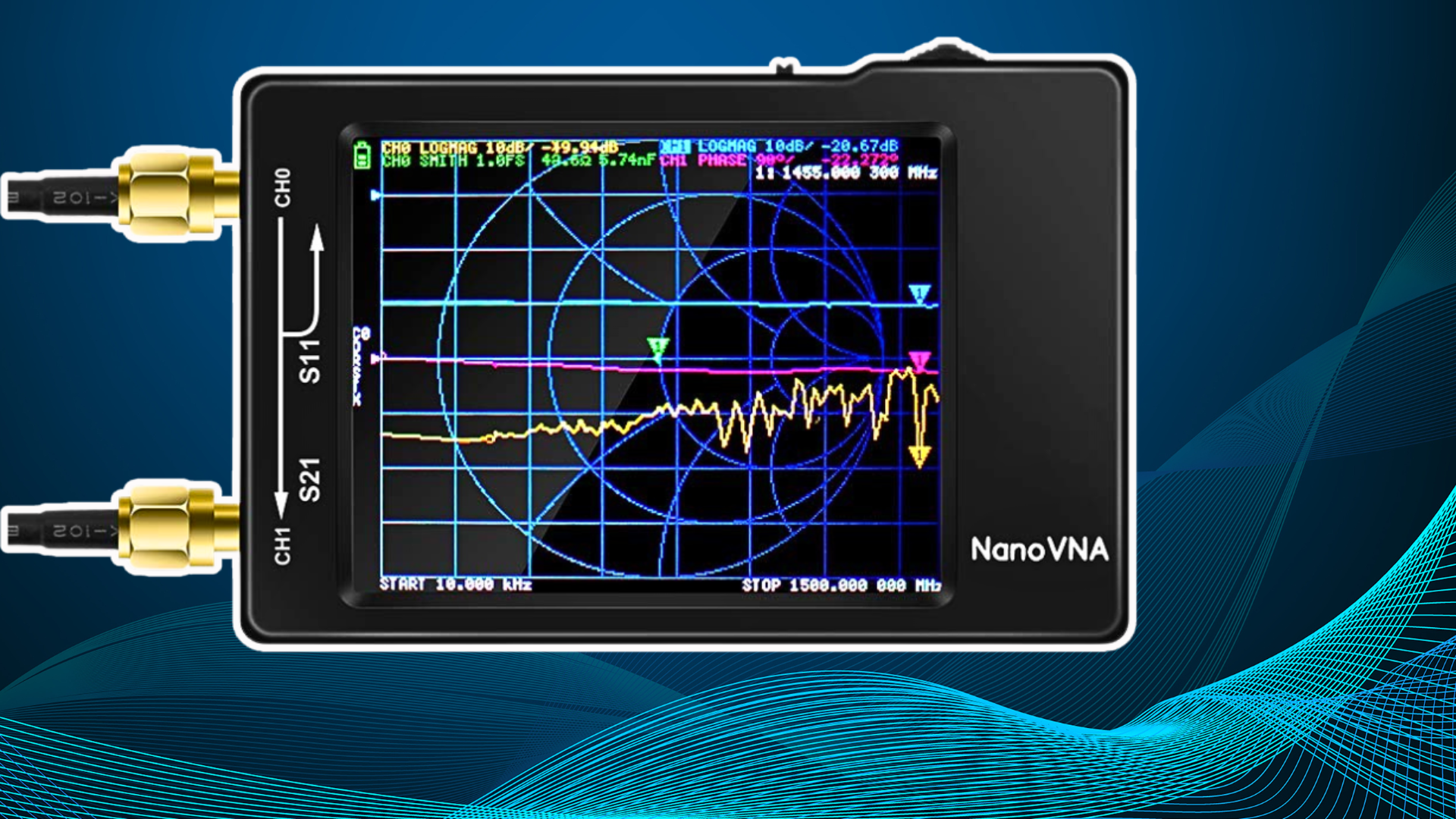
VNA for Antenna Tuning
A VNA for Antenna Tuning is one of the most powerful tools available to amateur radio operators for measuring antennas, feedlines, and RF components. Unlike basic SWR meters, a VNA provides detailed insight into impedance, resonance, and signal behavior across a wide frequency range.
This guide explains how VNAs work, how to use them correctly, and how to interpret measurements for real-world station performance.
VNA for Antenna Tuning
A VNA for Antenna Tuning is one of the most precise tools available for installing, evaluating, and optimizing antennas. It measures how radio frequency energy behaves at the antenna feedpoint across an entire frequency range, providing real electrical data instead of single-point readings. With a VNA, you can see reflection, impedance, resonance, and phase behavior — all of which determine how efficiently an antenna actually radiates energy.
Traditional antenna tuning relies heavily on SWR meters and incremental adjustments. While that approach can work, it often depends on trial and error. A VNA removes the guesswork by showing exactly how electrical characteristics change when antenna length, grounding, mounting height, or matching components are modified.
Because antennas interact electrically with their environment, tuning must be performed under final installation conditions. A VNA allows that level of precision, making it possible to optimize radiation efficiency rather than simply achieving a low SWR reading.
When used correctly, a VNA transforms antenna installation from approximation into measurement-based engineering. This results in stronger signal radiation, predictable bandwidth placement, and consistent operating performance.
Real-World Testing and Station Use
This guide is based on hands-on use of VNAs in real amateur radio station environments, including antenna tuning, feedline analysis, and impedance troubleshooting across HF and VHF bands.
Measurements were performed using standard calibration techniques and verified through on-air performance and comparative testing.
Quick Answer: What Is a VNA Used for in Antenna Tuning?
A Vector Network Analyzer measures antenna resonance, impedance, and reflection across frequency. By observing these measurements while adjusting antenna length, height, grounding, or matching components, operators can precisely tune the antenna for efficient power transfer and optimal radiation performance.
Why a VNA Provides More Accurate Tuning Than an SWR Meter
An SWR meter measures mismatch at a single point in the system, usually near the transmitter. It does not show how impedance changes across frequency, nor does it separate resistive and reactive components. Because of this, it cannot reveal the electrical cause of mismatch.
A VNA performs a frequency sweep and measures reflection at many points across the band. From this data it calculates return loss, complex impedance, phase response, and bandwidth behavior. This makes it possible to determine whether an antenna is electrically long or short, whether reactance is inductive or capacitive, and how installation changes influence performance.
For installation work, this is critical. Vertical antennas interact strongly with ground systems. End-fed antennas depend heavily on environment and counterpoise configuration. Without detailed measurement, tuning becomes guesswork. With a VNA, every adjustment produces measurable electrical change that can be interpreted and controlled.
Proper VNA Setup and Calibration for Accurate Feedpoint Measurement
Accurate measurement requires proper calibration. Calibration removes the electrical effects of test cables and connectors so the reference measurement plane is located exactly at the antenna feedpoint.
If the antenna is measured through several feet of coax without calibration, the cable introduces loss and phase shift. This alters impedance readings and can shift the apparent resonance point.
Calibration should always be performed at the end of the test cable that connects directly to the antenna. After calibration, sweep a frequency range that extends beyond the intended operating band to reveal the full resonance curve.
How to Interpret Resistance and Reactance
When reading impedance on a VNA:
- Resistance near 50 ohms indicates good power transfer
- Positive reactance means the antenna is electrically long
- Negative reactance means the antenna is electrically short
- Reactance near zero indicates resonance
This allows precise adjustment. Instead of guessing, you can determine exactly whether to shorten or lengthen the antenna.
Ground Plane Clarification and Its Electrical Role in Vertical Antennas
For vertical antennas, the ground system forms the return path for RF current and becomes part of the radiating structure. When ground resistance is high, energy is lost as heat rather than radiated. This reduces efficiency even if SWR appears acceptable.
Radials provide a controlled return path that lowers ground resistance. As radial count increases, current distribution becomes more uniform and loss decreases. This stabilizes feedpoint impedance and improves radiation efficiency.
The final radial configuration must be installed before tuning begins because any change to the ground plane alters impedance and shifts resonance.
Understanding High Feedpoint Impedance in End-Fed Antennas
End-fed antennas are typically fed at a point of high voltage and low current, producing very high feedpoint impedance. This impedance often reaches hundreds or thousands of ohms depending on electrical length and environmental coupling.
Matching transformers convert this high impedance to approximately 50 ohms for coaxial systems. However, actual feedpoint impedance varies with height, nearby conductors, and counterpoise configuration.
A VNA reveals the true impedance seen by the matching network under real conditions, allowing verification that the transformation ratio is appropriate.
Practical SWR Targets and What They Actually Mean Electrically
SWR measures impedance match between feedline and antenna system. It does not measure how effectively the antenna radiates energy into space.
A perfect 1:1 match does not guarantee high efficiency if ground loss is significant. Conversely, moderate SWR with excellent grounding can produce strong radiation.
The primary tuning goal is to place resonance at the desired operating frequency. Once resonance is correct, impedance can be evaluated to determine whether SWR falls within acceptable limits.
Step-by-Step Antenna Installation and VNA Tuning Procedure
- Install the complete ground or radial system.
- Mount the antenna at final operating height.
- Secure and weather-seal all feedline connections.
- Calibrate the VNA at the antenna feedpoint.
- Sweep the full operating band.
- Identify resonance and impedance.
- Adjust antenna length or matching components.
- Re-measure after each adjustment.
- Verify final bandwidth and SWR range.
- Install lightning protection and permanent grounding.
How to Read a VNA Sweep in Seconds
A VNA sweep provides immediate visual feedback:
- The lowest SWR point marks resonance
- A dip below 2:1 shows usable bandwidth
- A narrow dip indicates high Q (tight bandwidth)
- A wide curve indicates broader operating range
If resonance appears below your target frequency, the antenna is too long.
If it appears above, the antenna is too short.
This eliminates trial-and-error tuning.
Feedline Loss and How It Alters Measured and Actual Performance
Feedline attenuation reduces both forward and reflected power. Because reflected energy is partially absorbed by cable loss, SWR measured at the transmitter can appear lower than actual feedpoint mismatch.
Long feedlines also transform impedance depending on electrical length. Measurements taken inside the shack may not represent true antenna conditions.
Accurate tuning requires feedpoint measurement or compensation for feedline effects.
Why Shack Measurements Are Misleading
Measuring SWR from inside the shack introduces error:
- Feedline loss absorbs reflected energy
- Cable length transforms impedance
- Resonance may appear shifted
This can make a poorly tuned antenna appear acceptable.
Accurate tuning requires measurement at the feedpoint or proper compensation for feedline effects.
Mounting Height and Its Effect on Impedance and Radiation Angle
Height above ground influences both radiation pattern and feedpoint impedance. Raising a vertical antenna reduces ground interaction and typically lowers radiation angle, improving long-distance communication.
However, changing height also alters electrical length and shifts resonance. Even small height adjustments require remeasurement and retuning.
Radiation Pattern Formation and Signal Coverage Characteristics
Vertical antennas produce omnidirectional horizontal radiation. Vertical radiation distribution depends on ground conductivity and antenna height relative to wavelength.
Poor ground systems increase high-angle radiation and reduce long-distance efficiency. Balanced radial systems promote low-angle radiation suitable for long-distance communication.
Real-World Communication Range and What Actually Determines It
Communication range depends primarily on radiation efficiency and propagation conditions. A well-installed vertical antenna with effective grounding produces strong low-angle radiation capable of long-distance communication.
Installation inefficiency not antenna design is the most common cause of limited range.
Lightning Protection and Electrical Safety Requirements
Outdoor antennas must be grounded for lightning protection. The antenna structure, feedline shield, and station ground should be bonded to a common earth connection.
RF grounding used for tuning does not replace lightning protection grounding.
Radial System Design and Measured Efficiency Improvement
Radials reduce ground resistance and stabilize current distribution. Increasing radial count lowers loss resistance, increasing the portion of transmitter power that is radiated.
Field measurements consistently show stronger signal reports as radial systems improve, even when SWR changes only slightly.
Coaxial Cable Selection and Its Influence on System Performance
Coax loss increases with length and frequency. Low-loss cable preserves transmitted power and improves measurement accuracy. Outdoor connectors must be sealed to prevent moisture intrusion.
Common Installation Mistakes That Reduce Measured Performance
- Tuning before final installation
- Insufficient radial coverage
- Measuring only from the shack
- Mounting near metal structures
- Ignoring height effects
- Skipping lightning grounding
Real Measurement Case Study: Radial System Improvement
A ground-mounted vertical initially measured 3.0:1 SWR with significant reactance. Only four radials were installed. After adding twelve radials and trimming antenna length slightly, impedance approached 50 ohms and SWR dropped to 1.4:1. On-air signal reports improved by approximately two S-units.
SWR vs Real Performance Impact
| SWR | Reflected Power | Practical Effect |
|---|---|---|
| 1.0:1 | 0% | Practical Effect |
| 1.5:1 | 4% | No noticeable loss |
| 2.0:1 | 11% | Minor efficiency reduction |
| 3.0:1 | 25% | Noticeable performance loss |
| 5.0:1 | 44% | Significant inefficiency |
Feedline Loss Comparison
| Coax Type | Typical HF Loss | Best Use |
|---|---|---|
| RG-8X | Moderate | Short runs |
| RG-213 | Low | Base station |
| LMR-400 | Very low | Long runs |
Frequently Asked Questions
Do you need a VNA to tune an antenna?
No, but it provides far more precise information than an SWR meter.
Why does resonance change after installation?
Height, ground conductivity, and nearby objects alter electrical length.
Does low SWR guarantee strong signals?
No. Radiation efficiency depends on installation quality.
Author Bio
Vince is a licensed amateur radio operator and the founder of Ham Shack Reviews. He regularly tests mobile and handheld radios in real operating conditions, including repeater use, mobile installations, and digital network communication. His reviews focus on real-world performance, reliability, and practical setup so operators can choose equipment that works when it matters most.
VNA for Antenna Tuning
VNA for Antenna Tuning provides the measurement precision required to install and tune antennas for maximum performance. By observing impedance, resonance, and reflection directly at the feedpoint, operators can make informed adjustments that improve radiation efficiency and produce reliable communication results.